Wraps & Liners
Disposable Drip Pan Liner
A foil or paper liner that catches grease in a drip pan so the pan stays clean.
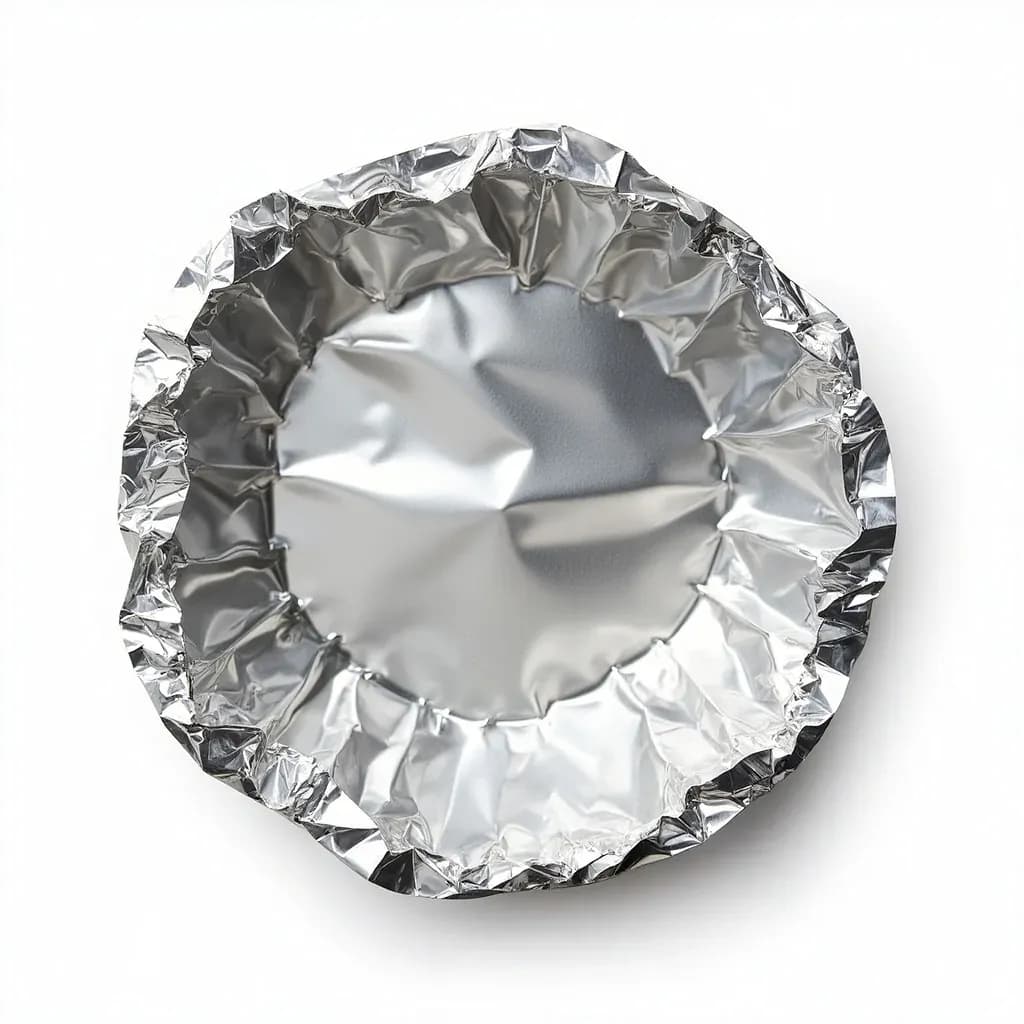
A disposable drip pan liner is a shaped foil or coated-paper insert that sits in a grill, oven, or broiler drip pan. It catches rendered fat and food drippings so the pan can be wiped or simply have the liner pulled and tossed. It saves long scrubbing and reduces flare-ups by containing grease.
A disposable drip pan liner is a pre-cut sheet of aluminum foil, heavy-duty parchment, or coated paper designed to sit inside the drip pan of a grill, roaster, broiler, or smoker. Its job is straightforward but valuable: intercept fat, juices, and caramelized drippings before they bake onto cookware surfaces, where they carbonize into the kind of residue that resists overnight soaking and elbow grease. A liner turns a half-hour cleanup into a ten-second one — lift it out, let the grease solidify, and toss it.
The material matters more than most cooks realize. Standard aluminum handles the heat of broiling and most grill work with ease and conducts enough to keep drippings from pooling in cold spots, but it reacts with prolonged contact from very acidic foods (tomato sauces, citrus marinades, long wine reductions), which can pit the foil and lend a metallic edge to the food. Parchment and silicone-coated paper are non-reactive and release sticky foods like melted cheese or sugar glazes more cleanly, but they're limited to roughly 230 °C / 450 °F and shouldn't touch a direct flame or broiler element. Perforated liners let grease drain through into the underlying pan, which is what you want when the drippings are destined for disposal; solid liners hold the liquid in place when you'd rather pour it off for gravy or stock.
For most grilling and roasting jobs, a heavy-duty, slot-less aluminum liner sized to your specific grill or roaster model is the most versatile choice. The slight premium over generic rolls of foil pays for itself the first time a pork shoulder renders two cups of fat and the only thing that needs washing is your tongs.
Alternatives
Types & varieties
Pre-cut to fit specific gas-grill brands (Weber, Broil King, Char-Broil, Napoleon, etc.); usually slotted to allow grease drainage into the OEM drip pan underneath.
Large flat sheets (often 19 × 23 in or larger) sized for countertop roaster ovens and full-size roasting pans.
Oversized foil or oven-bag style liners for Thanksgiving-sized birds (15–25 lb), sold by Reynolds, Handi-Foil, and similar brands.
Fluorine-free, heat-resistant parchment sheets rated to ~230 °C / 450 °F for ovens and air fryers where metal is undesirable.
Aluminum sheets with a food-safe non-stick coating for easy release of cheesy or sticky drippings.
Smaller foil trays that sit inside a standard oven broiler pan to catch fat from broiled chicken, fish, or steaks.
Pre-cut parchment or foil sheets with perforations, sized to common air-fryer baskets (5.8–6.5 qt are most common).
Small foil cups or sheets for wood-pellet or electric smokers' grease-collection cans.
Perforated vs. solid: which to choose
The perforation choice is the single biggest decision when buying a liner, and it should follow the fate of the drippings. Solid liners act as a shallow tray — they hold liquid in place so you can pour it off intact, which is what you want when you're rendering duck fat for potatoes or capturing pork shoulder drippings for a pan sauce. Perforated liners let the grease fall through into the OEM drip pan, where it pools away from the heat source and is easy to dispose of once it cools; this is the better choice for routine weeknight grilling where the drippings have no culinary purpose. Some grills ship with solid pans and call for perforated liners as replacements; others ship perforated and rely on a solid liner for easy emptying. Either way, the rule is simple: perforated when you want the grease to disappear into the pan, solid when you want to lift it out and keep it.
- Choose solid when drippings are destined for sauce, gravy, or future cooking fat.
- Choose perforated for high-volume, high-fat cooks where grease accumulation is the bigger concern.
- Solid liners are also easier to lift out cleanly when full; perforated liners can let drippings drip on the way to the trash.
- For hybrid use (some grease kept, some discarded), a solid liner set inside a perforated one is over-engineered but works.
Common uses
Tips & pitfalls
- Match the liner to the exact grill or roaster model — a too-small liner buckles and lets grease escape around the edges.
- On gas grills, always place the liner on the drip pan, never directly over the burner tubes; direct flame can ignite the foil and damage flavor plates.
- Leave a 1/2–1 in gap on at least one edge to allow airflow and prevent grease from pooling under the liner.
- For very fatty cooks (pork shoulder, whole duck), double up the liner or use heavy-duty gauge; thin foil can tear and leak onto burners.
- Don't reuse a liner that held raw poultry drippings — the cross-contamination risk outweighs the savings.
- If using a foil liner in a wood or pellet grill, confirm your model's manual allows aluminum; some manufacturers warn against foil contacting certain components.
- Parchment liners excel at cheese- or sugar-heavy bakes, but keep them below ~230 °C (450 °F) and away from direct flame or the broiler element.
- To remove a grease-filled liner cleanly, chill it briefly in the freezer so the fat solidifies and lifts off in one piece.
- For air-fryer parchment liners, weigh them down with food before preheating — a fan can lift an empty liner into the heating element and ignite it.
- Don't line the very bottom of an oven with foil if your owner's manual forbids it; many modern ovens have a hidden bake element or convection fan that can be damaged or discolored.
Good to know
- Primary material
- Aluminum foil (most common); also heavy-duty parchment and silicone-coated paper
- Heat tolerance
- Aluminum handles broiler and grill temperatures but should not contact open flame or burner tubes directly
- Thickness range
- Standard household foil (~0.016 mm) up to heavy-duty (~0.024 mm); some grill-specific liners are even thicker
- Common sizes
- Gas-grill drip pans ~12 × 16 to 17 × 24 in; oven/roaster liners ~15 × 20 to 19 × 23 in; turkey roaster liners up to ~25 × 18 in
- Perforation options
- Sold both solid (to hold liquid) and slotted/perforated (to let grease drain into the pan below)
- Recyclability
- Clean foil is recyclable in most municipal streams; grease-soaked liners should go in the trash
- Typical cost
- Multi-packs of 5–20 liners commonly $3–$10 depending on size and gauge
- Reusability
- Single-use by intent, though heavy-duty aluminum versions can often be wiped and reused 2–3 times for light drippings
Also called
Drip Tray Liner · Grease Pan Liner · Foil Drip Liner
Related

Aluminum Foil
Wraps, covers, and tents food for the oven and grill

Parchment Paper
Nonstick liner for clean, even baking and easy release

Wax Paper
Moisture-resistant sheet for wrapping and counter prep

Plastic Wrap
Clings tight to cover bowls and wrap leftovers

Silicone Baking Mat
Reusable nonstick liner that replaces parchment

Cheesecloth
Loose-woven cloth for straining stock and bundling herbs

Beeswax Food Wrap
Reusable wax wrap that molds around bowls and produce

Piping Tips
Shaped nozzles that turn frosting into stars and rosettes