Storage & Containers
Dry-Aging Bag
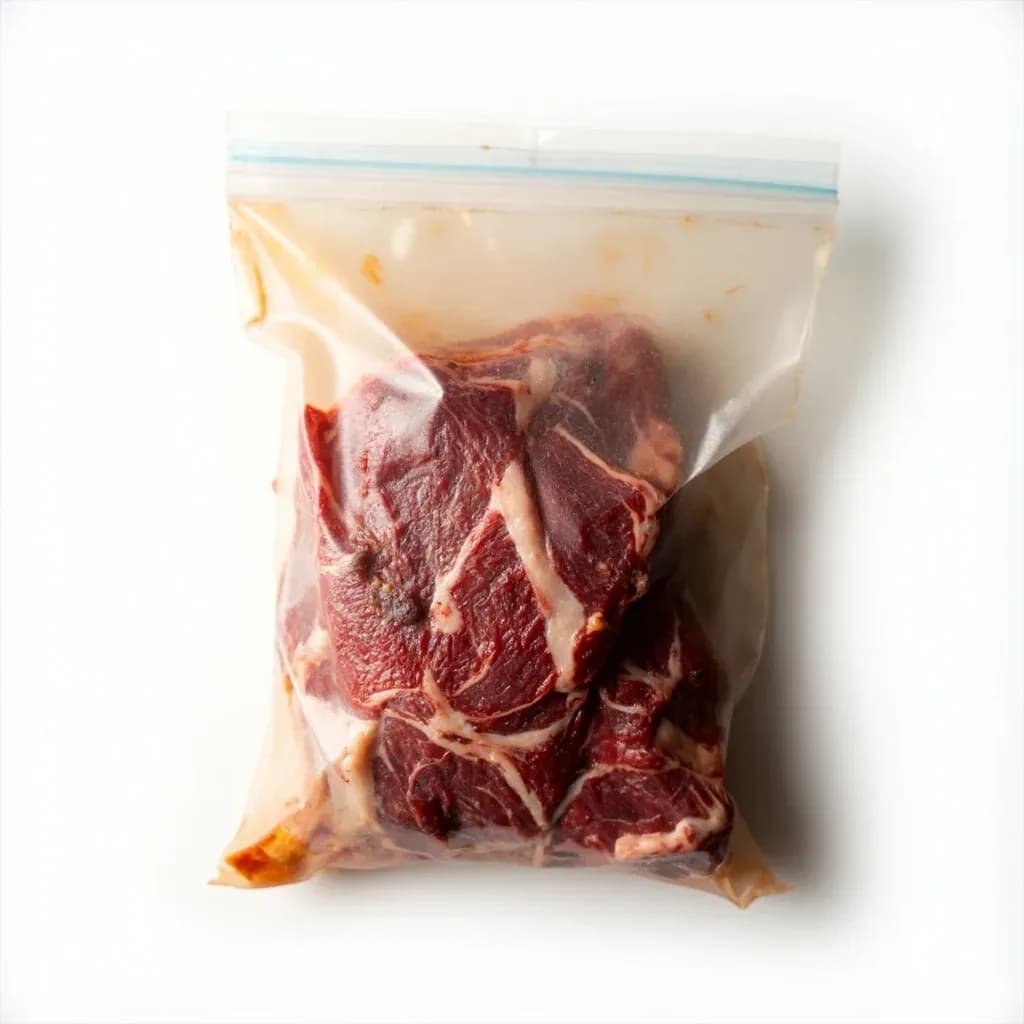
A moisture-permeable vacuum bag that lets meat dry-age safely in a normal refrigerator.
A dry-aging bag is a special vacuum bag with a moisture-permeable membrane that lets meat lose water while blocking outside bacteria. Sealed around a beef subprimal and held in a standard fridge, it mimics a dedicated dry-aging cabinet over several weeks. The membrane bonds to the meat, concentrating flavor and tenderizing it before it is trimmed and cooked.
A dry-aging bag is a multi-layer polymer pouch engineered to mimic the controlled environment of a professional dry-aging chamber while living happily in an ordinary home refrigerator. The film is selectively permeable: it transmits water vapor outward at a calibrated rate but blocks oxygen and spoilage bacteria from moving inward. Meat sealed inside loses moisture slowly through the bag wall, concentrating flavor and allowing the muscle's own enzymes to break down connective tissue — the same tenderizing chemistry that drives traditional dry aging, compressed into a single-use sleeve.
The practical appeal is enormous. Open-rack dry aging demands a dedicated space with tight control over temperature (around 34–38°F), relative humidity (75–85%), and airflow, plus UV sterilization to keep surface molds in check. A bag collapses that infrastructure into a pouch. Trim loss drops from 15–30% on a rack to roughly 5–10% in a bag, because no hardened bark forms, and there is nothing to saw off before portioning.
The trade-off is flavor complexity. Bag-aged beef delivers the enzymatic concentration, nutty sweetness, and tender bite of dry-aged meat, but the funkier, cheese-forward notes that develop over 60+ days in a real aging room are muted. For home cooks, small restaurants, and anyone who wants predictable results without committing to a chamber, that is a feature rather than a compromise.
Alternatives
Types & varieties
Small pouches sized for individual steaks or burger patties, the most common entry point for home cooks.
Larger pouches sized for full subprimals like bone-in ribeye or strip loin sections.
Larger-format bags sold for full primals or oversized cuts; oversized bags may need to be trimmed to fit a standard sealer bar.
Other manufacturers make similar moisture-permeable vacuum pouches; performance varies and UMAi is the benchmark most chefs evaluate against.
How the Membrane Works
The bag is built from a proprietary multi-layer polymer, not the poly-nylon of a standard vacuum pouch. The key layer is a hydrophilic membrane that acts as a one-way valve for water. Surface moisture on the meat evaporates into the bag's headspace, and water molecules migrate through the membrane and escape into the refrigerator. Oxygen, bacteria, and mold spores cannot pass the other direction. That selective permeability is the whole trick: an impermeable bag (like a sous-vide pouch) would let anaerobic spoilage organisms take over, while a fully open bag would behave like traditional rack aging, with all the trim loss that implies.
The tenderization inside is identical to traditional dry aging. Calpains and cathepsins — naturally occurring muscle enzymes — break down myofibrillar proteins and connective tissue over weeks. The concentration effect comes from moisture loss: as water leaves through the membrane, the remaining meat becomes denser in flavor, with the savory, slightly nutty, almost cheese-like character dry aging is prized for. The bag itself is flavor-neutral; everything you taste is the meat concentrating around its own chemistry.
Bag Aging vs. Open-Rack Aging
The two methods share the same underlying chemistry but differ sharply in environment and outcome. Open-rack aging exposes meat directly to refrigerated air, forming a dry, leathery bark that protects the interior. Microbial communities — mostly harmless molds like Thamnidium and Penicillium — colonize that surface and contribute funky, complex flavors over 40+ days. Bag aging prevents that surface colonization entirely. The result is a cleaner, more predictable profile: nutty and concentrated, but without the earthy, almost bleu-cheese intensity a long open-rack age develops.
Bag aging wins decisively on yield. The hardened bark of an open-rack primal must be trimmed off before cooking, sometimes costing a quarter of the original weight. A bag-aged cut is usually ready to portion and cook with only a quick pat-dry of the surface. For restaurants that yield difference directly affects menu price; for home cooks it means a 2 lb strip loin yields close to 2 lb of cookable steak.
Use bag aging when you want the tenderizing, flavor concentration, and 28–45 day clock of dry aging without dedicated equipment. Reach for open-rack aging only when you have a controlled environment and you specifically want the full microbial complexity of a long age — the funky, aged-butter notes that show up after 60+ days.
After You Open the Bag
Meat coming out of a dry-aging bag looks and feels different from what most cooks expect, and a little prep goes a long way. Plan for these finishing steps before the steak ever hits the pan:
- Pat the surface dry thoroughly with paper towels; it will feel slightly tacky and look darker than fresh beef, which is normal, not spoilage.
- If the cut is large, portion into steaks now. Bag-aged meat slices cleanly because the surface has not crusted over.
- Season aggressively just before cooking; the surface dryness means salt adheres well and the Maillard reaction kicks in fast in a hot pan.
- Expect fast surface browning: the dry exterior sears aggressively, so have your vent on and pull the steaks a few degrees shy of your target internal temperature to account for carryover cooking. A short rest after cooking is still worthwhile.
Common uses
Tips & pitfalls
- Pre-chill the meat to about 38°F before bagging; warm meat releases moisture that can fog the seal and compromise adhesion.
- Use a chamber-style or external vacuum sealer with real vacuum draw — handheld or seal-only machines typically fail to form the tight skin contact these bags need.
- Drape the bag around the meat before sealing so the film contacts every surface; air pockets mean spots that will not age properly and can spoil.
- Lay the bag on a wire rack over a sheet pan in the coldest part of the fridge (back, low shelf) to keep airflow underneath.
- Do not peek. Opening the bag mid-age resets the environment; trust the process and unseal only when you are ready to cook.
- After unsealing, the surface will look slightly tacky and darkened — that is normal, not spoilage. Pat dry, then sear; the concentrated flavor is in the meat, not the surface.
- Common mistake: using a standard food-storage or sous-vide bag. Those are moisture-impermeable and will cause anaerobic spoilage, not dry aging.
- Common mistake: aging above 40°F. Anything warmer risks off-flavors; the bag still relies on refrigerator temperature for safety.
- If the bag balloons during aging, the seal has failed — re-bag immediately or use the meat quickly; do not continue aging.
Good to know
- Material
- Multi-layer polymer film that is moisture-vapor permeable but oxygen- and bacteria-impermeable; not the same as a standard vacuum or sous-vide bag.
- Best-known brand
- UMAi Dry, the consumer product that defined the category and is often used generically for it.
- Storage temperature
- Standard refrigerator range, roughly 34–38°F (1–3°C). No dedicated chamber required.
- Typical aging time
- 28–45 days for beef primals and steaks; 14–21 days for milder concentration; longer windows offer diminishing returns in a bag.
- Trim and yield loss
- About 5–10%, vs. 15–30% or more for open-rack traditional dry aging, because no hardened outer crust forms.
- Equipment needed
- A chamber-style or external vacuum sealer with a real vacuum draw (handheld or seal-only machines are usually inadequate), a fridge with stable temps, and a small rack or sheet pan to elevate the bag.
- Compatible cuts and proteins
- Beef primals and subprimals (rib, loin, sirloin, chuck); also used on venison, duck breast (magret), pork, and other game.
- Shelf life of bag itself
- Sealed unused bags store for years when kept dry and out of direct sunlight; sold as flat pouches or rolls.
- Cost reference
- Generally a few dollars per bag for a steak-sized pouch; larger primal bags cost more.
- Common pitfall
- Substituting a standard food-storage or sous-vide bag — those are moisture-impermeable and will cause anaerobic spoilage, not dry aging.
Also called
Dry-Aging Bag · Meat Aging Bag · UMAi Bag
Related

Freezer Bags
Thick, sealable bags built to fight freezer burn

Storage Bags
Resealable bags for fridge storage and marinating

Storage Container
Lidded container for leftovers, prep, and meal kits

Glass Container
Oven-to-fridge glass that won't stain or hold odors

Plastic Container
Lightweight, stackable storage for everyday leftovers

Vacuum Sealer Bags
Airtight bags for long freezing and sous-vide

Reusable Bags
Washable silicone bags that replace single-use plastic

Mason Jar
Sealed glass jar for preserves, pickles, and storage