Wraps & Liners
Dutch Oven Liner
Disposable parchment or foil liner that keeps a Dutch oven clean during cooking.
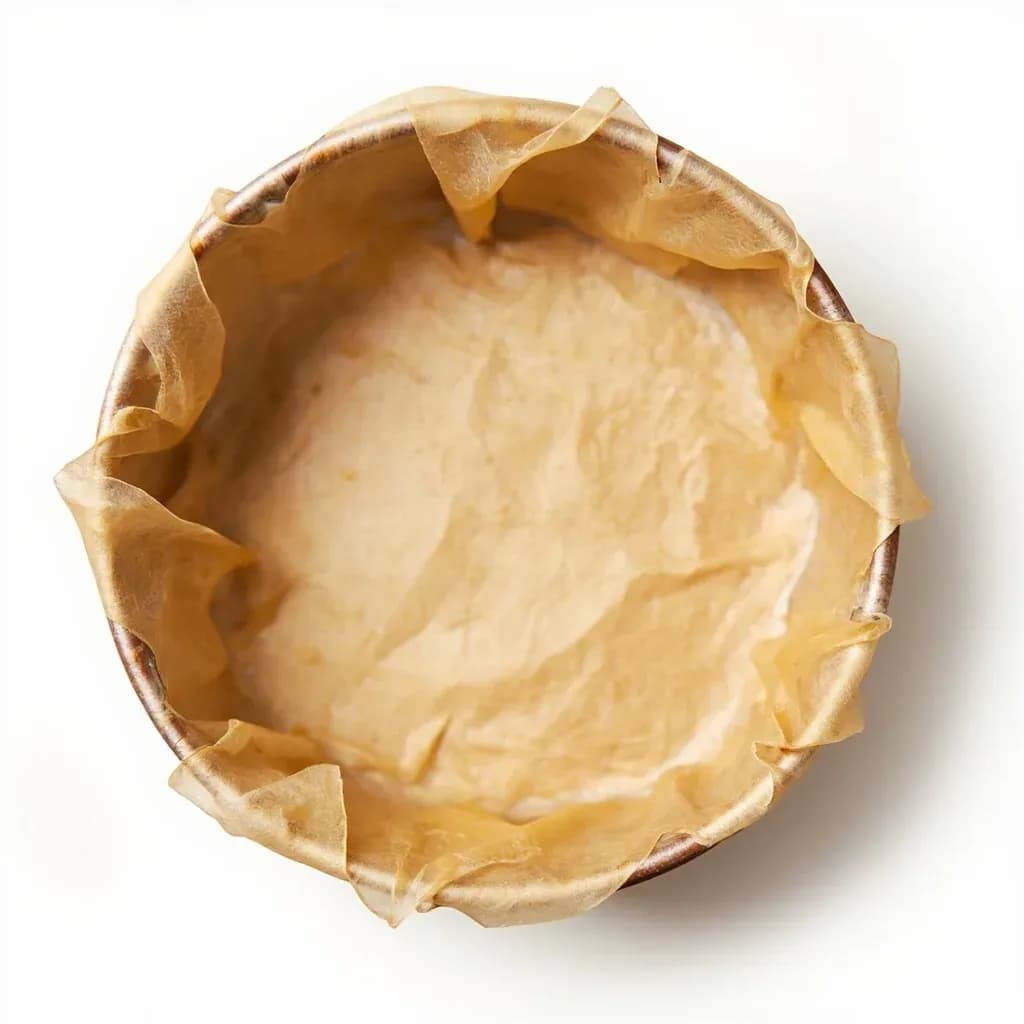
A pre-shaped parchment or foil liner dropped into a Dutch oven so food cooks without sticking to or staining the pot. It is especially valued in campfire and cast-iron cooking, where scrubbing seasoned iron is undesirable. After cooking, the liner lifts out with the mess, leaving the pot nearly clean.
A Dutch oven liner is a pre-cut or shaped sheet — almost always food-grade parchment — sized to drop into the floor of a Dutch oven and ride up the sides, creating a nonstick barrier between the food and the pot. They exist because the two tasks Dutch ovens do best, artisan bread baking and long braises, are also the two that punish the cook with the worst cleanup. A high-hydration sourdough can weld itself into the seasoning of bare cast iron; a chicken roasted at 450°F leaves a lake of fat and fond. The liner shoulders that work.
The trade-off is real and worth understanding before you reach for one. In bread baking especially, the crust that bakers prize — crackly, deeply browned, blistered — develops where dough meets the searing-hot walls and floor of the pot. A liner insulates the dough slightly, muting oven spring and bottom browning. Experienced bakers either accept the small loss in exchange for not chiseling bread out of a well-seasoned pot, or use the liner only as a sling to lift the loaf out rather than fully lining the walls. For roasts, braises, and sticky stews, the math is almost entirely in your favor: the seasoning survives, cleanup takes seconds, and the liner costs a fraction of a dollar.
Disposable parchment rounds dominate the market because they are inexpensive, fit any pot with a quick snip of scissors, and bake without fuss. Reusable silicone lids occupy a smaller niche for bakers who want one product that doubles as lid and liner. Aluminum foil works in a pinch but offers less grip and no nonstick surface.
Alternatives
Types & varieties
Disposable; sized to common Dutch ovens; many include raised tabs or overhanging edges for lifting bread out
Reusable; collapses to nest inside the pot, doubles as a lid during the bake; long-lasting but more expensive
Folded or pressed to fit; cheap and tolerant of very high heat, but offers less nonstick performance than parchment
Brown, minimally processed; behaves identically to bleached at baking temperatures
Pre-cut with holes or slits to improve airflow and bottom browning; a compromise for crust-conscious bakers
Often confused with parchment; the wax melts and smokes at oven temperatures and is unsafe for Dutch oven use
The Bread Crust Question
A liner sits between dough and cast iron, and cast iron at 500°F is exactly what gives artisan bread its signature crust. The parchment insulates the dough by a small but real margin, which translates to slightly less oven spring, a paler bottom, and a marginally less crackly crust. Most home bakers consider this an acceptable price for never having to soak a scorched loaf out of the pot. To get the best of both worlds, use the liner as a sling rather than a full liner: lay the shaped dough on the parchment, lift the whole thing into the preheated pot, and let the dough contact the bare metal on the bottom while the parchment sticks out the top for easy unmolding. A light dusting of flour or rice flour on the parchment helps the dough grip during transfer without sliding off the sling.
Sizing and Fit
A liner should sit flat on the floor of the pot with enough overhang to grip when you lift. Too small and the dough spills onto the metal; too large and the parchment crumples against the wall, and those wrinkles telegraph into the crust as ridges. Measure the inside diameter of your pot at its widest point just below the rim, and choose a liner within about 1/2 inch of that measurement. For most 5–7 quart Dutch ovens (Le Creuset, Staub, Lodge) a 9–10 inch round fits well; for an 8 quart or larger, move up to 11–12 inches. When in doubt, buy a pack of the smaller size and trim to fit — you can always cut away excess, never add it back.
Common uses
Tips & pitfalls
- Trim a slightly oversized liner with scissors rather than letting it crumple against the wall — wrinkles imprint into the crust as ridges
- For bread, make a parchment sling with overhanging edges so you can lift the loaf out without burning yourself on the pot rim
- Don't fully line the walls; the dough needs direct contact with hot cast iron on the bottom for proper oven spring and a crackly crust
- Check the temperature rating before buying — a liner rated only to 425°F is useless for a 500°F lid-on bake
- Replace silicone liners that have become cloudy, warped, or cut; degraded silicone won't release food cleanly and may shed
- Grease the parchment (not the dough) when baking sticky enriched breads like brioche to prevent tearing on unmold
- Stash a couple of pre-cut liners inside the empty Dutch oven during storage so they are always on hand when you start a bake
- Don't assume the liner eliminates cleanup — condensation pools underneath the parchment and the lid still needs washing
Good to know
- Type
- Disposable or reusable cooking liner, most commonly parchment paper
- Typical material
- Food-grade silicone-coated parchment for disposable; food-grade silicone for reusable
- Common shapes
- Pre-cut rounds sized to Dutch oven interior
- Standard diameters
- 9 in (≈23 cm) and 10 in (≈25 cm) for 5 qt ovens; 11 in (≈28 cm) for 6–7 qt ovens; 12 in (≈30 cm) for 8 qt+ ovens
- Heat tolerance
- Most parchment liners rated to 420–450 °F / 215–230 °C; high-heat versions to ~500 °F / 260 °C
- Reusable alternative
- Silicone baking mats and lids rated to ~480 °F / 250 °C
- Reusability
- Disposable parchment is single-use; silicone versions wash and reuse indefinitely
- Cost
- $0.50–$1.50 per parchment liner in packs of 50–100; silicone lids $15–$30
- Origin
- Became mainstream in home kitchens in the late 2000s alongside the no-knead and artisan bread baking movement
- Storage
- Store flat in original packaging, dry and away from heat sources
Also called
Dutch Oven Parchment Liner · Disposable Foil Dutch-Oven Liner · Camp Oven Liner
Related

Aluminum Foil
Wraps, covers, and tents food for the oven and grill

Parchment Paper
Nonstick liner for clean, even baking and easy release

Wax Paper
Moisture-resistant sheet for wrapping and counter prep

Plastic Wrap
Clings tight to cover bowls and wrap leftovers

Silicone Baking Mat
Reusable nonstick liner that replaces parchment

Cheesecloth
Loose-woven cloth for straining stock and bundling herbs

Beeswax Food Wrap
Reusable wax wrap that molds around bowls and produce

Piping Tips
Shaped nozzles that turn frosting into stars and rosettes