Storage & Containers
Disposable Clay Cup (Bhar)
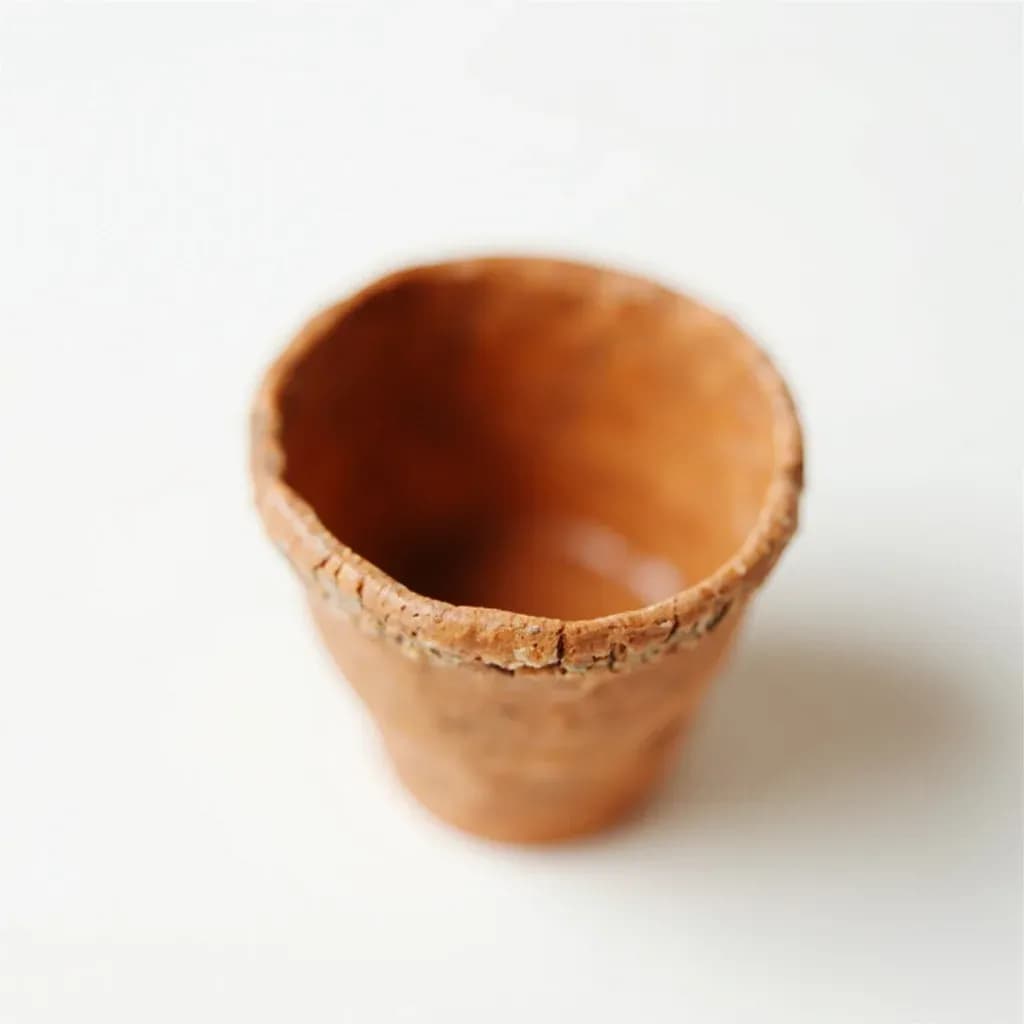
An unglazed terracotta cup, used once for chai and lassi across the Indian subcontinent.
An earthen cup, known as a bhar or kulhad, is a small unglazed terracotta vessel fired from raw clay. It is the traditional single-use cup for street chai and lassi, lending a distinctive earthy aroma to the drink. After use it is smashed and returns to the soil, making it a fully biodegradable serving vessel.
The disposable clay cup — known as bhar across much of Kerala and Tamil Nadu, kulhad in the North, and shikora in Bengal and Bangladesh — is an unglazed, low-fired terracotta vessel designed to be filled once, drunk from, and then smashed or composted. Most are slip-molded or wheel-thrown by village potters from local alluvial clay, then fired in simple clamp or scove kilns at relatively low temperatures. That porous, unglazed surface is the whole point: the cup is meant to be cheap, hygienic through single-use, and to impart a brief mineral note to whatever it is filled with.
What the bhar does for the drink is subtle but real. The thin walls breathe, so a hot chai cools slightly faster in clay than in ceramic, and a small amount of mineral character transfers from the cup into the liquid. With lassi and chaas, the same porosity works the other way: pre-chilled clay keeps a yogurt drink noticeably colder, longer, than glass or steel. The walls are deliberately thin and brittle so that the cup cannot be meaningfully washed and reused — which is also why a potter can sell a stack of them for very little, and why a street stall never runs out of clean ones.
The disposable bhar sits inside a wider South Asian tradition of single-use earthenware drinkware, and it is not the same thing as the thicker, sometimes smoked reusable mitti kulhad. Where a seasoned clay cup imparts a pronounced earthy depth over many uses, a fresh bhar adds only a whisper of mineral sweetness on first contact. Used well, it is one of the most direct and unmediated ways to drink chai or lassi as it is drunk across the subcontinent.
Alternatives
Types & varieties
Small, thin-walled single-use cup, 80–120 ml; the everyday chai and sulaimani vessel of street stalls and teashops across the south
Larger, slightly thicker-walled North Indian cousin with a wider flared rim; same single-use terracotta logic, often bigger servings
Clay tea cup sometimes lined inside with a slip or lacquer so it can hold liquid longer without soaking through
Pressed from the same clay as traditional matka water pots; thicker walls, sometimes sold as a reusable smoked mitti kulhad — a different product, not a true disposable bhar
How the cup changes the drink
Two physical effects are worth understanding before you pour. First, the unglazed walls are slightly permeable: liquid from the drink seeps into the clay, and as that moisture evaporates from the outer surface, a hot drink sheds a few degrees of temperature that simply does not happen in a glazed ceramic. Second, because the clay is fired but not vitrified, a trace of mineral character leaches into the liquid on first contact — most easily tasted in a plain chai or in warm water sipped from a fresh bhar. The effect is small and short-lived; a reused, washed, or lacquered cup gives almost none of it.
- For chai: expect a rounder, slightly softer finish and a few degrees of cooling compared with the same tea served in ceramic.
- For lassi and chaas: pre-chill the bhar so the cold clay draws heat out of the drink and holds it longer than glass.
- The clay note is strongest in the first minute of contact and fades as the cup soaks through.
The disposable logic
The bhar is not a cheaper version of a cup. It is a different object, designed around the economics of a roadside stall where washing crockery costs more labor than firing fresh clay. A potter throws cups in stacks, fires them in a single clamp kiln, and sells them nested; the cup costs the customer a fraction of what tea costs, so there is no incentive to reuse it. This is also why the walls are deliberately thin — a cup thick enough to survive washing would cost more to make than the saving is worth.
- Thin walls = low price; thick walls = reusable product (the mitti kulhad), a separate category.
- The cup is hygienic by turnover, not by cleaning — every customer gets a clean, unused cup.
- Spent bhars compost readily; broken shards break down faster than glazed ceramic in soil.
Choosing, storing, and handling
A good stack of bhars rings faintly when tapped together and feels bone-dry and light; a damp stack feels heavier, and individual cups will split along the rim the moment hot liquid hits them. Buy from vendors with high turnover if you can — fresh stock out of the kiln is drier and less prone to cracking. Always hold a filled bhar from the base or with a napkin, and never fill past three-quarters: the unglazed rim softens with heat and a brim-full cup is genuinely unstable in the hand.
- Tap the stack — dry cups ring, damp cups thud.
- Store unused cups in a sealed container with silica if you live somewhere humid.
- For chai, swirl a small splash first and discard to settle the cup and rinse loose clay dust.
- Break spent cups into compost; the fired shards are a useful soil amendment in clay-poor beds.
Common uses
Tips & pitfalls
- Buy from busy stalls with high turnover — freshly fired stock is drier and less likely to crack in the stack.
- Store unused bhars bone-dry; any humidity absorbed in storage weakens the walls and they will split on the first pour.
- Pour a small splash of hot chai first, swirl, and discard to settle the cup and rinse off loose clay dust before filling.
- Do not fill above three-quarters — the unglazed rim softens with heat and a full cup is unstable in the hand.
- Hold from the base or with a napkin; the walls conduct heat and a freshly filled bhar will burn fingers.
- Do not leave a filled bhar standing more than 10–15 minutes — the clay absorbs the drink and the flavor turns muddy.
- For lassi or chaas, chill the bhar in the freezer for 10 minutes first; cold clay keeps yogurt drinks cool far longer than glass.
- Break spent cups into the compost or garden bed; the fired shards break down faster than glazed ceramics.
Good to know
- Material
- Unglazed, low-fired terracotta (earthenware clay), usually from local riverbed or alluvial sources
- Capacity
- Roughly 80–120 ml for a small bhar; larger kulhad-style cups run to 150–200 ml
- Form
- Hand-thrown or slip-molded, roughly cylindrical and slightly tapered, with no handle and a thick rounded rim
- Firing
- Low-temperature clamp or scove kiln firing, leaving the walls porous and the color brick-red to buff
- Beverages served
- Masala chai, sulaimani (Keralan black tea), sweet or salted lassi, chaas, and small filter coffee
- Flavor effect
- Faint earthy, mineral note from the clay; slow evaporation through porous walls cools hot drinks slightly
- Shelf life (unused)
- Indefinite if kept bone-dry; damp storage weakens the walls and cups split on first pour
- Eco-profile
- Biodegradable and compostable, but production consumes kiln fuel — not a zero-impact swap for paper or reusables
Also called
Bhar · Kulhad · Clay Cup · Earthen Cup
Related

Freezer Bags
Thick, sealable bags built to fight freezer burn

Storage Bags
Resealable bags for fridge storage and marinating

Storage Container
Lidded container for leftovers, prep, and meal kits

Glass Container
Oven-to-fridge glass that won't stain or hold odors

Plastic Container
Lightweight, stackable storage for everyday leftovers

Vacuum Sealer Bags
Airtight bags for long freezing and sous-vide

Reusable Bags
Washable silicone bags that replace single-use plastic

Mason Jar
Sealed glass jar for preserves, pickles, and storage