Wraps & Liners
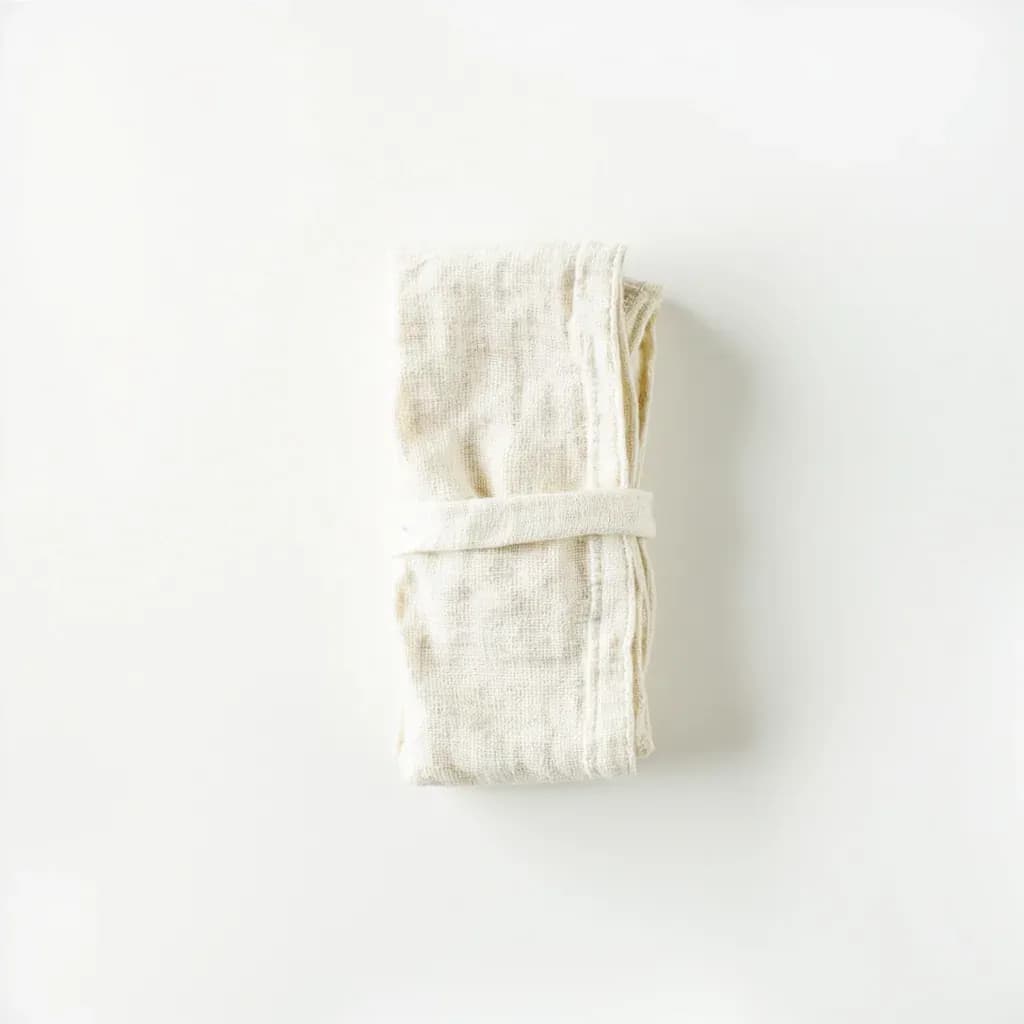
Cloth Flour Sack
Lint-free cotton cloth used as a straining, drying, and wrapping all-rounder.
A plain woven cotton cloth, originally the bag flour was sold in, prized in kitchens for being lint-free and highly absorbent. Cooks use it to strain stocks and cheese curds, dry herbs and greens, wrap proofing dough, and line bowls or steamers. Because it launders well and leaves no fuzz on food, it doubles as a drying towel and a makeshift cheesecloth.
A flour sack is a tightly woven, plain-weave cotton cloth, usually sold in a generous towel size around 27–28 inches square, that originated as the woven bag American flour mills shipped their product in from the late 19th century through the mid-20th century. Once mills switched to paper and plastic packaging, the cloth survived as a purpose-made kitchen towel, valued for a single defining trait: a tight weave that releases almost no lint into food. That property is what separates it from cheesecloth, which is gauzier and sheds fibers, and from standard kitchen terry, which is bulky and slow to strain through. The fabric is light to medium weight (roughly 4–6 oz/yd²), absorbent without being thirsty, and breathable enough to wrap rising dough without trapping condensation the way plastic would.
In practice, cooks reach for a flour sack in two distinct roles. As a straining medium, it is folded to multiple plies and used like a reusable cheesecloth to clarify stocks, strain nut milks, or line a chinois — slower than a metal sieve but producing noticeably cleaner results. As a wrap and cover, it proofs bread, lines bannetons, wraps cheese, dries salad greens, and polishes glassware streak-free. The same cloth does both jobs; the difference is ply and intent. Treated well, a flour sack will survive hundreds of wash cycles, and a worn one can be cut down and used until it finally thins to nothing.
Alternatives
Types & varieties
Ecru/tan color; the classic, most food-neutral option; softens noticeably with washing
Bright white, preferred when color transfer matters (clarifying consommé, polishing glass); can be chlorine-bleached
Historic feedsack prints, gingham stripes, or branded motifs; decorative but fully functional
Denser weave with more strength for demanding straining jobs; slightly slower liquid flow
Looser weave that dries fast; better suited to general kitchen-towel duty than to fine straining
Straining with a flour sack
Used as a reusable cheesecloth, a flour sack produces clearer results than single-ply cheesecloth at the cost of slower flow. The mechanics are simple, but a few habits make the difference between a clean strain and a cloudy one.
- Fold the cloth to at least four layers for general straining; eight layers for very fine work like consommé or fruit syrup clarification.
- Wet the cloth first and wring it out — damp fibers swell slightly and slow the first rush of liquid that would otherwise push solids through.
- Set over a fine-mesh sieve set in a bowl for support, or drape directly over a stockpot rim and weight the edges with a clean ring or bag clips.
- Never squeeze the loaded cloth to force liquid out; let gravity do the work, or gather the corners and press gently with the back of a ladle.
- Rinse immediately after use and launder separately from kitchen towels to avoid lint transfer.
Caring for the cloth
Flour sacks outlast most kitchen linens when treated with a little discipline. The two enemies are silicone softener residue and bleach-induced fiber breakdown on colored versions.
- Wash new cloths at least once before food contact to strip factory starch and sizing that would otherwise cloud strained liquids.
- Skip fabric softener and dryer sheets entirely; the silicone coating kills absorbency and can leave a faint film in stocks and sauces.
- Bleach unbleached cloths occasionally if they gray; oxygen bleach is gentler on fibers than chlorine.
- Boil cloths between uses when working with allergens, strong-flavored spices, or any job where clarity matters.
- Mark straining cloths with a permanent marker or assign a dedicated color so they never end up in the general-towel laundry.
Common uses
Tips & pitfalls
- Wash new cloths before food contact to remove factory starch that would otherwise cloud strained liquids.
- Fold to at least four layers — eight for very fine straining — because a single layer lets fine particles through.
- Never use fabric softener or dryer sheets; the silicone residue kills absorbency and can leave film in stocks.
- Reserve a dedicated set for raw meat and poultry and a separate set for straining and produce to prevent cross-contamination.
- To strain without a frame, drape the cloth over a bowl and weight the edges, or clip it to a colander with bag clips.
- Iron while slightly damp for a crisp, professional presentation if using as a bread cover or cheese wrap.
- Cut a worn-out sack into quarters and reuse the pieces as a reusable cheesecloth replacement.
- Boil cloths between uses when working with allergens, strong spices, or any job where liquid clarity matters.
Good to know
- Material
- 100% cotton (occasionally a cotton-linen blend); tightly woven plain weave
- Typical size
- 27" x 27" or 28" x 28"; bolt width usually 36" when sold by the yard
- Fabric weight
- Roughly 4–6 oz/yd² — light to medium, lint-free but absorbent
- Origin
- Repurposed cotton flour sacks in American kitchens from the 1880s through the 1950s, when mills shipped flour in woven bags
- Care
- Machine washable in hot water; skip fabric softener and dryer sheets; bleach-safe for white versions
- Reusability
- Hundreds of wash cycles; retire when visibly thin or holed
- Sanitizing
- Boil 5–10 minutes or run through a dishwasher cycle before straining clear liquids
- Storage
- Fold flat or roll; keep dry to prevent mildew; store away from strong odors, which cotton readily absorbs
Also called
Flour Sack Towel · Flour Sack Cloth · Cotton Sack
Related

Aluminum Foil
Wraps, covers, and tents food for the oven and grill

Parchment Paper
Nonstick liner for clean, even baking and easy release

Wax Paper
Moisture-resistant sheet for wrapping and counter prep

Plastic Wrap
Clings tight to cover bowls and wrap leftovers

Silicone Baking Mat
Reusable nonstick liner that replaces parchment

Cheesecloth
Loose-woven cloth for straining stock and bundling herbs

Beeswax Food Wrap
Reusable wax wrap that molds around bowls and produce

Piping Tips
Shaped nozzles that turn frosting into stars and rosettes