Wraps & Liners
Foil Bar Wrapper
Pre-cut foil-and-paper laminate sheets for individually wrapping chocolate bars, butter, or confections.
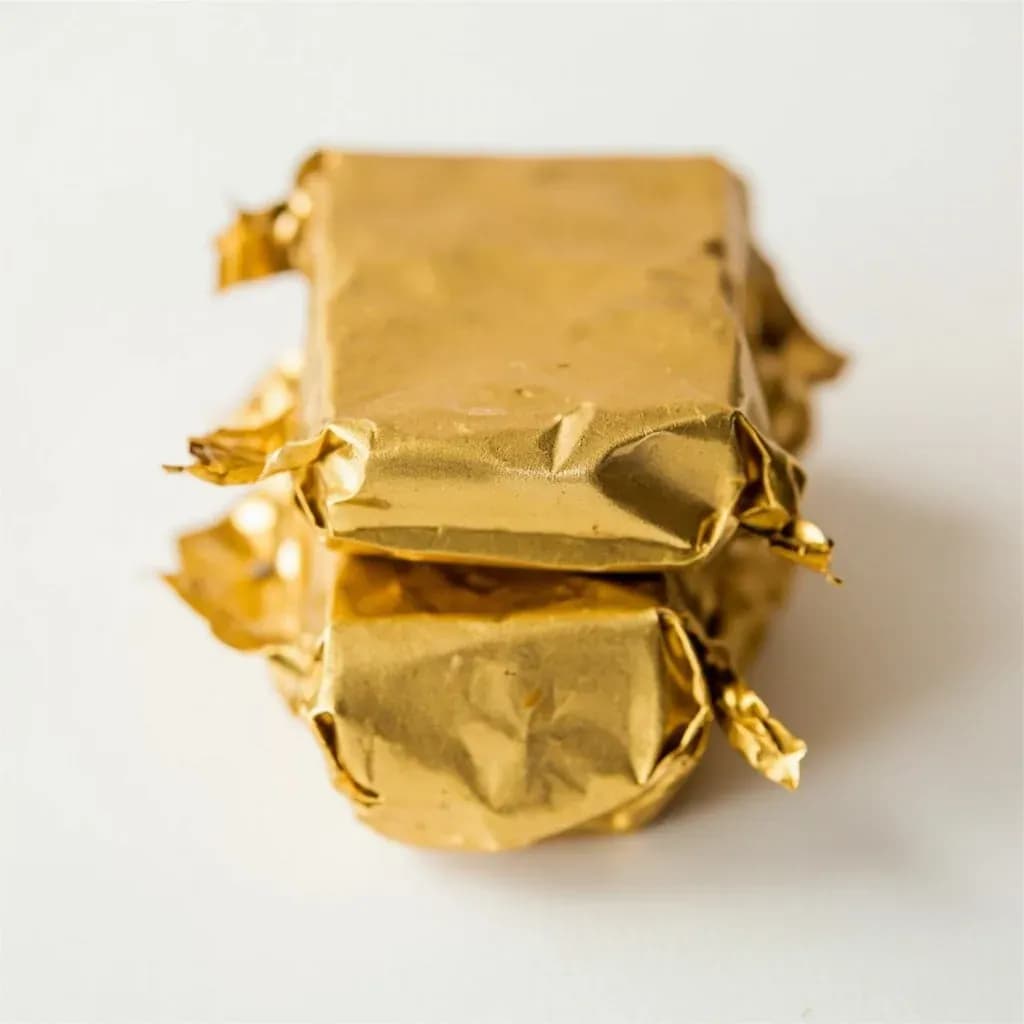
A foil bar wrapper is a pre-sized sheet of aluminum foil, often laminated to paper, used to enclose chocolate bars, butter blocks, caramels, and other confections. Chocolatiers and small producers fold it around the product to block light, moisture, and odors while giving a finished, retail-ready look. The foil layer is the key barrier, while the paper backing adds stiffness and a printable surface.
A foil bar wrapper is a pre-cut sheet of aluminum foil bonded to a paper or film layer, designed for wrapping individual portions of chocolate, butter, or other confections. The laminate combines the moisture- and light-blocking properties of metal foil with the printable, foldable surface of paper in a single piece that handles cleanly on a bench and presents well on a tray. Unlike loose kitchen foil, the bonded paper keeps the metal from springing back, so creases hold sharply and the product underneath stays covered.
The paper side almost always faces outward, where it accepts ink, color, and brand artwork, and where it provides a grippy, slightly tacky surface for tight folds. The foil side faces inward, acting as the barrier against humidity, oxygen, and light that would otherwise dull chocolate, dry out butter, or bloom decorated sugar. Most sheets are sized for hand folding in an envelope or twist finish; heavier-duty laminates add a polymer layer that heat-seals under the bar-wrapping machines used by larger confectioners.
Foil bar wrappers are a small but specialized supply purchased primarily by chocolatiers, confectioners, bakeries, hotels, and serious home candy makers. Their value lies as much in the tidy, retail-ready presentation as in the protection they offer, and a well-wrapped bar signals care in a way that loose foil or plastic film rarely matches.
Alternatives
Types & varieties
The classic chocolate-bar wrapper; crisp, translucent paper exterior that accepts ink cleanly for branding
Brown paper side for an artisanal, rustic look; popular with craft chocolatiers and small-batch confectioners
Polymer layer allows machine heat-sealing; the workhorse of larger confectionery lines
Same construction as standard silver but with a gold aluminum finish for premium or seasonal bars
Paper side printed with brand artwork; minimum runs typically begin around 5,000–10,000 sheets
Smaller, often square or rectangular sheets sized to 1/2 oz or 1 oz hotel butter portions
Cut for cylindrical pieces like salt-water taffy, where the ends are twisted rather than folded
Pre-printed with neutral motifs such as holly, snowflakes, or scrolls for seasonal gifting
Sizing a Sheet to the Bar
The most common mistake with foil bar wrappers is choosing a sheet that is too small. Measure the finished bar in both directions and add at least 1" of overlap on every side, or up to 1.5" for a looser envelope; that margin is what gets folded and tucked, and it is the difference between a sealed bar and one that exposes a corner. For a typical 2"x5" retail bar, a 3.5"x6.5" or 4"x7" sheet is a reliable starting point. For longer 3"x8" bars, plan on a 5"x10" or 5"x11" sheet so the folds have room to seat cleanly. For square or near-square pieces, allow slightly more on all sides to keep the envelope folds symmetrical. Test one wrapper on a representative bar before committing to a production run, and remember that the paper side will compress very slightly under a tight fold while the foil side wants to spring back.
Fold-Wrap vs. Twist-Wrap vs. Heat-Seal
Hand work calls for fold-wrap or twist-wrap grades; machine lines use heat-seal laminates. The three are not interchangeable in practice, and choosing the wrong one leads to wasted material and untidy seams.
- Fold-wrap sheets are cut as rectangles sized to a bar; the two short ends fold in first, the two long sides fold over, and the seam is burnished flat.
- Twist-wrap sheets are cut wider and longer relative to the piece so the ends have enough material to roll and twist cleanly; they only suit round or cylindrical candies.
- Heat-seal laminates require a heat-seal bar wrapper and a polymer-coated paper or film layer; they produce a uniform, tamper-evident seam but are impractical for small hand batches.
Common uses
Tips & pitfalls
- Let chocolate cool fully to room temperature before wrapping, or condensation will cause sugar bloom and the foil will stick to the surface of the bar.
- Keep hands clean and dry; fingerprints and skin oils show permanently on bright foil and are difficult to buff out.
- Burnish folds with a bone folder, the back of a chef's knife, or a bench scraper to set crisp seams that don't relax on the tray.
- Store sheets flat in their original ream or box so they don't curl, dent, or pick up humidity from the bench.
- For consistent results on a production run, build a simple cardboard jig the size of the finished wrapped bar to check fold placement and seam tension.
- Orient printed designs so the artwork reads correctly when the bar sits label-up on a tray or shelf.
- Never substitute twist-wrap sheets for square bars; the geometry wastes material and produces a lumpy, untidy package.
Good to know
- Material
- Aluminum foil laminated to glassine, kraft, or parchment paper; heat-seal grades add a PE or EVA polymer layer
- Foil thickness
- Typically 0.0005"–0.001" (0.5–1 mil) aluminum
- Paper weight
- Usually 25–35 lb glassine or kraft, food-grade
- Standard sizes
- Common cut sizes run roughly 3"x4" up to 6"x9"; dimensions follow the bar or butter portion being wrapped
- Closure style
- Fold-wrap (envelope or tuck) for bars and pats; twist-wrap for cylindrical pieces such as salt-water taffy
- Heat-seal versions
- Some laminates use a heat-sealable polymer film for machine wrapping at production speeds
- Food contact
- Manufactured to FDA/EU food-contact standards for direct contact with chocolate, butter, and confections
- Storage
- Store flat in original packaging away from moisture and strong odors; shelf life is essentially indefinite if kept dry
Also called
Foil Wrapper · Confectionery Foil · Chocolate Bar Foil
Related

Aluminum Foil
Wraps, covers, and tents food for the oven and grill

Parchment Paper
Nonstick liner for clean, even baking and easy release

Wax Paper
Moisture-resistant sheet for wrapping and counter prep

Plastic Wrap
Clings tight to cover bowls and wrap leftovers

Silicone Baking Mat
Reusable nonstick liner that replaces parchment

Cheesecloth
Loose-woven cloth for straining stock and bundling herbs

Beeswax Food Wrap
Reusable wax wrap that molds around bowls and produce

Piping Tips
Shaped nozzles that turn frosting into stars and rosettes