Heat & Safety
Food-Grade Sanitizer
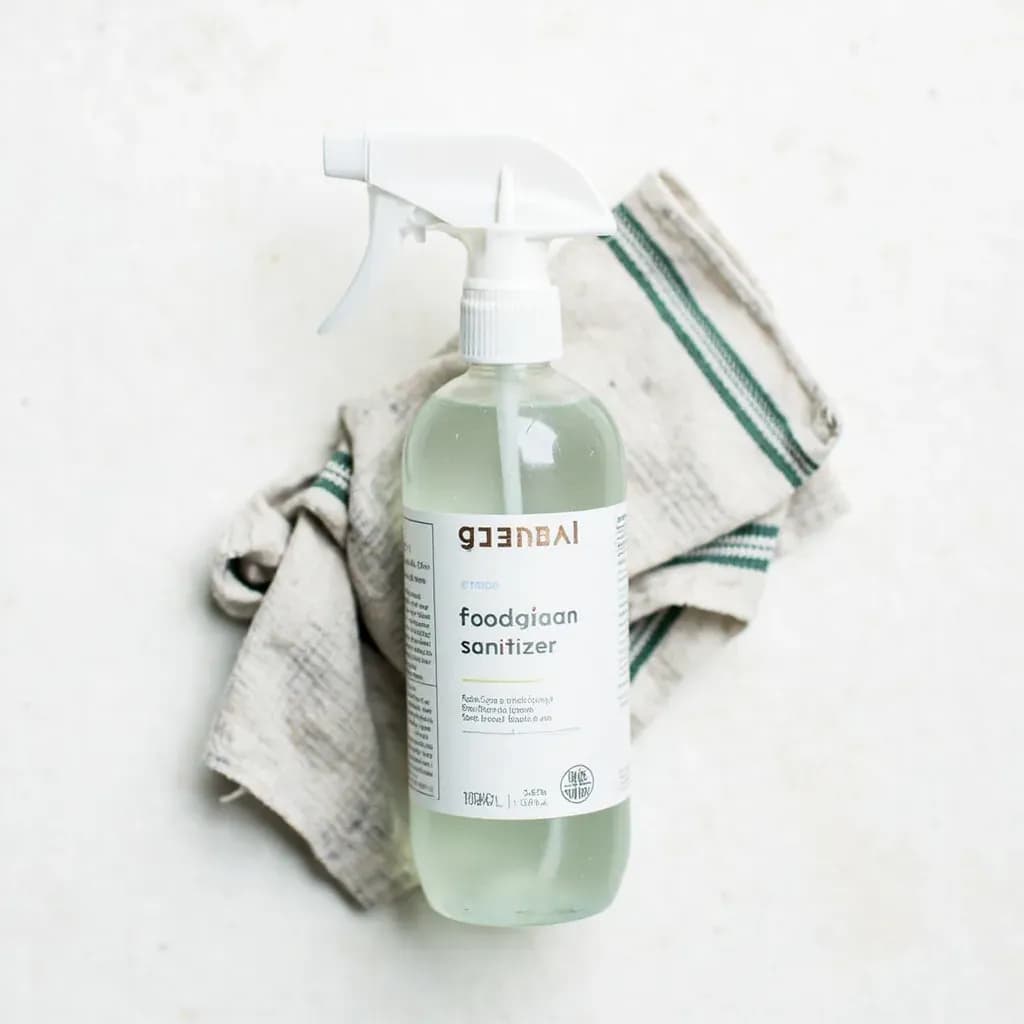
Food-safe sanitizing solution that kills bacteria on prep surfaces and equipment.
Food-grade sanitizer is a food-safe chemical solution, often a diluted quaternary or chlorine compound, used to sanitize cutting boards, prep surfaces, and equipment after cleaning. Cooks spray or wipe it on, then let it air-dry to reduce bacteria below safe levels without a final rinse. It is a key step against cross-contamination, especially after handling raw meat, poultry, or seafood.
Food-grade sanitizers are chemical solutions specifically formulated to reduce pathogenic microorganisms on food-contact surfaces to safe levels—typically achieving a 99.999% reduction in bacteria, viruses, and fungi. Unlike disinfectants used in healthcare or industrial settings, food-grade sanitizers are regulated for use on surfaces that will contact edible food, leaving no toxic residues above approved safety thresholds. They work by destabilizing microbial cell membranes and disrupting essential enzyme systems, effectively neutralizing pathogens without damaging food-safe surfaces when used correctly.
Sanitizing is not cleaning—it is the critical second step in safe food handling. A surface must be thoroughly cleaned of grease, food debris, and organic matter before sanitizer can work. Organic material shields microorganisms from contact with the sanitizer and can neutralize the active ingredients, rendering the treatment ineffective. This is why health inspectors and food safety protocols mandate the two-step process: clean first, then sanitize.
Effective sanitization depends on three variables: concentration, contact time, and surface wetness. Too weak a solution or insufficient wet contact time leaves pathogens viable; too strong risks chemical residues on food-contact surfaces. Commercial kitchens verify concentration with test strips at each shift, while home cooks can achieve safe results with properly diluted unscented chlorine bleach. Understanding your sanitizer type—whether chlorine, quaternary ammonium, iodine, or acid-based—is essential, because each has distinct requirements for dilution, water temperature, rinsing, and compatible surfaces.
Alternatives
Types & varieties
Sodium hypochlorite solutions; most economical and widely available; broad-spectrum effectiveness against bacteria and viruses; can corrode metal and damage fabrics if over-concentrated; requires rinsing on most surfaces; water temperature must stay below 75°F (24°C); effective at 50–100 ppm. Bleach smell dissipates as it degrades, which is normal.
Cationic surfactants; non-corrosive and non-staining; effective across a wide temperature range; leaves a residual antimicrobial film on surfaces; do not require rinsing; can absorb into porous materials like wood and certain plastics, reducing effectiveness on those surfaces; effective at 150–400 ppm.
Iodine combined with surface-active agents; broad-spectrum effectiveness with good performance in the presence of organic matter; amber color indicates active strength—faded color means replenishment needed; can stain plastic and light-colored surfaces with prolonged use; effective at 12.5–25 ppm.
Phosphoric or citric acid-based with anionic surfactants; primarily used in dairy, beverage, and food-processing industries; effective in hard water conditions where other types falter; requires thorough rinsing after use; pH-dependent effectiveness.
Sanitizer vs. Disinfectant: Why the Distinction Matters
The terms are often used interchangeably, but the distinction is critical for food safety. Disinfectants are designed for non-food-contact surfaces—floors, walls, bathroom fixtures—and may leave residues that are unsafe for ingestion. Food-grade sanitizers are specifically formulated and EPA-registered for surfaces that will contact edible food. They achieve microbial reduction to safe levels without leaving toxic residue above regulatory limits. Always verify that any sanitizer you use in a kitchen is labeled for food-contact surface use. Industrial disinfectants applied to cutting boards or prep counters can introduce harmful chemicals into food.
- Look for EPA registration number and 'food-contact surface' language on the label
- Hospital-grade germicides are not equivalent to food-grade sanitizers
- Using the wrong product is a common violation cited in health inspections
Choosing the Right Sanitizer for Your Kitchen
Each sanitizer type has trade-offs that make it better suited for specific environments. Consider your priorities: budget, surface materials, water hardness, required rinsing, and user safety. Chlorine bleach is the most cost-effective option and widely familiar, but it requires careful concentration control, cool water, and corrodes metal over time. Quaternary ammonium compounds offer convenience—no rinsing required, no corrosion—but can be absorbed by wood and certain plastics, and require careful label compliance. Iodine-based sanitizers perform well with organic soil load but can stain and require monitoring of color strength. For home kitchens, diluted unscented chlorine bleach (approximately 1 tablespoon per gallon of water) is the most accessible option; commercial kitchens should follow local health department requirements, which often specify approved sanitizer types and mandatory verification protocols.
- Chlorine: best for budget-conscious operations on metal and non-porous surfaces
- Quats: ideal for areas requiring no-rinse application and non-corrosive formulas
- Iodine: suited for environments with organic soil load or harder water
- Acid-anionic: primarily industrial use in dairy and beverage processing
Common uses
Tips & pitfalls
- Always clean surfaces with detergent and water BEFORE applying sanitizer—organic matter inactivates most sanitizers
- Use test strips calibrated for your specific sanitizer type; chlorine test strips do not work for quats and vice versa
- Mix fresh solutions daily or per manufacturer expiry; solutions lose potency over time, especially chlorine in warm conditions
- Store sanitizers away from food and food-contact surfaces in clearly labeled containers to prevent accidental contamination
- Wear appropriate PPE—gloves and eye protection—when handling concentrated sanitizer solutions
- For chlorine-based sanitizers, add bleach to water rather than water to bleach to prevent splashing of concentrate
- Do not apply sanitizer to surfaces that are already wet—dilution reduces effective concentration below kill-threshold levels
- Label all dilution containers with sanitizer type, concentration, and date mixed so staff can verify freshness
- Allow sanitizer to remain wet on the surface for the full contact time—do not wipe or dry prematurely
- Establish a two-compartment sink system: one for washing and rinsing, one filled with sanitizing solution
- Never use sanitizers on visibly dirty surfaces—the clean step is non-negotiable and cannot be skipped
- Check manufacturer guidance on compatible surfaces; quats absorbed into wood cutting boards can affect food flavor
Good to know
- Kill Rate Standard
- Reduces microorganisms by 99.999% (5-log reduction) to meet FDA Food Code safety thresholds
- Regulation
- EPA-registered for food-contact surfaces; must meet FDA Food Code standards when used per label directions
- Application Order
- Always applied AFTER cleaning—organic matter inactivates most sanitizer types
- Concentration Range
- Measured in ppm; verified with test strips specific to sanitizer type (chlorine: 50–100 ppm; quats: 150–400 ppm)
- Contact Time
- 30 seconds to 1 minute of wet surface contact required for effective microbial reduction
- Water Temperature
- Chlorine sanitizers lose efficacy above 75°F (24°C); quats and iodophors tolerate wider temperature ranges
- Drying Method
- Air dry only—wiping with cloths recontaminates sanitized surfaces
- Test Frequency
- Commercial kitchens should test sanitizer concentration at the start of each shift
Also called
Food-Safe Sanitizer · food-safe-sanitizer · Food-Safe Sanitizer Spray · Sanitizer Solution · sanitizer-solution · Food-Safe Sanitizer (Sanitizing Cloth/Solution)
Related

Paper Towels
Disposable sheets for spills, drying, and patting dry

Kitchen Towels
Reusable cloths for drying, gripping, and wiping

Oven Mitts
Heatproof gloves to handle hot pans and trays safely

Disposable Gloves
Single-use gloves for safe, mess-free handling

Cleaning Cloths
Reusable cloths for wiping counters and spills

Tortilla Warmer
Insulated holder that keeps tortillas warm and soft

Trivet
Heatproof stand that shields surfaces from hot pots

Ice Bath Setup
Bowl of ice water that halts cooking and sets color