Heat & Safety
Food-Grade Tubing
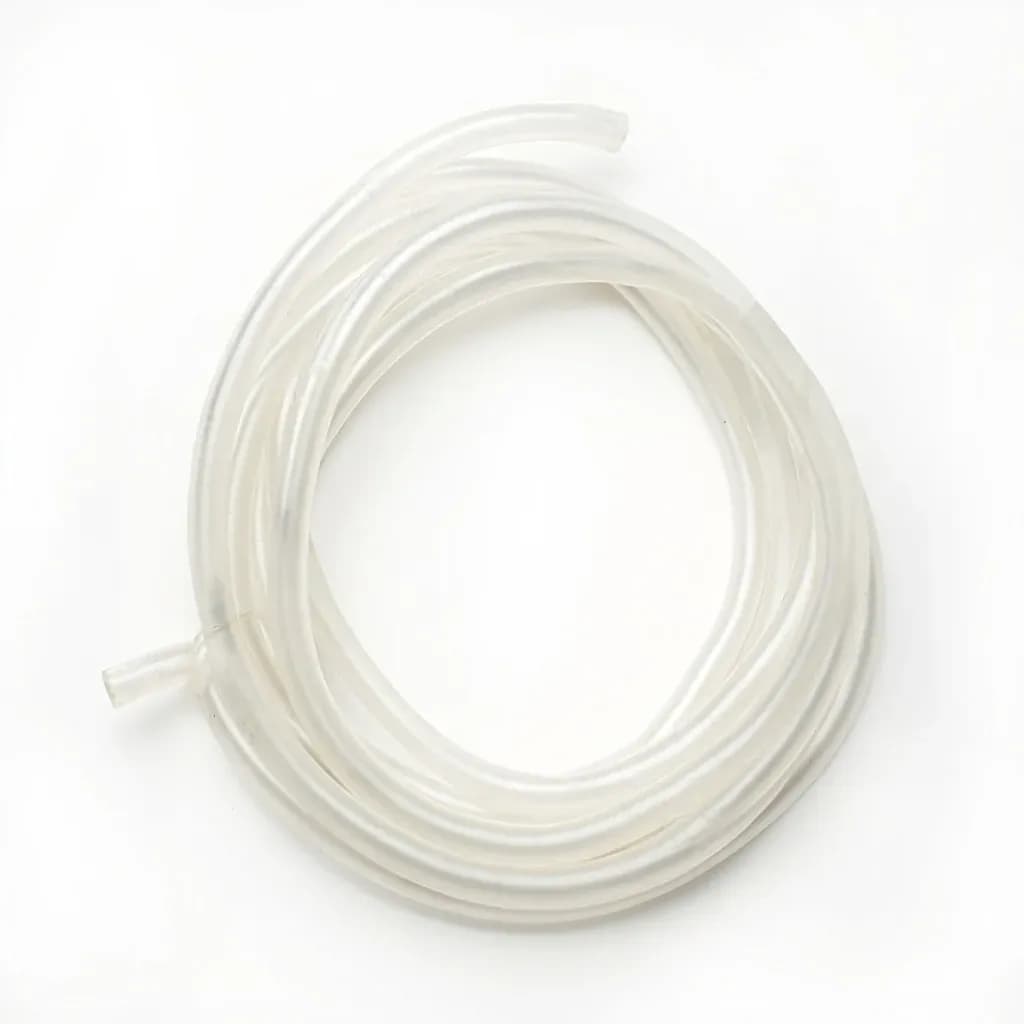
Flexible silicone or PVC tubing certified for transferring liquids like beer, wine, oil, or syrup.
Food-grade tubing is flexible silicone or PVC hose certified safe for moving food liquids without leaching contaminants. Brewers, winemakers, and producers use it to siphon and transfer beer, wine, oils, brines, and syrups between vessels. Silicone versions tolerate high heat and sanitizing cycles, while clear PVC lets you watch the flow and spot sediment.
Food-grade tubing is the flexible, certified hose that quietly moves liquids through nearly every serious home brewery, winemaking setup, café, and commercial kitchen. It shows up racking wine off sediment, pushing wort between kettles, connecting kegs to taps, dispensing syrup from bag-in-box systems, and even circulating water in DIY sous vide baths. Most cooks never think about it until a line fails, flavors turn off, or a health inspector asks pointed questions about what's actually inside that soda gun line.
The single most important rule with food-grade tubing is certification. A tube that looks like clear vinyl can come in two very different forms: one manufactured to FDA or NSF food-contact standards, and one sold for industrial or aquarium use that may leach phthalates, plasticizers, or other compounds into alcohol, acids, oils, and hot liquids. If the tubing isn't explicitly rated for food contact by a recognized body, it doesn't belong in your kitchen, no matter how clean it looks or how cheap it is at the hardware store.
Material choice is driven by temperature, chemical compatibility, and how long the liquid sits in the line. Silicone handles heat and resists flavor carryover best, PVC is the inexpensive workhorse for cold beverages and short transfers, and PTFE is the choice when chemical inertness matters more than budget. The gear itself is cheap — usually under a few dollars per foot — but biofilm buildup and material wear make regular replacement the real ongoing cost, and the real safety concern if neglected.
Alternatives
Types & varieties
Highest-purity silicone with very low extractables and no peroxide byproducts; the standard for beer, wine, dairy, and any high-temperature or flavor-sensitive transfer. Translucent or opaque.
The homebrewing and beverage default — inexpensive, transparent, easy to cut and see through. Best for cold liquids and short transfers; not suited for sustained contact with high-proof alcohol or hot liquids.
A family of proprietary formulations including Tygon B-44-3 for beer and beverage lines, Tygon E-3603 for lab and food use, and Tygon F-4040-A (fuel/oil resistant). Widely trusted in labs and kitchens.
Chemically inert and tolerant of extreme temperatures and aggressive solvents. Expensive, but the right choice when nothing must react with the liquid — flavor-sensitive transfers, strong acids, or laboratory work.
Flexible, chemically resistant, and inexpensive. Common for water lines, low-pressure dispensing, and some homebrew setups where PVC would be overkill.
Heat-resistant and tolerant of hot water and steam. Found in some commercial coffee equipment, dairy lines, and anywhere hot water circulates regularly.
Thicker-walled and often braided with polyester for pressurized systems and hot liquor transfers up to about 180°F. The workhorse of all-grain brewing setups.
Treated with silver-ion or similar additives to inhibit bacterial colonization on the inner wall. Marketed for soda and beer lines where biofilm is a constant concern.
Certification: The Non-Negotiable
Food-grade isn't a marketing phrase — it's a regulatory category. In the United States, the relevant standards are FDA 21 CFR (which lists approved materials for food contact) and NSF/ANSI 51 for food equipment. In Europe, look for EU 1935/2004 and EU 10/2011. Dairy operations often specify 3-A Sanitary Standards. A reputable manufacturer will print or stamp the certification on the tubing or its packaging, and the technical datasheet will list the specific food types the material is rated for (aqueous, acidic, alcoholic, fatty). When in doubt, ask for the compliance documentation before you put anything consumable through the line.
- FDA 21 CFR covers materials deemed safe for food contact in the U.S.
- NSF/ANSI 51 applies to food equipment components, including tubing
- EU 1935/2004 and EU 10/2011 are the European equivalents for food contact materials
- 3-A Sanitary Standards are specifically for dairy and beverage processing equipment
- Always request the manufacturer's compliance document for the specific food type you'll be transferring
Choosing the Right Material
Match the tubing to the temperature, the chemistry of the liquid, and how long that liquid will sit in the line. PVC is fine for cold water, cold beer, and short transfers — and it lets you see what's flowing. Silicone is the right answer once heat enters the picture, or when flavor neutrality matters (wine, delicate infusions, dairy). PTFE is reserved for chemical inertness — strong solvents, aggressive acids, or laboratory work. Reinforced brewers' hose earns its place on the hot side of a brewing system, where pressure and 180°F liquor would kink or burst a standard line.
- Cold beverages, short transfers → PVC or LDPE
- Hot liquids, hot liquor tanks, sous vide → silicone or reinforced brewers' hose
- Flavor-sensitive transfers (wine, clear spirits, infusions) → platinum-cured silicone or PTFE
- High-proof alcohol for long storage → silicone or PTFE; PVC can leach plasticizers over time
- Commercial draft beer lines → Tygon B-44-3 or equivalent beverage-grade vinyl at 3/16" ID
Cleaning, Sanitizing, and Replacement
Flexible tubing is harder to clean than rigid pipe. The interior is usually smooth, but biofilm — a slimy layer of bacteria and yeast — builds up over months of use, especially in beer, soda, and dairy lines. No amount of flushing fully removes it. The realistic approach is to sanitize thoroughly between uses and replace the tubing on a schedule. Commercial draft systems should swap beverage lines every one to two years; homebrew and home wine setups should replace PVC every year or two when used regularly, and silicone every few years or whenever it clouds, stiffens, or picks up persistent odors.
- Sanitize with the same product you use on your equipment: Star San, iodophor, or a dilute bleach solution
- Soak for the full recommended contact time, then flush with clean water or product
- Run a brush through larger-diameter lines to break up biofilm before sanitizing
- Replace PVC every 1–2 years in commercial service; silicone every few years as needed
- Discard tubing that has become cloudy, brittle, permanently stained, or hard to clean
Common uses
Tips & pitfalls
- Never use aquarium tubing, hardware-store PVC, or any unmarked vinyl for food — many contain phthalates and plasticizers that leach into alcohol, oils, and acidic liquids.
- Match the material to temperature: silicone or PTFE for anything above about 140°F; standard PVC is fine for cold beverages and short transfers.
- For beer lines, use 3/16" ID vinyl (or 1/4" for very short runs) to balance flow and prevent excessive foaming — line length and restriction matter more than pump pressure.
- Sanitize tubing before each use with the same sanitizer you use on your other equipment, soak for the recommended contact time, then flush with clean water or product.
- Replace PVC tubing every 1–2 years in commercial draft systems; biofilm builds on the inner wall and is nearly impossible to fully remove from flexible lines.
- Use barbed fittings matched to the tubing's inner diameter and secure them with Oetiker clamps or stainless worm-drive hose clamps — never zip ties, which can slip or cut into the tube.
- Dedicate silicone tubes to one product type when possible; silicone absorbs odors and flavors, and a tube that carried strong wine will taint delicate oil.
- If you're not sure a tube is food-grade, smell it — high-quality silicone and PVC are nearly odorless, while industrial tubing often has a strong chemical or plastic smell.
Good to know
- Also called
- Beverage tubing, transfer hose, food-safe hose
- Common materials
- Silicone, PVC, polyethylene, PTFE, EPDM rubber, and Tygon (proprietary PVC formulations)
- Typical inner diameters
- 1/4", 3/8", 1/2", 5/8", 3/4" for beverage work; 1" and up for bulk oil transfer
- Standard lengths sold
- By the foot, or in 10 ft, 25 ft, 50 ft, and 100 ft coils and pre-cut lengths
- Temperature range (silicone)
- Approximately -60°F to 400°F; platinum-cured silicone tolerates brief exposure near 500°F
- Temperature range (PVC)
- Typically 25°F to 150°F; softens and can leach plasticizers above this range
- Shelf life (unopened)
- Silicone indefinite; PVC typically 5–7 years when stored away from UV
- Certifications to look for
- FDA 21 CFR, NSF/ANSI 51, USDA approval, EU 1935/2004, EU 10/2011, and 3-A Sanitary Standards for dairy
- Pressure rating
- Beverage lines typically rated 20–60 psi working pressure, with burst pressures several times higher
- Common colors
- Clear, translucent, white, black, red, blue; color usually has no functional meaning, though some breweries color-code lines
- Cost range
- Roughly $0.50–$4 per foot depending on material, diameter, and brand
Also called
Beverage Tubing · Siphon Hose · Transfer Tubing
Related

Paper Towels
Disposable sheets for spills, drying, and patting dry

Kitchen Towels
Reusable cloths for drying, gripping, and wiping

Oven Mitts
Heatproof gloves to handle hot pans and trays safely

Disposable Gloves
Single-use gloves for safe, mess-free handling

Cleaning Cloths
Reusable cloths for wiping counters and spills

Tortilla Warmer
Insulated holder that keeps tortillas warm and soft

Trivet
Heatproof stand that shields surfaces from hot pots

Ice Bath Setup
Bowl of ice water that halts cooking and sets color