Storage & Containers
Food Storage Bag
Lightweight plastic bag for storing, portioning, and carrying ingredients and leftovers.
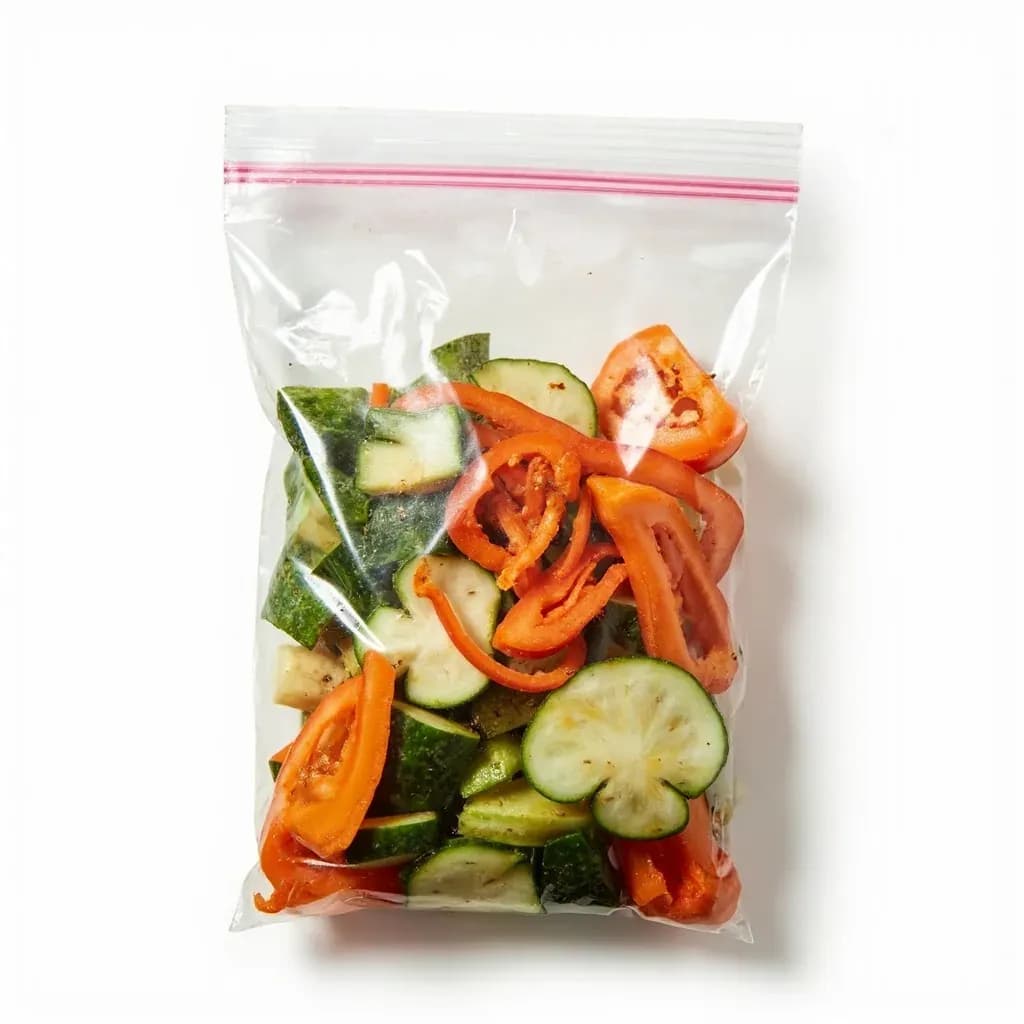
A food storage bag is a lightweight plastic bag used to store, portion, and transport ingredients, leftovers, and dry goods. Cooks use them to marinate proteins, freeze flat portions that thaw quickly, and corral prepped components in the fridge. Food-grade bags are made for direct food contact, unlike generic shopping or bin bags, and many can be sealed with a clip or tie.
Food storage bags are flexible, lightweight plastic pouches sealed with interlocking tracks, twist ties, or sliders, designed to contain and protect food during refrigeration, freezing, and transport. Made from low-density polyethylene (LDPE, recycling code #4), these bags have become indispensable in both home and professional kitchens since their commercial introduction in the 1950s and 1960s. Their primary function is creating a barrier against air and moisture—two principal drivers of food spoilage. By displacing oxygen and sealing out ambient humidity, storage bags extend the usable life of prepared foods and raw ingredients alike. Their transparency allows quick identification of contents, their flexible walls conform to irregularly shaped items, and their disposability eliminates the cleanup required by rigid containers. Professional kitchens rely on storage bags for portion control, batch preparation, and sous vide cooking, where food is vacuum-sealed and immersed in precisely temperature-controlled water baths. For home cooks, the humble storage bag replaces an array of specialized containers with a single, adaptable tool that handles everything from marinating chicken to freezing soup in flat, space-saving slabs.
Alternatives
Types & varieties
Medium thickness for refrigerator storage of leftovers and prepared foods
Thicker walls to resist ice crystal formation and prevent freezer burn; often have gusseted bottoms for standing upright
Pre-sized with fold-over or slider closure; sized for single sandwiches or small portions
Smallest standard size; ideal for nuts, crackers, and portioned ingredients
Feature a plastic slider mechanism for easier opening and closing; preferred for one-handed use
Gathered closure sealed with integrated twist ties; less airtight than zipper varieties
Gusseted bottom allows bag to stand; popular for marinating and sous vide
Specifically designed for vacuum sealers; smooth or textured surfaces depending on the sealer type
BPA-free, platinum-cured silicone; dishwasher and microwave safe; last years with proper care
Made from PLA (polylactic acid) or PBAT; require industrial composting conditions
The Air Removal Advantage
The primary purpose of sealing food in bags is air removal, which serves two critical functions. In the refrigerator, reduced oxygen slows the aerobic bacteria responsible for spoilage. In the freezer, air removal minimizes freezer burn—the dehydration and oxidation that cause frozen food to develop dry, discolored patches. Vacuum sealers achieve the most complete air removal, but manual squeezing achieves 80–90% of that benefit for most home freezer applications. For bread, which benefits from some air retention to prevent crushing, partial sealing is preferable.
- Manual air expulsion removes approximately 80–90% of available air
- Vacuum sealers achieve near-complete air removal but are not necessary for standard freezer storage
- Some air retention is beneficial for fragile items like fresh bread
Freezer-Safe Practices
Not all storage bags are designed for the freezer. Freezer bags are manufactured with more virgin plastic and thicker walls to withstand temperatures to -40°F and resist cracking that can occur in standard bags. Always verify the bag is labeled 'Freezer' or 'Freezer Safe' if you intend to freeze for more than a few days. For long-term freezer storage (beyond 3 months), vacuum-sealed bags provide superior protection against freezer burn and flavor transfer between items stored together.
- Use only bags rated for freezer temperatures
- Double-bag items stored longer than 3 months
- Place newly frozen items away from items already frozen to ensure complete freezing before storage
Common uses
Tips & pitfalls
- Squeeze out as much air as possible before sealing—oxygen accelerates both spoilage and freezer burn. For freezer items, consider using a straw to draw out additional air from zipper bags.
- Label every bag with contents and date using a washable marker or pre-printed tape. This prevents forgotten items and enables proper rotation.
- Lay bags flat when freezing soups, sauces, or ground meat for thin, stackable slabs that thaw quickly. Upright storage after solidifying prevents drips.
- For marinating, place the bag in a bowl or pan to catch any potential leaks. Double-bag if using a weak sealer.
- Avoid overfilling past the fill line. Overstuffed bags create weak seals and are prone to splitting.
- Never store sharp-edged items (bones, pineapple cores) without wrapping them first in paper towels to prevent punctures.
- Allow hot foods to cool to room temperature before sealing to avoid condensation inside the bag, which dilutes food and creates a bacterial environment. The USDA recommends cooling foods within two hours.
- Never reuse single-use plastic bags for raw meat after they have held raw proteins unless they are washed in hot, soapy water—cross-contamination risk is high.
Good to know
- Material
- Polyethylene plastic (LDPE - low-density polyethylene), designated recycling code #4
- Temperature Range
- Generally safe from -40°F to 195°F (-40°C to 90°C)
- Standard Sizes
- Gallon, quart, sandwich, and snack
- First Commercial Use
- Introduced in the 1950s–1960s by companies including Glad and Ziploc
- Freezer Bag Thickness
- Approximately 2.5–3 mils (standard storage bags are 1.5 mils)
- BPA Status
- Traditional polyethylene bags are BPA-free by composition
- Reusability
- Single-use by design; silicone alternatives are dishwasher-safe and reusable for years
Also called
plastic-bag · plastic-storage-bag · plastic-storage-bags · plastic-food-bag · food-grade-plastic-bag · plastic-bags · plastic-grocery-bag · black-plastic-bag · red-plastic-bag · kavera-bag · nylon-bag · polythene-bag · sandwich-bag · sandwich-bags · plastic-wrap-bag · plastic-food-bag-id · food-storage-bag-and
Related

Freezer Bags
Thick, sealable bags built to fight freezer burn

Storage Bags
Resealable bags for fridge storage and marinating

Storage Container
Lidded container for leftovers, prep, and meal kits

Glass Container
Oven-to-fridge glass that won't stain or hold odors

Plastic Container
Lightweight, stackable storage for everyday leftovers

Vacuum Sealer Bags
Airtight bags for long freezing and sous-vide

Reusable Bags
Washable silicone bags that replace single-use plastic

Mason Jar
Sealed glass jar for preserves, pickles, and storage