Heat & Safety
Cooking Gas Cylinder
A pressurized tank of propane or butane that fuels stoves, burners, and torches.
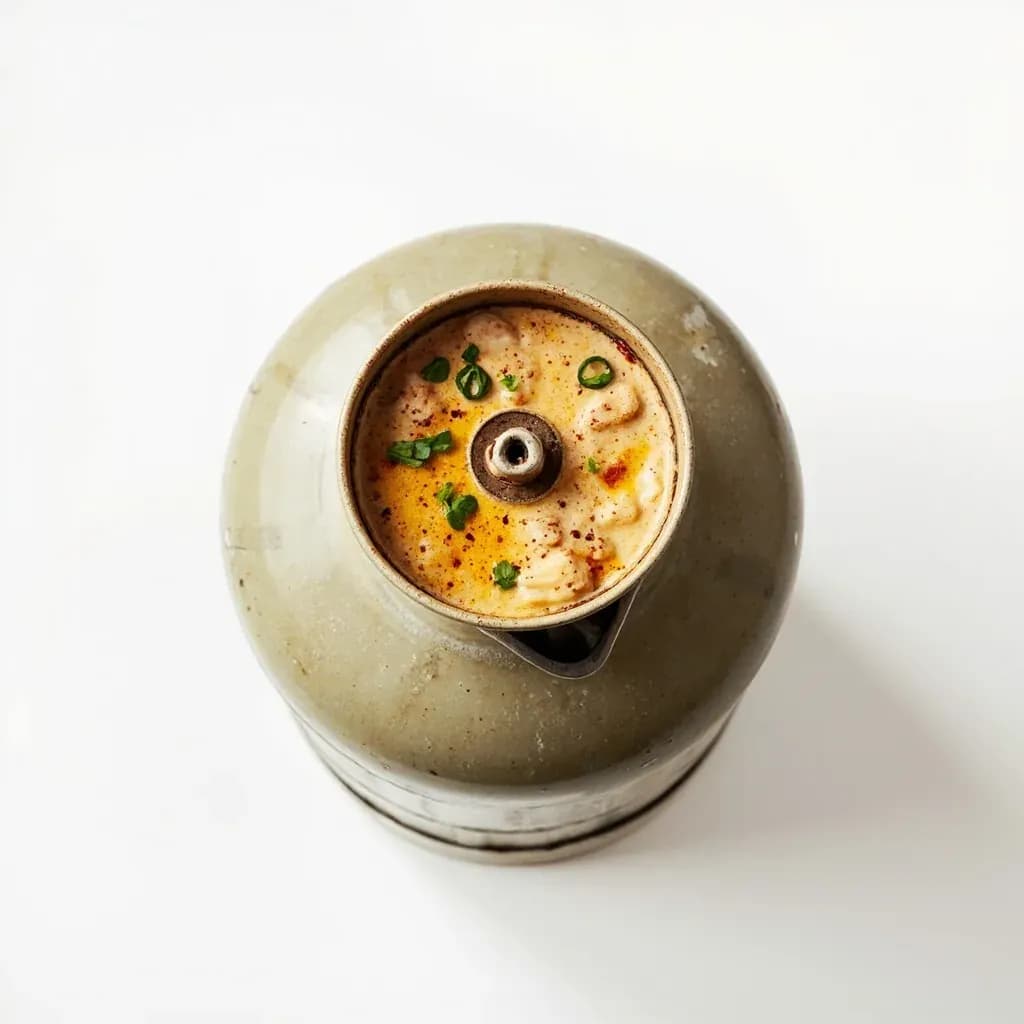
A cooking gas cylinder is a steel or aluminum bottle holding pressurized propane or butane that fuels stovetops, wok burners, and outdoor cookers. It is the primary cooking-heat source in many homes and field kitchens where piped gas is unavailable. Cylinders must be stored upright in ventilated space and checked for leaks at the regulator and hose.
A cooking gas cylinder is a sealed, pressurised vessel holding liquefied petroleum gas (LPG) — propane, butane, or a calibrated blend of the two — and metering it as vapour to stoves, ovens, grills, and torches wherever piped natural gas is unavailable. Inside the tank the fuel sits in a curious two-phase state: a pool of liquid under its own vapour pressure, with gas continuously boiling off the surface to feed the regulator. That vapour pressure is what changes the appliance in your hand — a hot patio cylinder delivers enthusiastically, a cold kitchen one may starve the burner, and a propane regulator is never a safe substitute for a butane one.
For a working cook the cylinder is what makes very high-BTU cooking portable. A 20 lb US tank or a 13 kg UK/Australian swap bottle can drive a jet burner past 15 kW — the heat a natural-gas domestic line rarely reaches — which is exactly the range you want for wok hei, paella socarrat, or a 500 °C pizza-oven floor. Smaller EN 417 / Lindal cartridges do the same job for backpack stoves and crème-brûlée torches at the pass. Used with the right regulator, in a ventilated spot, an LPG cylinder is one of the cleanest, most controllable, and longest-lived heat sources a cook can own.
Get the practicalities wrong, though, and the same cylinder is a hazard: a wrong-thread connection, a stored spare indoors, or an expired tank that should have been revalidated. The detail that separates a useful tool from an incident is almost always in the connection, the regulator, the date stamp, and where you keep the spare.
Alternatives
Types & varieties
Best for cold weather, high-output wok and jet burners, and outdoor grilling; higher tank pressure demands a propane-rated regulator and hose.
Cheaper and cleaner-burning; loses usable pressure below about 5 °C, so it is suited to warm-climate indoor tabletop stoves rather than winter patios.
The most common household refill — a winter-grade or summer-grade blend that balances cold-weather performance with cost.
100–450 g disposable or refillable cartridges for backpacking stoves and screw-on kitchen blowtorches.
Lightweight, rust-proof, often translucent so you can read the fuel level at a glance; common in 12.5–18 kg sizes across Europe and Australia.
The familiar 20 lb 'BBQ tank'; legal models carry an OPD (overfill-prevention) valve and a Type 1 ACME / QCC1 hand-wheel connection.
Permanently mounted, larger ASME-rated cylinder running at a different pressure and with a different fitting from standard household bottles — must never be cross-connected.
Why the gas type and regulator matter
Propane and butane are close cousins, but they behave very differently once they leave the tank, and a regulator that works for one will under- or over-feed the other. Match the wrong pair and you get either a starved, sooty flame or a regulator that ices up and shuts off mid-service.
- Propane vaporises down to roughly −42 °C, so it keeps delivering pressure on a cold patio, in an unheated outbuilding, or at altitude. Butane stops vaporising usefully below about 5 °C — the liquid just sits there and the flame dwindles.
- Tank pressure differs sharply: propane sits around 110 psi at 21 °C, butane around 30 psi. A butane regulator cannot hold back propane safely; a propane regulator will starve a butane-fed appliance.
- Outlet pressures are jurisdiction-specific — about 28–37 mbar in the UK and Australia, about 11 in w.c. in the US. A regulator bought overseas is almost certainly wrong for your appliance and your cylinders.
- If a propane cylinder is run hard in cold weather, the boil-off can chill the liquid enough to frost the cylinder and the regulator. Slow the burner briefly, or shelter the tank, and the pressure recovers.
Reading a cylinder before you connect it
A few seconds of inspection tells you whether a tank is safe to use, how full it is, and when it must next be revalidated. Most of the information is stamped on the collar, the foot ring, or the valve guard.
- Date stamp: a '12-27' style marking on the collar or foot ring is the month and year the cylinder was last inspected or hydrostatically tested. Most jurisdictions require re-test every 5–10 years — an expired cylinder must be revalidated, not just refilled.
- Tare weight (TW or T): stamped on the collar. Weigh the cylinder on a bathroom scale; total weight minus tare gives the fuel remaining.
- US BBQ tanks: confirm the OPD (overfill-prevention) valve and the Type 1 ACME / QCC1 hand-wheel connection. Older POL-only tanks are obsolete for retail refill in many US states.
- UK / Australian swap bottles: confirm the LCC27 or BS 321 fitting, and check that the date disc on the foot ring is still in date.
- Camping canisters: look for the EN 417 mark and a clear fuel weight. Never pierce, incinerate, or attempt to refill a disposable cartridge yourself.
Common uses
Tips & pitfalls
- Always match the regulator to the gas type and the country of use — a propane regulator is not interchangeable with a butane regulator, and a UK/Australian regulator will not work safely on a US appliance.
- After fitting or swapping a cylinder, do a soap-and-water leak test on every joint and the hose; bubbles mean a leak. Do not ignite the appliance until the leak is fixed and the joint re-tested dry.
- Store cylinders upright in a well-ventilated spot, away from ignition sources and out of direct sun — heat drives tank pressure up fast.
- Never keep a spare cylinder indoors, in a closed car, or under the kitchen sink; even a slow leak can build an explosive mix in an enclosed space.
- Check the date stamp on the collar or foot ring (e.g. '12-27' = last tested December 2027). An expired cylinder must be revalidated, not just refilled — most swap networks will refuse to refill it.
- Discard a cylinder that is dented at the shoulder, rusted through, has a damaged valve, or sits heavy in liquid but won't deliver gas — these are signs the tank is no longer safe to use.
- Transport cylinders upright and secured, with the valve closed and the dust cap on. A loose tank rolling in a car boot is a valve-damage risk and a real projectile in a hard stop.
- If you smell gas, close the cylinder valve immediately, extinguish any flames, ventilate the room, and do not touch any electrical switches — call your gas supplier or the fire service from outside.
- Empty camping canisters go in normal household waste only if fully purged; partially filled cartridges are hazardous waste and must be taken to a designated collection point.
Good to know
- Fuel
- Liquefied petroleum gas (LPG) — propane, butane, or a propane/butane blend
- Propane boiling point
- ≈ −42 °C (−44 °F); vaporises readily even in hard cold
- Butane boiling point
- ≈ −1 °C (30 °F); pressure collapses below about 5 °C (40 °F)
- Regulator outlet pressure
- ≈ 28–37 mbar in UK/Australia, ≈ 11 in w.c. in the US — never match a regulator to the wrong gas type
- Common household size (UK / Australia)
- 13–15 kg refillable swap bottle with LCC27 / BS 321 fitting
- Common household size (US)
- 20 lb (≈ 9 kg) DOT-4BA240 portable tank with OPD valve and Type 1 (ACME / QCC1) connector
- Camping canister
- 100–450 g screw-thread cartridge to EN 417, with 7/16" UNEF Lindal valve
- Approximate run time
- A medium domestic burner on a 20 lb US tank uses ~0.5 lb/hr — about 35–40 hours of continuous cooking per fill
Also called
propane-tank · propane-canister · butane-cylinder · bottled-gas-canister · LPG cylinder
Related

Paper Towels
Disposable sheets for spills, drying, and patting dry

Kitchen Towels
Reusable cloths for drying, gripping, and wiping

Oven Mitts
Heatproof gloves to handle hot pans and trays safely

Disposable Gloves
Single-use gloves for safe, mess-free handling

Cleaning Cloths
Reusable cloths for wiping counters and spills

Tortilla Warmer
Insulated holder that keeps tortillas warm and soft

Trivet
Heatproof stand that shields surfaces from hot pots

Ice Bath Setup
Bowl of ice water that halts cooking and sets color