Heat & Safety
Gel Ice Pack
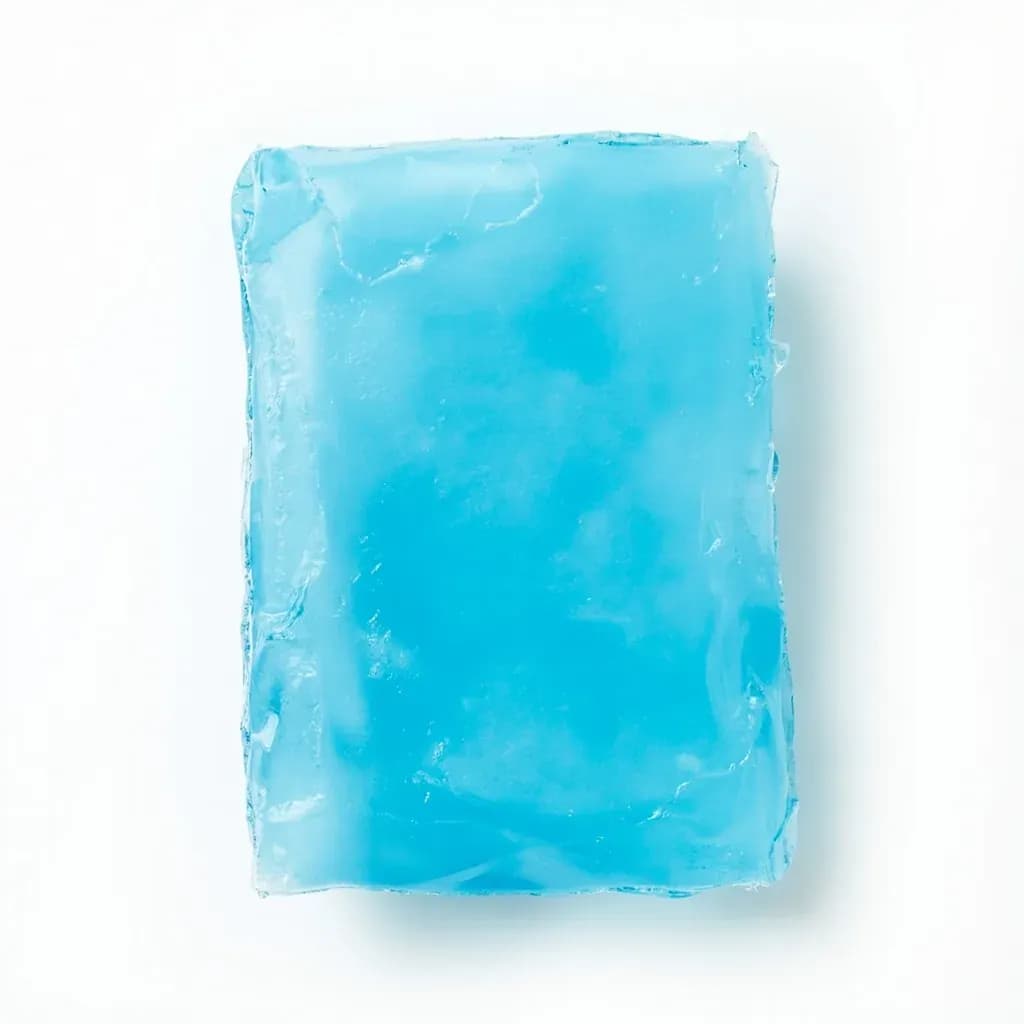
A reusable gel-filled pack frozen to keep coolers, transported food, and chilled prep cold.
A gel ice pack is a sealed pouch filled with a non-toxic refrigerant gel that is frozen before use. Cooks slip them into coolers, insulated bags, and meal-prep boxes to hold food in the safe cold zone during transport or catering. The gel stays cold longer than loose ice and, unlike melting ice, will not leave water pooling around the food.
A gel ice pack is a sealed plastic pouch or rigid case filled with a water-based gel — most commonly water thickened with sodium polyacrylate, carboxymethyl cellulose, or food-grade propylene glycol — designed to be frozen solid in a home freezer and then used as a reusable cold reservoir. Unlike a bag of ice cubes, the gel stays put as it melts, so the pack does not flood the cooler or dilute food, and its high thermal mass holds a useful cold temperature for hours. To a cook, that means a reliable, leak-proof way to keep perishable food below 4 °C / 40 °F during transport, outdoor service, and long prep sessions, without the wet mess and rapid melt of loose ice.
The pack works as a cold-storage battery: the gel absorbs and releases large amounts of heat as it changes phase from solid to slush to liquid, holding the surrounding environment near 0 °C / 32 °F once thawing begins. It is not an insulator on its own — the surrounding cooler, bag, or box must provide the insulation, and the pack provides the cold. Used well, a frozen gel pack is the difference between a safe picnic chicken and a trip to the doctor's office, and it is the quiet workhorse behind every successful meal-kit delivery, catered raw bar, and lunchbox packed for a hot commute.
The technology matured in the 1980s alongside superabsorbent polymers used in hygiene products, and the modern pack family ranges from credit-card-sized pouches for bento boxes to two-kilogram cooler bricks. Understanding the variants, and crucially the placement and pairing of packs with insulation, is what separates a five-hour cold chain from a forty-five-minute one.
Alternatives
Types & varieties
Flexible PE/PA bag that drapes around bottles and oddly shaped food; the standard lunchbox pack.
Rigid HDPE case with gel inside; durable, stackable, and easy to clean for catering coolers.
Large flat rectangular pack designed to lie across the top of a cooler for maximum dwell time.
Slim cylinder sized to slot between wine or beer bottles in a cellar-style carrier.
Credit-card to sandwich-size; sized for lunch bags, bento boxes, and single-serve yogurt or cheese.
Engineered to freeze at a precise temperature (often 0 °C, -5 °C, or -21 °C); used in meal-kit delivery and catering where holding a specific set point matters.
Single-use ammonium nitrate or urea cold pack for first aid — chemically activated, not freezer-based, and not interchangeable with reusable gel packs in the kitchen.
How a gel pack actually behaves
The gel is mostly water, and water has a high latent heat of fusion — it absorbs a great deal of energy as it melts, which is what gives a frozen pack its long useful life. The thickeners (sodium polyacrylate, CMC, or propylene glycol) do not change the total energy the pack can absorb, but they slow the rate of melt and keep the contents in one piece, so the pack does not become a bag of water after an hour. The thinner the gel layer, the faster the pack cools on contact but the shorter its runtime; the thicker the brick, the slower its chill-down but the longer it holds temperature. This is why experienced caterers combine one large brick with several small pouches: the brick anchors the long cold soak, while the pouches snuggle against individual containers to pull them down to safe temperature quickly.
- Latent heat of fusion is the workhorse — the phase change from solid to liquid absorbs most of the energy, not the cold itself.
- Sodium polyacrylate swells as the pack ages and loses cooling mass; visible swelling or mushiness means retire the pack.
- Phase-change packs can be tuned to hold 0 °C, -5 °C, or even -21 °C, which matters for frozen transport versus chilled transport.
- A pack is a battery, not insulation: cold escapes through the cooler walls, and the pack can only buy you time.
Choosing and staging packs for a cooler
Match pack size to the job: a lunchbox needs one or two small pouches; a half-day picnic needs two medium packs flanking the food; a full catering cooler wants one large brick on top plus two smaller packs pre-chilling the cavity. Always freeze packs flat and fully solid — a slushy pack has shed most of its latent heat already, and you have paid freezer time for nothing. Pre-chill the empty cooler for 20-30 minutes with a sacrificial pack before loading food, then swap in the working packs; this avoids losing the first hour of cooling capacity to warming the cooler's plastic walls.
- Freeze packs flat, not stacked upright — they store more cold mass per unit volume that way.
- Pre-chill the cooler with a throwaway or sacrificial pack, then swap in fresh working packs.
- Layer a brick on top of food, not below: cold air sinks, so a top-mounted pack chills everything beneath it.
- Combine pack sizes — one big brick plus two small pouches is the most efficient layout for a packed cooler.
Common uses
Tips & pitfalls
- Freeze packs flat and fully solid for at least 12-24 hours; a slushy pack has already lost most of its latent heat and will give up its cold within an hour.
- Place packs on TOP of the food in a cooler, not the bottom — cold air sinks, and a top-mounted brick chills everything below it more evenly and for longer.
- Pre-chill the empty cooler with a sacrificial pack for 20-30 minutes before loading food, then swap in your working packs; otherwise the cooler's warm walls eat the first hour of cooling.
- Wrap a pack in a clean tea towel when pressing it against chocolate work, buttercream, or delicate pastry — direct contact can cause local freezing or condensation marks on glossy surfaces.
- Never microwave or bite a gel pack: propylene glycol and sodium polyacrylate are not acutely toxic in small amounts, but a ruptured pouch leaks a thick, sticky gel that is tedious to clean out of a microwave or mouth.
- Persistent leaks, swelling, or a mushy texture signal end-of-life — sodium polyacrylate absorbs water over time and the pack loses its cooling mass and freeze shape; retire punctured packs.
- Pair frozen packs with insulation (newspaper, wool blanket, or a quality cooler wall) — the pack is a cold battery, not an insulator, and bare gel packs in a thin tote will be warm in under an hour.
- Avoid direct contact between a frozen pack and raw fish, raw meat, or soft cheese — condensation can leach flavour and waterlog the surface; interpose a layer of cling film or parchment.
Good to know
- Category
- Heat & Safety / Cold-chain supply
- Outer shell
- Polyethylene-nylon laminate for soft pouches; high-density polyethylene for rigid cases
- Inner gel
- Water-based gel thickened with sodium polyacrylate, carboxymethyl cellulose, or propylene glycol
- Freezing point
- About -18 °C / 0 °F once fully frozen in a home freezer (12-24 hours)
- Working temperature
- Holds the surrounding contents near 0 °C / 32 °F as the gel thaws
- Standard sizes
- Mini (~150-300 g), medium (~500-750 g), large brick (~1-2 kg)
- Lifespan
- Roughly 2-4 years with good care before leaks or loss of cooling mass
- Food-safety role
- Keeps perishables below 4 °C / 40 °F during transport, picnics, and outdoor service
- Reusable
- Yes — refreeze indefinitely; non-toxic if contents leak but not for ingestion
Also called
Cooler Pack · Freezer Pack · Cold Pack
Related

Paper Towels
Disposable sheets for spills, drying, and patting dry

Kitchen Towels
Reusable cloths for drying, gripping, and wiping

Oven Mitts
Heatproof gloves to handle hot pans and trays safely

Disposable Gloves
Single-use gloves for safe, mess-free handling

Cleaning Cloths
Reusable cloths for wiping counters and spills

Tortilla Warmer
Insulated holder that keeps tortillas warm and soft

Trivet
Heatproof stand that shields surfaces from hot pots

Ice Bath Setup
Bowl of ice water that halts cooking and sets color