Wraps & Liners
Glassine Paper
A smooth, grease- and moisture-resistant translucent paper for lining, separating, and wrapping food.
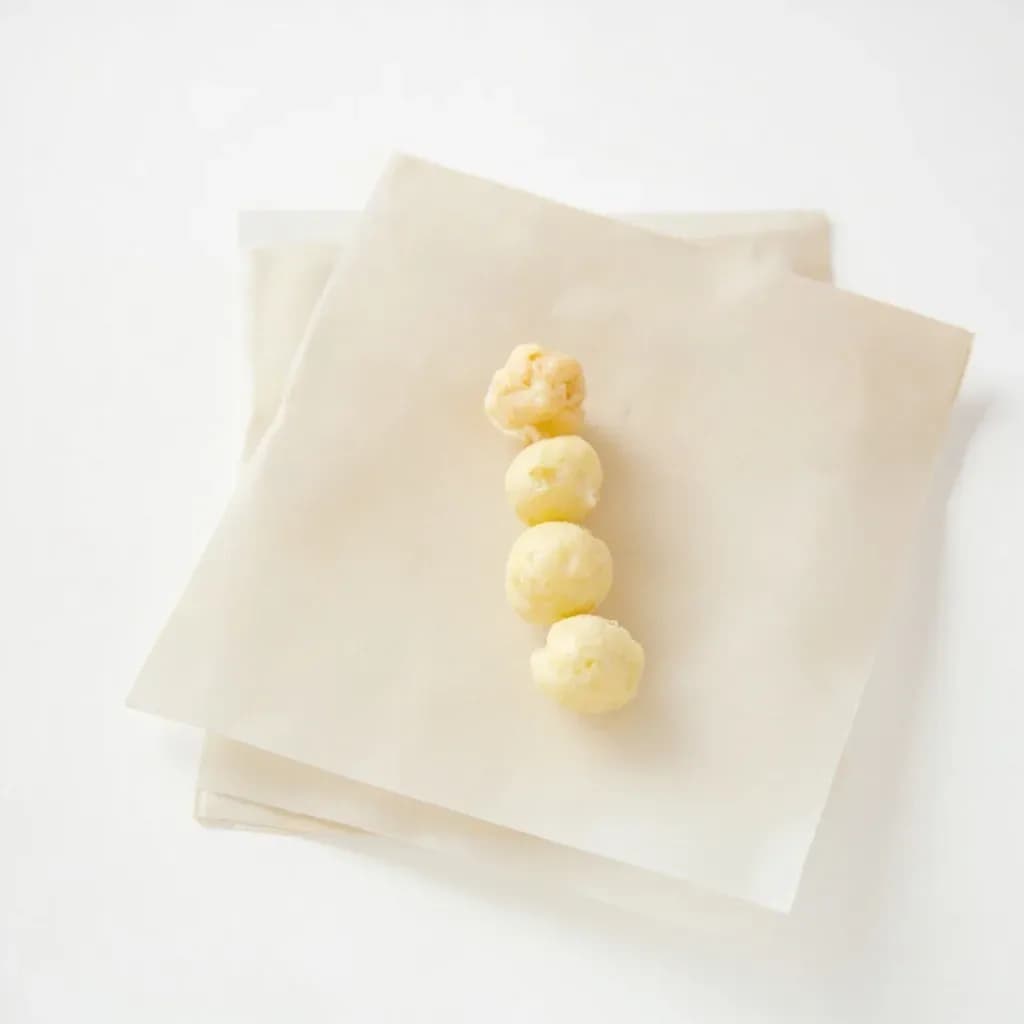
Glassine is a dense, smooth, translucent paper that is naturally resistant to grease, air, and moisture. Bakers and confectioners use it to line trays, separate stacked cookies or pastries, and wrap chocolates and candies. Its slick surface keeps fats and oils from soaking through, making it a clean alternative to waxed paper that still recycles well.
Glassine is a dense, translucent paper made from chemical wood pulp that has been supercalendered — pressed through heated steel rollers until the fibers fuse into a smooth, almost glassy sheet. The result is a paper that resists grease and moisture without any wax or plastic coating, which is exactly what makes it useful in a kitchen: it keeps oils from soaking through, yet it remains food-safe, recyclable, and free of the coatings that limit other papers in the oven.
For cooks, glassine's value lies in what it won't do. It won't cling to tempered chocolate, so chocolate sets with a clean satin sheen and peels off in one piece. It won't absorb butterfat or cheese oils over a few days in the fridge, so it makes a clean wrapper for caramels, fudge, butter, and cheese. And because it has no wax, it won't transfer a waxy note to foods the way wax paper occasionally can. The trade-off is that it has no meaningful heat resistance — it scorches and chars well below baking temperatures — so its role is limited to cold, room-temperature, and chocolate-work applications.
In practice, glassine is the paper you reach for when you need a non-stick surface, a breathable wrapper, or a way to keep sticky layers apart, but never when heat is involved. Food-grade glassine is sold for direct food contact, and it should not be confused with archival or museum glassine, which is buffered for storing photographs and documents and is not always made to the same purity standard.
Alternatives
Types & varieties
The standard translucent paper sold for kitchen use in sheets and rolls — wrapping, lining, interleaving, and chocolate work.
Pre-cut into 4×4 in or 5×5 in squares sized for wrapping individual caramels, fudge, and truffles.
Slightly heavier sheets sold for wrapping wheels and wedges; lets the cheese breathe without wicking oils into the paper.
A grade used as a release surface for tempered chocolate and thin chocolate decorations; chocolate peels cleanly off the smooth surface.
Buffered with calcium carbonate and acid-free for storing photographs and documents. Not for food — keep it out of the kitchen.
Glassine vs. wax paper vs. parchment
These three translucent papers are often used interchangeably, but they behave very differently in the kitchen.
- Glassine: pure paper, supercalendered, no coating. Grease-resistant, not heat-resistant. Best for cold and chocolate work.
- Wax paper: paper coated with a thin layer of paraffin or soybean wax. Moisture-resistant, but the wax can melt or smoke above about 200 °F / 95 °C. Best for rolling dough and wrapping sandwiches for the fridge.
- Parchment (silicone paper): paper coated with food-grade silicone. Heat-resistant to roughly 420–450 °F / 215–230 °C. The only one of the three that belongs in the oven.
- Plastic film (cling wrap): polyethylene or PVC — not paper at all. Useful for sealing, but it traps condensation against chocolate and is not a substitute for a release surface.
Working with chocolate on glassine
Glassine is a popular surface in pastry kitchens for setting tempered chocolate and making chocolate decorations. The smooth, non-porous surface lets tempered chocolate set with a glossy sheen and release cleanly when you peel the paper away, with no scraping or oiling required.
- Pour a thin, even layer of tempered chocolate onto a sheet of glassine and let it set at room temperature until firm but not brittle.
- Once set, lift the sheet and flex it gently; the chocolate will release as a single thin sheet that can be cut or broken into shapes.
- To make chocolate decorations, spread chocolate thinly, let it partially set, then cut, score, or stamp shapes before it fully hardens.
- For chocolate bark or transfer sheets, glassine gives a clean, satin finish and peels away without leaving residue on the chocolate.
Common uses
Tips & pitfalls
- Never put glassine in the oven — it will scorch and char long before food is cooked. Reach for parchment paper for any baking at 300 °F / 150 °C and above.
- Do not substitute glassine 1:1 for wax paper in the oven; wax paper smokes from its wax coating, while glassine burns through, often without warning.
- Glassine can scorch in the microwave even though it will not melt like plastic — keep it out of the microwave as well.
- Cut sheets with a sharp knife or rotary cutter rather than tearing; glassine tears unevenly along the fiber direction.
- Store glassine flat in a dry place. Humidity causes curling and gradually reduces its grease resistance over time.
- For wrapping cheese, fold the sheet around the wheel and tape or fold-seal the ends; the slight breathability helps cheese age without drying out.
- If you need a release layer in a slightly warm application (such as between layers of a warm cake), line the glassine with parchment first to protect it from the heat.
- Keep food-grade and archival glassine clearly separated in the pantry — archival glassine is buffered for paper preservation, not always made to food-contact standards.
Good to know
- Material
- Densified wood-pulp paper, supercalendered to a smooth, translucent finish with no wax or plastic coating.
- Composition
- Chemical wood pulp (typically sulfite); pure paper, no surface coating.
- Appearance
- Translucent, glossy, smooth on both sides; pale off-white to white.
- Grease resistance
- High — fiber densification blocks oil penetration without any coating.
- Moisture resistance
- Resistant but not waterproof; eventually absorbs water and loses strength when soaked.
- Heat tolerance
- Low — scorches and chars well below parchment temperatures; never use in the oven.
- Typical basis weight
- Approximately 30–50 gsm depending on grade.
- Common formats
- Cut sheets (4×4 in, 5×5 in, 8×10 in, 12×12 in) and rolls of varying widths.
- Food-contact status
- Generally recognized as safe for direct food contact in the U.S. when sold as food-grade.
- Recyclable
- Yes — curbside recyclable in most programs because it is uncoated paper.
- Confused with
- Wax paper (wax-coated), parchment or silicone paper (silicone-coated, heat-resistant), and plastic film.
Also called
Glassine · Glassine Sheets
Related

Aluminum Foil
Wraps, covers, and tents food for the oven and grill

Parchment Paper
Nonstick liner for clean, even baking and easy release

Wax Paper
Moisture-resistant sheet for wrapping and counter prep

Plastic Wrap
Clings tight to cover bowls and wrap leftovers

Silicone Baking Mat
Reusable nonstick liner that replaces parchment

Cheesecloth
Loose-woven cloth for straining stock and bundling herbs

Beeswax Food Wrap
Reusable wax wrap that molds around bowls and produce

Piping Tips
Shaped nozzles that turn frosting into stars and rosettes