Heat & Safety
Griddle / Grill Cleaning Stone
Abrasive pumice block that scours baked-on grease and carbon off hot griddles and grills.
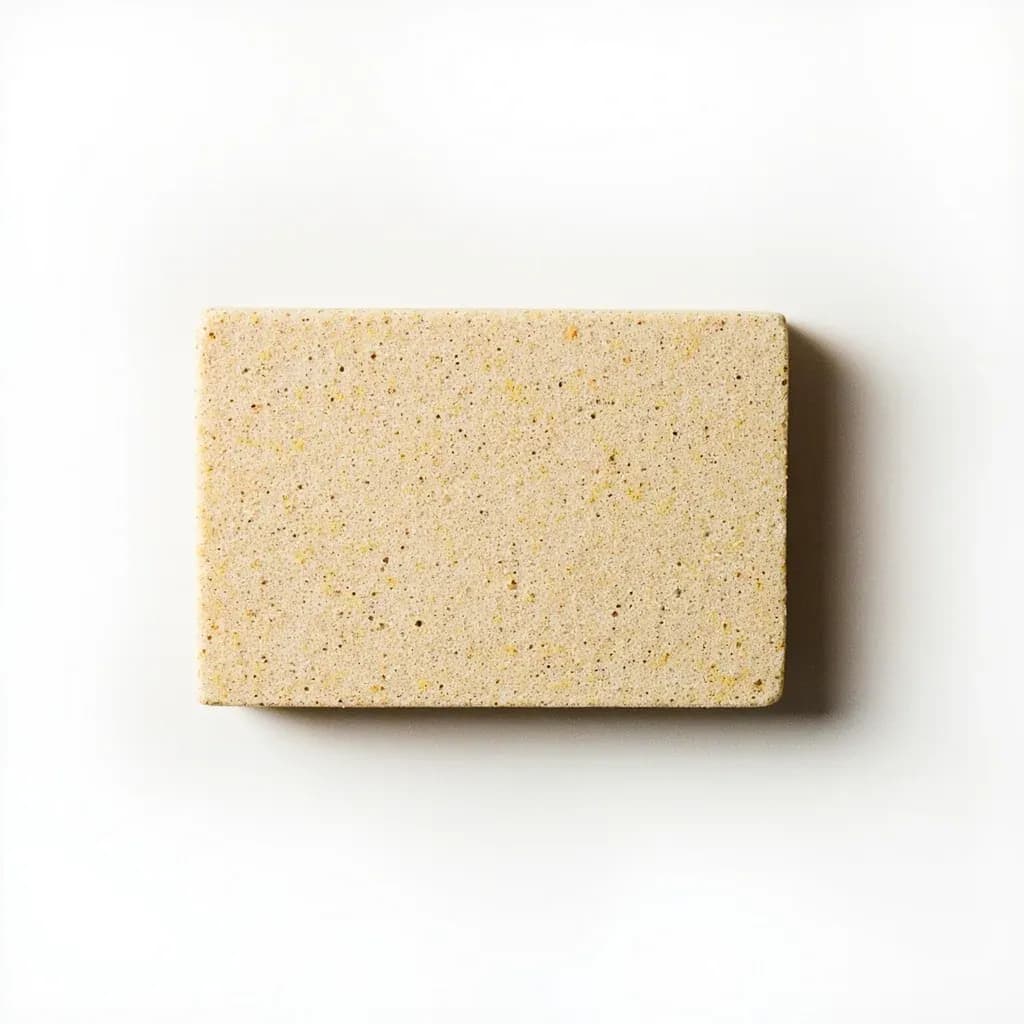
A griddle cleaning stone is a porous block of pressed pumice or recycled glass used to scrub flat-top griddles and grill grates. While the surface is still warm it is rubbed across the metal to grind away carbonized grease and residue, conforming to the surface as it wears down. It contains no chemicals, crumbles away with use, and is favored in restaurants for restoring a clean griddle between services.
A griddle cleaning stone — also sold as a grill brick — is a block of abrasive pumice (or a compressed pumice or recycled-glass equivalent) used to scour baked-on carbon and polymerized grease off bare steel, cast iron, and carbon steel cooking surfaces. Unlike a scraper, which lifts thick residue by wedging under it, the stone works by micro-abrading the topmost layer of cooked-on oil until it releases, leaving a clean, dry metal surface behind. The reason it is favored in commercial kitchens is that it requires no water, no detergent, and no cooling time: you scrape a hot flat-top between tickets and the brick does the rest.
Mechanically, the stone is just soft, porous volcanic rock. Its abrasive grains are friable — they fracture and expose fresh edges as you scrub — which is why a light touch works better than heavy pressure and why the brick slowly wears down with use. It performs best on a warm surface (roughly 300–400°F) where fat and carbon have softened but the steel has not oxidized. On a cold griddle the same brick will skate, clog with debris, and feel almost useless.
The critical limitation is surface compatibility. Pumice is harder than every common non-stick or coated finish, so it will scuff Teflon, scratch anodized aluminum, and dull polished stainless or porcelain enamel. Reserve it for bare or seasoned steel and cast iron — the same surfaces that already tolerate a chain-mail scrubber and a stiff scraper.
Alternatives
Types & varieties
The classic tan/beige rectangular block; the workhorse of diner and short-order griddles.
Denser, more uniform grit than raw pumice; wears down more slowly and is less prone to crumbling mid-shift.
Newer alternative made from crushed recycled glass; sharper grit, marketed as an eco-friendly pumice substitute.
Smaller round or oval stone fitted into a plastic or foam handle; sized and priced for home cooks and light buildup.
Brand-specific bricks cut to fit recessed cleaning-block holders on certain electric griddles and flat-tops.
Why a stone and not a scraper or pad?
A bench scraper and a grill stone solve different problems. A scraper is a wedge: it lifts thick, blistered carbon in sheets and is the right first pass on a heavily loaded griddle. A stone is a fine abrasive: it removes the thin, smoky, polymerized oil film that a scraper leaves behind and that, over weeks, builds into a dark, sticky patina. Used together — scrape first, then stone — they keep a flat-top truly clean. A nylon or chain-mail pad is gentler than pumice and the correct choice on seasoned surfaces you do not want to abrade, but it will not shift heavy carbon the way a brick will.
- Scraper: removes thick, blistered carbon in sheets; non-abrasive but mechanical.
- Cleaning stone: micro-abrades the thin polymerized oil film a scraper leaves behind.
- Chain-mail or nylon pad: gentlest option for seasoned surfaces with light residue; will not shift heavy buildup.
- Sequence for a dirty griddle: scrape → stone → oil → cook.
Surface compatibility at a glance
The stone is harder than every factory coating used on consumer griddles. The rule of thumb: if water beads on the surface because of a coating rather than seasoning, do not use pumice on it. Bare or seasoned steel and cast iron are the only safe targets.
Common uses
Tips & pitfalls
- Preheat the griddle to a warm — not red-hot — temperature, around 300–400°F. The residue softens and the stone glides; a cold griddle makes the brick skate and clog, and a screaming-hot one will burn residue back onto the metal before you can wipe it.
- Hold the brick flat and use long, overlapping sweeping strokes in the same direction as your cooking pass. Circular scrubbing on steel leaves visible swirl marks that show up the next time you sear a pale food like eggs or fish.
- Let the stone do the work. Heavy pressure just fractures the pumice grains, shortens the brick's life, and leaves gritty residue on the griddle.
- Wipe with a dry towel or stiff scraper immediately after scrubbing while the loosened carbon is still loose — it re-bonds to the steel as it cools and becomes harder to remove.
- Do not soak the brick in water before use. Damp pumice crumbles unpredictably, the slurry is hard to fully remove, and water on a 300°F griddle flashes to steam and can scald you.
- For deep carbon, work in sections: heat a zone, scrub, scrape, wipe, and oil it, then move to the next zone — chasing a cold, greasy slab is what wears bricks out fastest.
- After cleaning, wipe a thin coat of neutral oil onto the warm steel or cast iron to protect against flash rust and to start rebuilding seasoning.
- Discard the brick when it is thin enough to flex in your hand; small fragments can lodge in food, and a tired brick is a false economy.
Good to know
- Material
- Pumice — a friable volcanic rock composed mainly of silica and alumina; some blocks are compressed pumice or crushed recycled glass
- Typical size
- Roughly 3–4 in × 2–3 in × 6–8 in rectangular brick; smaller handheld pucks are also sold for home cooks
- Working surface temp
- Best at 300–400°F (150–200°C); effectiveness drops sharply on a cold griddle
- Safe on
- Bare steel, carbon steel, cast iron, and unpolished stainless griddle tops and grates
- Avoid on
- Non-stick, ceramic, anodized aluminum, polished stainless, and porcelain enamel — the abrasive will strip or scuff them
- Cleaning agent required
- None — works dry via mechanical abrasion; water and degreaser are unnecessary and can be absorbed into the porous stone
- Service life
- 2–8 weeks in heavy commercial use; months to years for a home cook, depending on buildup and pressure applied
- Approximate cost
- $5–$15 USD per brick; commercial cases of 12 or 24 are common
Also called
Grill Cleaning Stone · Grill Brick (Pumice Stone) · grill brick · griddle brick · pumice block
Related

Paper Towels
Disposable sheets for spills, drying, and patting dry

Kitchen Towels
Reusable cloths for drying, gripping, and wiping

Oven Mitts
Heatproof gloves to handle hot pans and trays safely

Disposable Gloves
Single-use gloves for safe, mess-free handling

Cleaning Cloths
Reusable cloths for wiping counters and spills

Tortilla Warmer
Insulated holder that keeps tortillas warm and soft

Trivet
Heatproof stand that shields surfaces from hot pots

Ice Bath Setup
Bowl of ice water that halts cooking and sets color