Heat & Safety
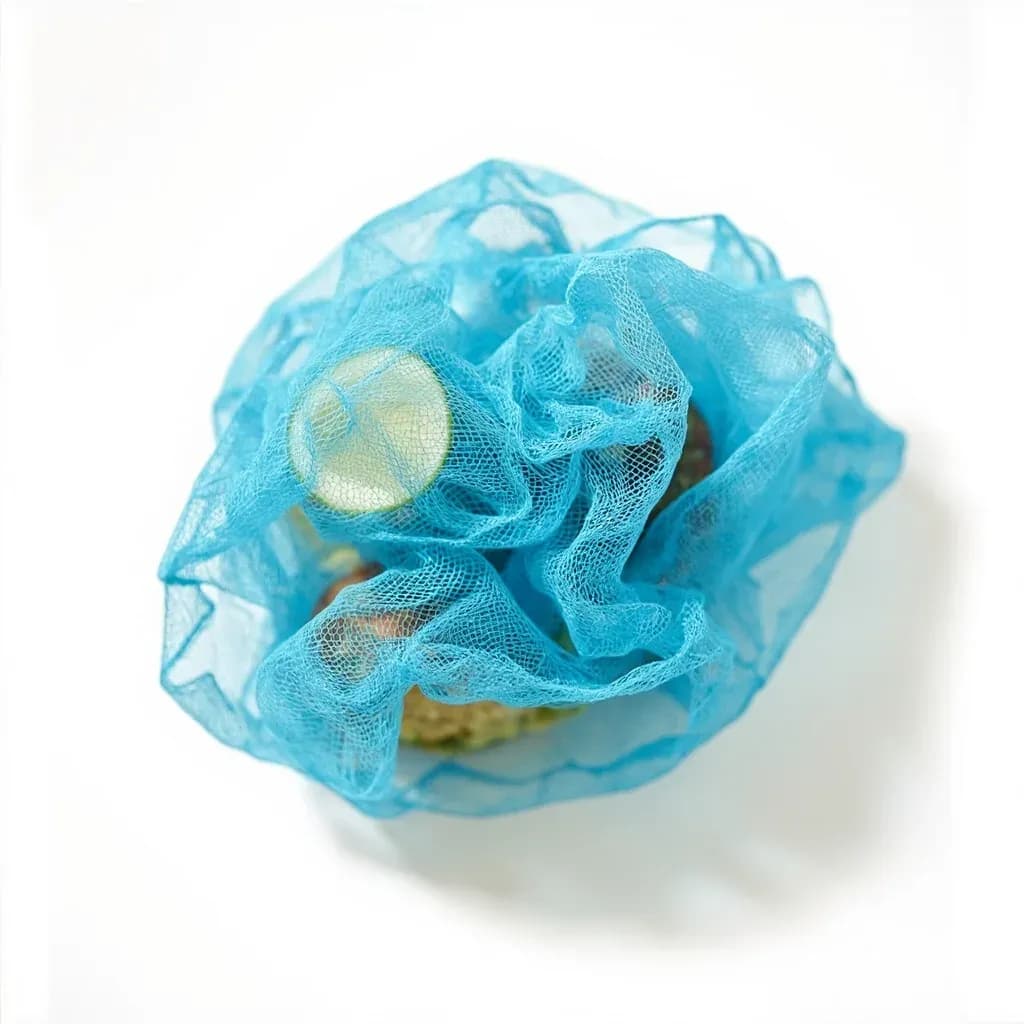
Hairnet
Fine mesh net worn to keep hair contained and out of food during prep.
A hairnet is a lightweight, fine-mesh net worn over the hair to keep loose strands contained and out of food during preparation. It is a standard food-safety and hygiene item in commercial kitchens and food-handling settings. Worn over the whole head, often with a beard net or cap, it helps kitchens meet sanitation rules and prevents stray hair from contaminating dishes.
A hairnet is a fine-mesh garment worn over the head to contain all hair and prevent it from falling into exposed food. In professional food handling, it is a fundamental barrier against physical contamination—one of the most common reasons for health code violations and food recalls. Hairnets are manufactured from nylon, polyester, or polypropylene mesh with openings typically 1–2 mm in diameter, small enough to trap even fine hair strands. They come in both disposable single-use and reusable laundered styles, and are required by food safety regulations in virtually every jurisdiction for any staff member handling unpackaged food. The net fits snugly around the head via an elastic band or reinforced edge, and must fully enclose all hair including the hairline at the temples, nape, and any hair escaping below the band. In practice, the two primary failure modes are hair escaping containment and degraded mesh on worn reusable nets—inspectors catch both instantly.
Alternatives
Types & varieties
Simple elastic band style; pulls over the existing hairstyle; most common in quick-service, food processing, and casual dining
Full coverage that accommodates all hair volume; preferred for longer or styled hair; available in mesh or non-woven fabric
Lightweight, single-use; often pleated for expansion; common in food manufacturing, catering, and large institutions
Durable nylon mesh with reinforced edge; laundered and reused; standard in professional kitchens with dedicated uniform policies
Mesh covering specifically for facial hair; worn over a beard or mustache to contain stray hairs
Single-use non-woven material for facial hair; typically paired with a hairnet for complete hair coverage
Why Hairnets Are Non-Negotiable
Hairnets exist because hair in food is both a physical safety hazard and a psychological one—customers view it as a sign of poor hygiene even when the kitchen is otherwise immaculate. From a regulatory standpoint, hair is considered a physical hazard under FDA Food Code guidelines and most state and local health codes, and its presence in ready-to-eat food can trigger citations, fines, or forced closures during inspections. In commercial kitchens, the expectation extends beyond the head: beard nets are equally required when facial hair is present, as most U.S. state and EU health codes mandate full hair coverage of the head and face. Some operations use color-coded nets to distinguish departments—blue for kitchen, white for pastry—or to designate dedicated food handlers versus management staff who may not handle open food.
- Hair is classified as a physical hazard under FDA Food Code guidelines
- Beard nets are required alongside head hairnets in most U.S. states and EU jurisdictions when facial hair is present
- Color-coded nets help operations enforce role-based food handling policies
Common uses
Tips & pitfalls
- All hair must be completely tucked inside before donning the net—stray strands at the temples, nape, or below the band are the most common inspection failure
- The net should fit snugly without causing discomfort; a loose net shifts during active work and can fall into food or slide back to expose hair
- For thick, voluminous, or styled hair, use a bouffant-style cap rather than a standard pull-on net—the additional coverage prevents blow-outs and keeps hair fully contained
- Replace disposable nets immediately if contaminated (touched the floor, became wet, or tore during use)
- Reusable mesh nets degrade over time—inspect for thinning mesh, small holes, or weakened elastic before each shift; discard when integrity is compromised
- Check your local health codes before purchasing: some jurisdictions specify material requirements, minimum mesh density, or mandate full-head coverage rather than simple pull-on nets
- Pair with a clean hat, visor, or skull cap if your kitchen dress code requires additional headwear over the net
- Pair beard nets with head hairnets whenever facial hair is present—most health inspectors will cite one without the other
Good to know
- Primary Material
- Nylon or polyester mesh; disposable versions often polypropylene
- Mesh Opening
- Typically 1–2 mm—fine enough to contain even fine hair strands
- Health Code Requirement
- Required by food safety regulations in most jurisdictions for anyone handling exposed food
- Common Colors
- White, blue, black; color coding may designate department or role in some operations
- Use Type
- Disposable (single shift) or reusable (laundered and inspected before each use)
- Also Called
- Food handler net, chef's net, bouffant cap (full-head style)
- Fit
- One-size-fits-most with elastic or adjustable band; must sit snug without causing discomfort
- Inspection
- Disposable nets checked each use; reusable nets inspected for tears or thinning mesh before each shift
Also called
Hair Net · hair-net · bouffant-cap
Related

Paper Towels
Disposable sheets for spills, drying, and patting dry

Kitchen Towels
Reusable cloths for drying, gripping, and wiping

Oven Mitts
Heatproof gloves to handle hot pans and trays safely

Disposable Gloves
Single-use gloves for safe, mess-free handling

Cleaning Cloths
Reusable cloths for wiping counters and spills

Tortilla Warmer
Insulated holder that keeps tortillas warm and soft

Trivet
Heatproof stand that shields surfaces from hot pots

Ice Bath Setup
Bowl of ice water that halts cooking and sets color