Wraps & Liners
Ham Cover Cloth (Paño para Jamón)
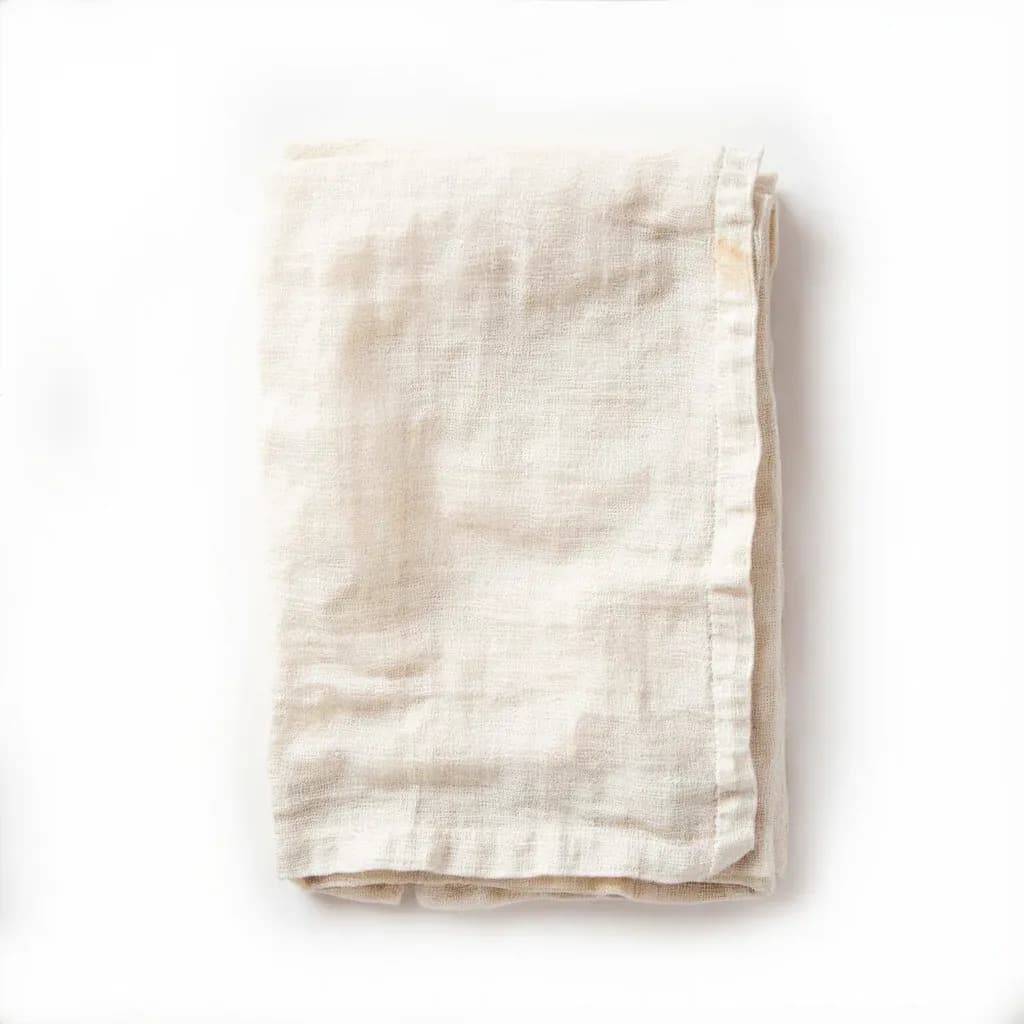
A breathable cloth draped over a cured ham leg to shield the cut face from air, dust, and insects.
A ham cover cloth, paño para jamón in Spanish, is a light breathable cloth laid over the exposed face of a whole cured ham leg between servings. It protects the cut surface from drying out, dust, and flies while still letting the meat breathe. Often paired with the rendered fat or a few drops of oil over the cut, it keeps a jamón in prime condition over the weeks it takes to carve.
The paño para jamón is the unbleached cotton or linen cloth that Spanish ham slicers drape over the cut face of a started jamón ibérico or serrano between slicing sessions. Its job is narrow but essential: block dust, kitchen aerosols, and flies while still letting the exposed meat and fat breathe. The cut face of a dry-cured ham is essentially a slow-drying cross-section, and any covering that traps humidity will turn the fat rancid, gray the lean, and seed the surface with the kind of mold that ruins flavor rather than protecting it. A paño threads that needle by being porous enough to exchange air, absorbent enough to hold a thin film of moisture, and clean enough not to transfer odors.
In practice the cloth is used slightly damp: a cortador runs it under plain water, wrings it until no drops fall, and lays it flat across the cut face so the damp fibers maintain a humid microclimate without condensation. This slows oxidation of the unsaturated fat — critical in ibérico de bellota, where the acorn-fed lipids are especially vulnerable — and keeps the outer layer from hardening into a thick rind that would have to be carved away and discarded. The paño is not a flavoring or curing agent; it is a passive shield, removed before each new cut and replaced or re-moistened as the day goes on.
Used correctly, a paño extends the working life of a started leg to two to four weeks at room temperature, and up to two months for a whole paleta. Used incorrectly — wrapped tight, soaked, scented, or swapped for plastic — it does the opposite and is one of the fastest ways to spoil an expensive ham.
Alternatives
Types & varieties
The everyday standard: plain, undyed cotton, loose enough weave to breathe but tight enough to keep dust and flies off the cut face.
A heavier, more durable traditional option favored by professional cortadores; linen absorbs and holds moisture without feeling wet and resists odor buildup longer than cotton.
A very open-weave version used when ambient humidity is low; maximizes air exchange to prevent the surface from weeping, but offers less protection in dusty or insect-prone rooms.
Cut and often hemmed to the rough contour of a ham face and sold by ham-accessory makers; drapes more neatly for display and service in restaurants and tapas bars.
Commonly bundled as a gift with a jamónero or a whole leg; functionally identical to a plain cloth, though usually smaller and lighter in weight.
Why a started ham needs to breathe
A dry-cured leg is not cooked and not sterile. Once the first slice is cut, the exposed face is a slow-drying cross-section of lean, intramuscular fat, and surface fat — each of which responds to air differently. The lean oxidizes and turns gray within hours if left bare; the unsaturated fat (especially in ibérico de bellota) begins to go rancid on contact with oxygen; and the surface moisture migrates outward and either evaporates, leaving a hard tapa, or pools and feeds surface molds. A breathable cloth moderates all three: it slows oxygen exchange at the surface, holds enough ambient humidity to keep the fat pliable, and physically blocks contaminants. Sealing the same leg in plastic accelerates every one of those problems, which is why Spanish ham schools teach covering, never wrapping.
- Enzymatic and oxidative reactions continue for weeks after slicing, so the cut face is never a stable surface.
- Rancidity in the fat layer is the first quality loss a home cook notices, and it is almost always a covering mistake, not a ham problem.
- A clean, slightly damp paño is the closest a non-vacuum method can get to mimicking the controlled humidity of a curing cellar.
The cortador's three-piece kit
Professional ham slicers in Spain work with a tightly defined kit, and the paño is one of its core accessories. The other essentials are the jamónero — the swiveling ham stand that holds the leg at a comfortable angle — and the cuchillo jamonero, a long, thin, flexible blade designed to release a single sheet of meat roughly the size of the palm. A good cortador keeps two cloths: a larger dampened one for the cut face and a smaller dry one at hand to wipe fat and moisture from the blade between cuts, since a greasy blade smears rather than slices. Beyond the three core pieces, sharpening and deboning tools — a chaira and a deshuesador — round out the professional setup.
- Jamónero (ham holder/stand): positions the leg and rotates as cuts progress up the maza toward the babilla and the tibia.
- Cuchillo jamonero: long, thin, flexible blade for clean, full-face slices.
- Chaira and deshuesador: sharpening steel and a short, stiff boning-style knife for working around the bone.
- Paño para jamón: the covering cloth, sized to drape the cut face.
The tapa ritual
Before re-covering the ham between sessions, Spanish practice calls for trimming a very thin slice — the tapa — off the entire cut face with a clean, sharp knife. This exposes a fresh layer of fragrant fat and lean and removes the slightly oxidized outer film that has built up since the last cut. Frequent covering with a paño reduces how thick that tapa has to be, because the cloth slows oxidation in the first place; neglected hams may need a tapa of a centimeter or more cut away and discarded before usable slices can be taken.
- Trimming should be done with the cuchillo jamonero, not a paring knife, to keep the cut face flat and even.
- In a busy bar, a tapa may be trimmed once at the start of service and once at the end.
- The trimmings themselves are not wasted: diced, they go into tortillas, croquetas, or stews where the concentrated flavor carries the dish.
Common uses
Tips & pitfalls
- Moisten the cloth with plain water and wring it until just damp — a soaking-wet paño drips onto the cut, encourages surface mold, and washes flavor out of the fat layer.
- Cover only the exposed cut face, not the whole leg; the rind and hoof need to keep breathing, and sealing the entire piece in cloth or plastic is the single most common mistake home cooks make.
- Re-moisten the paño every 12–24 hours in dry, heated rooms; in humid climates, use it dry to avoid a 'sweaty' cut face that dulls the knife on the next slice.
- Wash the cloth in unscented soap; scented detergents and fabric softeners transfer to the ham and taint the aroma of the fat, especially in jamón ibérico de bellota.
- Trim a thin tapa off the cut face with a clean, sharp knife before re-covering; this exposes fresh, fragrant fat and lean and is standard in Spanish ham rooms.
- Replace the paño the moment it develops a sour, rancid, or stale-meat smell — a smelly cloth will imprint those notes on the cut surface within hours.
- Never wrap a started ham in cling film, foil, or a sealed container between sessions; trapped humidity oxidizes the fat, turns the lean gray, and can produce off-flavors in as little as 24 hours.
- Store the leg on its jamónero at room temperature, ideally 20–22 °C, away from direct sunlight and strong-smelling foods like cheese, smoked fish, or alliums, which the cut fat readily absorbs.
Good to know
- Origin
- Spain; standard accessory in professional and home ham-cutting practice
- Also called
- Paño cortador, paño jamonero, ham cover, ham shroud
- Material
- Unbleached cotton or linen, loose breathable weave; some are cheesecloth-weight gauze
- Typical size
- Roughly 35 × 50 cm to 50 × 70 cm, sized to drape over the cut face of a whole leg
- Used with
- Jamón ibérico (bellota, cebo de campo, cebo), jamón serrano, and paleta (shoulder ham)
- Storage temperature
- 20–25 °C / 68–77 °F, dry ambient; never refrigerated once the ham is started
- Humidity at use
- Lightly dampened with water only, then wrung out so the cloth is moist, not wet
- Replaces
- Cling film, foil, plastic bags, and airtight containers — all of which trap moisture and cause rancidity
- Shelf life of a started leg
- 2–4 weeks at room temperature under a paño; up to 2 months for a whole paleta
- Care
- Hand or machine wash in unscented mild soap; air-dry; replace when stained, sour, or frayed
Also called
Paño para Jamón · Jamón Cloth · Ham Cloth
Related

Aluminum Foil
Wraps, covers, and tents food for the oven and grill

Parchment Paper
Nonstick liner for clean, even baking and easy release

Wax Paper
Moisture-resistant sheet for wrapping and counter prep

Plastic Wrap
Clings tight to cover bowls and wrap leftovers

Silicone Baking Mat
Reusable nonstick liner that replaces parchment

Cheesecloth
Loose-woven cloth for straining stock and bundling herbs

Beeswax Food Wrap
Reusable wax wrap that molds around bowls and produce

Piping Tips
Shaped nozzles that turn frosting into stars and rosettes