Heat & Safety
Hardwood Lump Charcoal
All-natural charred hardwood that burns hot and clean for grilling and smoking.
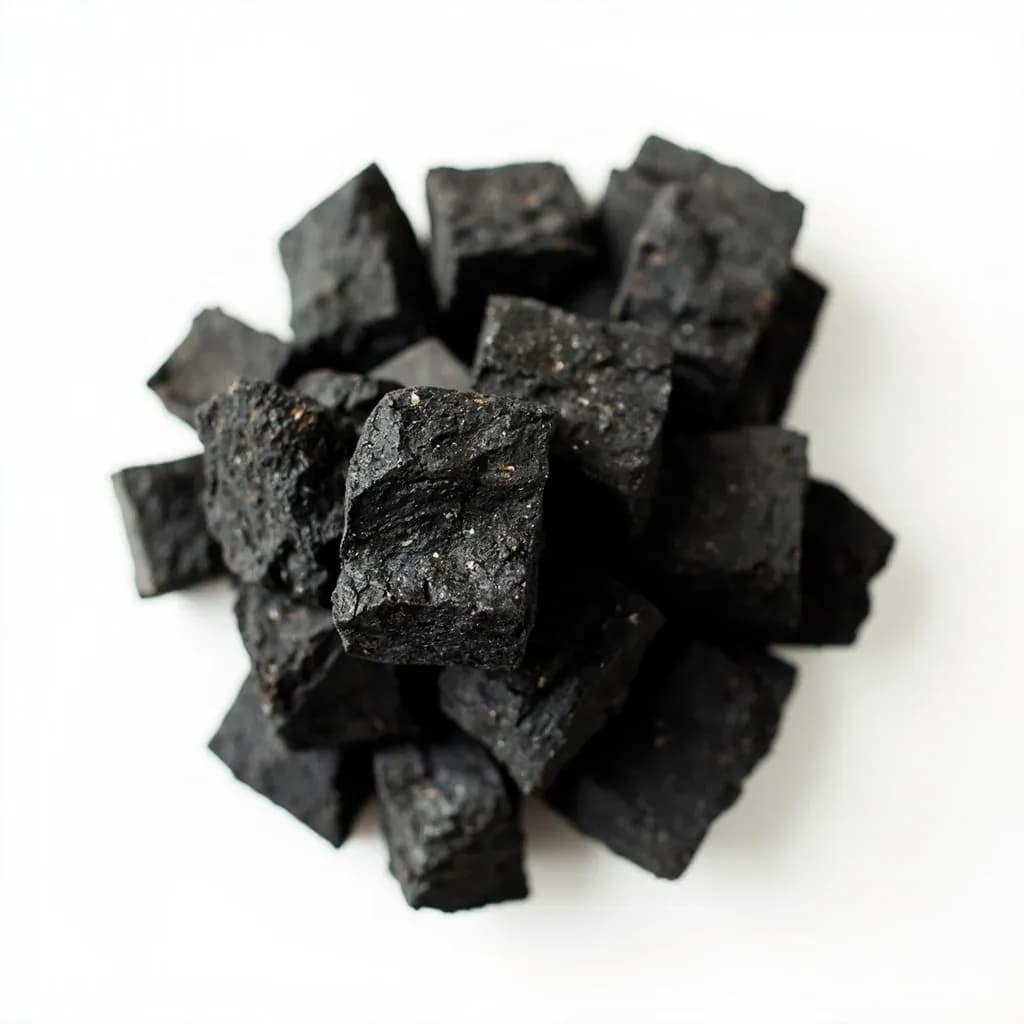
Hardwood lump charcoal is made by charring whole pieces of hardwood, leaving irregular lumps with no binders or fillers. Grillers prize it because it lights fast, burns hotter than briquettes, and gives a clean wood-smoke flavor with minimal ash. It is the fuel for high-heat searing and many ceramic kamado cookers, though piece sizes vary so the burn is a little less uniform than briquettes.
Hardwood lump charcoal is the original cooking charcoal: hardwood that has been burned in a low-oxygen kiln until nearly all the moisture, sap, and volatile compounds have been driven off, leaving behind pieces of almost pure carbon. The process, called pyrolysis or carbonization, takes place at roughly 800–1,000°F and produces irregular chunks rather than the uniform pillow shapes of pressed briquettes. Because nothing is added — no starch binders, no coal dust, no sawdust fillers — what you burn is essentially just charred wood, and what you taste is the food, not the fuel.
In practical terms, lump burns hotter, faster, and cleaner than standard briquettes. A well-lit bed will push 700–1,000°F at the cooking grate, throw off only 2–5% ash by weight, and respond almost instantly when you open or close a damper. That responsiveness is why kamado owners, competition cookers, and steakhouse grillmen reach for it: you can drive a fire up for a sear and then throttle it back for an indirect finish without rebuilding the bed. The trade-off is burn time per pound — lump is denser but less compact, so it goes faster and demands more attention on long cooks.
The other thing to understand about lump is that it produces almost no smoke on its own. Because the wood has already been carbonized, the compounds that create smoke flavor — guaiacol, syringol, the various wood tars — are largely gone. If you want hickory or cherry notes on your brisket, you add a chunk of smoking wood to the coals; lump itself is the heat source, not the flavor source. This separation of heat and smoke is, for many cooks, the whole point of switching from briquettes.
Alternatives
Types & varieties
The workhorse and most common hardwood base; neutral flavor and reliable burn, the default for everyday grilling
Strong, bacon-like smoke character; traditional for ribs, pork shoulder, and competition barbecue
Intense, almost sweet smoke; classic for Tex-Mex and high-heat grilling, but can turn bitter on long cooks
Mild and slightly sweet; a good match for poultry, pork, and vegetables
Light, sweet smoke notes; popular for poultry, ham, and pork
Extremely dense, slow-burning, very high heat; the standard premium lump used in Argentine asado
Dense and long-burning with a mild neutral profile, common in Thai-style grilling and imported into the U.S.
Japanese premium charcoal traditionally made from ubame oak; near-pure carbon, very long burn time, almost no flame, used for yakitori and high-end grilling
Larger, denser pieces screened for ceramic kamado grills where tight airflow control is the norm
Sorted for uniform large pieces with minimal fines and dust; the choice of cook teams and busy kitchens
Reading a Bag: How to Judge Lump Quality
Lump charcoal varies wildly from bag to bag, and the only reliable judge is the bag itself. Lift it: a quality 20-pound sack should feel heavy and have most of its weight in chunky pieces the size of your fist or larger. A light, dusty bag is mostly fines, which clog air gaps, spark, and burn through in minutes. Open it and pour a few pieces into your hand: premium lump has sharp fractured edges and a metallic ring when two pieces knock together, the same way a good clay pot chimes. Soft, crumbly pieces that crush under your thumb usually mean high moisture or incomplete carbonization.
- Heavy bag with large chunks = good; light bag with powder and slivers = bad
- Ringing 'clink' on contact = dense, well-carbonized; dull thud = soft or damp
- Few bark fragments and almost no sawdust = clean burn
- A faint wood smell (not a chemical or sour smell) = properly stored
- Avoid any bag that feels damp to the touch or has visible condensation inside
Lump vs. Briquettes: When to Choose Which
Reach for lump when you want high, fast, controllable heat and clean flavor — searing steaks, grilling fish, running a kamado at 600°F for a pizza, or doing a reverse-seared ribeye where the sear is short and the heat needs to spike. Reach for briquettes when you want a long, steady, predictable fire — an overnight brisket at 225°F, a backyard cookout where you don't want to tend the fire for four hours, or any situation where fuel cost matters more than performance. Some cooks mix the two: plain briquettes for the long, steady bulk of the cook, with lump added at the end to spike the heat for a sear or to crisp skin. Skip the self-starting coated briquettes, though — their binders and lighter-fluid soak will taint the food.
Common uses
Tips & pitfalls
- Always light lump in a chimney starter or with an electric starter; lighter fluid is the single most common mistake and leaves a chemical aftertaste on food
- Break or crack oversized pieces with a mallet so they fit the chimney and catch quickly — most chimney baskets can't hold a single fist-sized chunk
- Wait for a uniform gray ash coating over the coals before placing food, generally 10–20 minutes after the chimney is emptied
- Stack lump in a pyramid or pile for fast ignition; spread for searing; bank to one side for two-zone indirect cooking
- Use roughly 25–30% less lump by volume than briquettes for the same cook — it burns hotter and more efficiently, so what looks like a small pile is plenty
- Add a chunk of smoking wood (hickory, oak, cherry, apple) if you want smoke flavor; lump itself produces almost none
- For long, low-and-slow cooks (8+ hours), supplement with larger logs or expect to add fresh lump every 2–3 hours
- Replenish by adding fresh lump to a hot fire rather than blowing on embers, which introduces ash and cools the bed unevenly
- Close the bottom vents partially once you've reached target temperature; lump's high heat means you can choke it back further than briquettes without the fire dying
- Store in a sealed bin or heavy bag in a dry space — a humid garage will absorb moisture, and wet lump hisses, smokes heavily, and is nearly impossible to light
- Never mix self-starting coated briquettes into a lump fire — the binders and lighter-fluid soak will taint everything cooking on the grate
Good to know
- Composition
- Roughly 85–95% pure carbon with no chemical binders, fillers, or accelerants
- Heat output
- 700–1,000°F at the cooking surface — noticeably hotter than standard briquettes
- BTU value
- About 12,000–14,000 BTU per pound, versus 8,000–9,000 for typical briquettes
- Ash yield
- Only 2–5% by weight, compared to 8–15% for briquettes, so grates stay cleaner
- Smoke output
- Minimal, because the wood is already fully carbonized — smoke flavor comes from added wood chunks
- Ignition time
- 10–20 minutes in a chimney starter, with a uniform gray ash as the readiness signal
- Moisture (premium grade)
- Under 5–8% — wet lump hisses, smokes heavily, and is hard to light cleanly
- Quality test
- Good lump feels heavy for its size and rings with a metallic 'clink' when two pieces strike each other
Also called
Lump Charcoal · natural lump charcoal · binchotan (white charcoal) · hardwood charcoal
Related

Paper Towels
Disposable sheets for spills, drying, and patting dry

Kitchen Towels
Reusable cloths for drying, gripping, and wiping

Oven Mitts
Heatproof gloves to handle hot pans and trays safely

Disposable Gloves
Single-use gloves for safe, mess-free handling

Cleaning Cloths
Reusable cloths for wiping counters and spills

Tortilla Warmer
Insulated holder that keeps tortillas warm and soft

Trivet
Heatproof stand that shields surfaces from hot pots

Ice Bath Setup
Bowl of ice water that halts cooking and sets color