Heat & Safety
Hardwood Logs (Oak / Holm Oak)
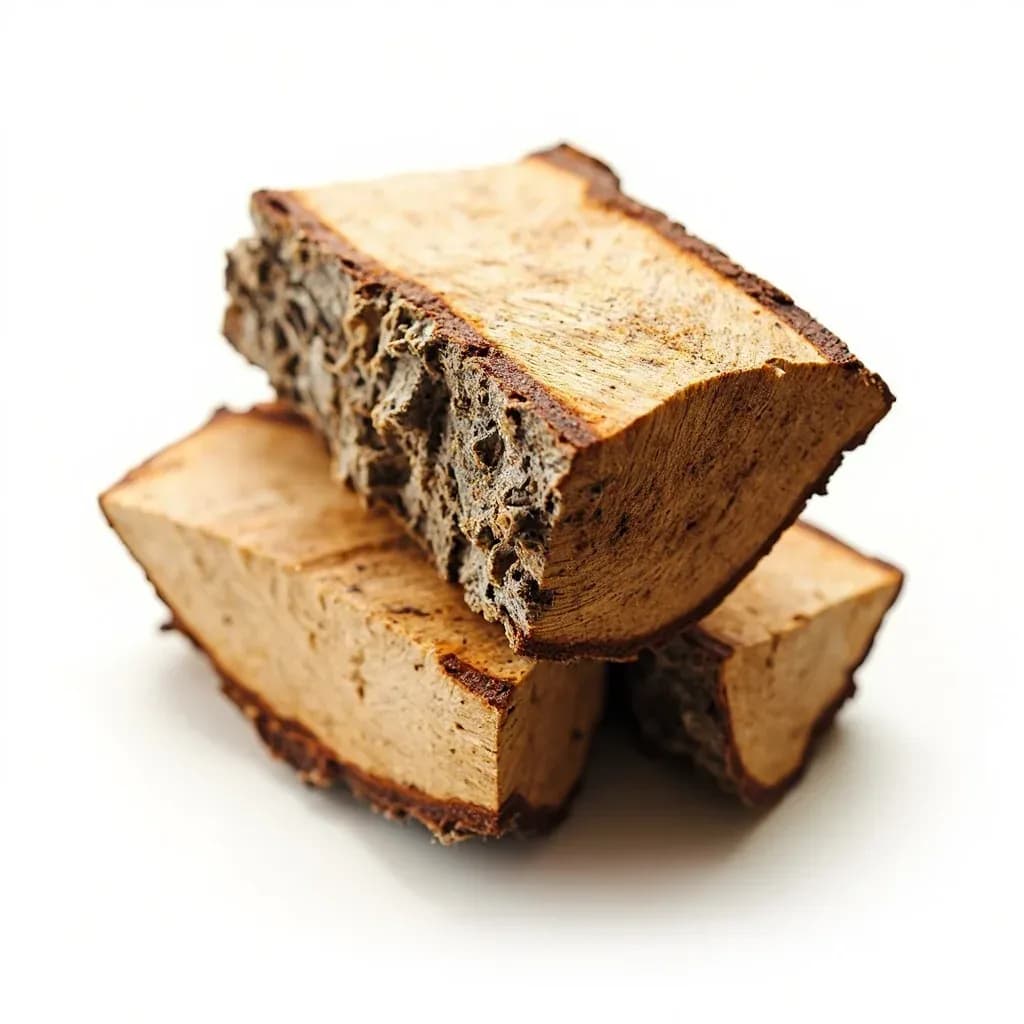
Split hardwood logs burned for live-fire grilling, roasting, and smoking.
Split logs of dense hardwood such as oak or holm oak, burned to fuel live-fire grilling, wood-fired ovens, and smoking. Hardwoods burn long and hot and break down to a steady bed of embers ideal for direct-flame and slow cooking. Properly seasoned (dried) wood is essential, as green wood smolders and gives acrid smoke that taints food.
Oak is the reference hardwood of cooking fires because it sits in the comfortable middle of every axis that matters at the hearth: dense enough to throw serious heat and sustain a long roast, low enough in resin to burn cleanly without tainting food, and mild enough in smoke to partner with almost any protein. A seasoned oak log — typically white oak in North America, European oak in the UK and France, and holm oak (encina) across Spain and Italy — is the most versatile single choice for live-fire grilling, wood-oven cooking, and low-and-slow barbecue.
Physically, oak is among the densest common cooking woods (roughly 700–900 kg/m³ when seasoned), which translates to long-lived embers, steady radiant heat, and an energy density of about 24–30 million BTU per cord — comparable to hickory and beech, and well above softer fruitwoods. Its smoke is medium in intensity, clean, and faintly sweet, with light vanilla and toasted-bread notes that complement rather than mask the food. Because oak carries very little resin, it suits both open grills and enclosed offset smokers, and leaves little creosote on meat provided the wood is properly dried.
Holm oak deserves special mention. The evergreen Quercus ilex of the Mediterranean basin is the traditional fuel under the spit-roasted cochinillo and cordero of the Spanish meseta, and the standard fire for the horno de leña. It is exceptionally dense, giving a long, steady burn with an even cleaner smoke than most temperate oaks, and its small, twisted trunk yields the dense, knobbly logs that Spanish and Italian cooks prize. For most home cooks a split, air-dried white or European oak log will serve beautifully; holm oak is worth tracking down for whole-animal roasting and any application that demands a long, steady burn with restrained smoke.
Alternatives
Types & varieties
Mediterranean evergreen; the traditional fuel for Spanish asados, leña-style lamb, and suckling pig. Very dense, long-burning, mild smoke. Prized in Galicia, León, and Castilla.
North American BBQ benchmark for brisket and pork shoulder. Tight grain, neutral smoke, burns long and hot.
More porous, faster-burning, slightly more acrid; usable but generally considered inferior to white oak for smoking.
Standard firewood across the UK and France; mild smoke, consistent heat, the default choice for European charcoal-grilled meats.
Southern US; extremely dense, very long burn. A regional favourite in Texas barbecue pits.
Mediterranean scrub oak; smaller pieces, fast and hot — historically used in Greek and Andalusian ovens.
Seasoning and Storing Oak
Even the finest oak log will spoil a dish if it isn't properly dried. Green oak — straight from a felled tree — burns poorly, hisses and spits, and blankets food in acrid, creosote-laden smoke. The cure is air-drying, and oak needs longer than most woods because of its density: six months is the absolute minimum, twelve to twenty-four is better, and holm oak or live oak in particular benefit from a full year on the rack before burning.
- Test with a pin moisture meter: under 20% is acceptable, 12–18% is ideal; above 25% the wood will not light cleanly.
- Listen for the hollow ring when two logs are knocked together; green oak sounds dull and dense.
- Look for loosening bark, darkened end-grain, and radial cracks across the log faces — all signs of well-seasoned wood.
- Split to wrist-width (about 7–10 cm) before stacking; a split face sheds moisture far faster than a round one.
- Stack on pallets or 2x4s with bark side up, rows spaced 5–10 cm apart for airflow, and cover only the top — sealed sides trap moisture and breed rot.
Building the Fire
How you arrange an oak fire depends entirely on what you're cooking. Pizza and bread want a rolling flame; a whole lamb wants hours of steady radiant heat; brisket wants ten or more hours of clean, smoky, low combustion. The size, number, and placement of the logs all change with the application.
- Pizza oven: build a small teepee of kindling, add 3–4 short splits (25–30 cm) log-cabin style, and cook when the dome is white-hot and the coals are pushed to one side.
- Parrilla grilling: let a teepee of kindling and 2–3 medium splits collapse to a deep ember bed; cook over glowing coals, not flames, to sear without carbonising.
- Offset smoking: light a small charcoal chimney, then add one oak split at a time to hold 225–275°F (107–135°C); reloading more than one log smothers the fire and stalls the cook.
- Spit-roasting (asado): pack the firebox with a single deep layer of large splits and let it burn down to a long-lived coal bed that will outlast the roast.
Common uses
Tips & pitfalls
- Burn only seasoned hardwood; green wood drops creosote on food and starves the fire of oxygen.
- Reject any log carrying paint, varnish, glue, or pressure-treatment — combustion releases toxic fumes that linger on meat.
- Avoid softwoods (pine, spruce, fir, cedar): their resins give a turpentine, sooty smoke that ruins flavour and coats oven walls.
- Split logs to wrist-width (about 7–10 cm) before drying — it speeds seasoning and gives a far more controllable fire than rounds.
- Build a two-zone fire: a hot flame-and-ember side for searing, a slower coal bed for roasting or smoking, so you can move food as needed.
- Let flames die back to glowing embers before placing food over the fire; live flames carbonise the outside before the inside has cooked.
- Holm oak is excellent with fatty meats (lamb, pork, duck) — its clean smoke won't overpower rendered fat.
- Replenish with one log at a time rather than reloading — sudden temperature drops are the most common cause of tough, dry barbecue.
- Store under a tarp or roof with the sides open; a fully sealed stack traps moisture and grows fungus that can flavour the smoke.
- Kiln-dried 'briquette logs' are acceptable but burn hotter and shorter than cord oak — adjust quantities accordingly.
Good to know
- Wood type
- Dense hardwood from the genus Quercus; softwoods are unsuitable for cooking.
- Primary cooking species
- Holm Oak (Quercus ilex), White Oak (Q. alba), European Oak (Q. robur and Q. petraea), Live Oak (Q. virginiana).
- Density (seasoned)
- Roughly 700–900 kg/m³ — among the densest common cooking woods.
- Energy
- About 24–30 million BTU per cord, comparable to hickory and beech.
- Smoke flavour
- Medium intensity; clean, slightly sweet, with light vanilla and toast notes.
- Resin content
- Very low — safe for indoor wood-fired ovens and offset smokers.
- Seasoning & moisture
- 6–24 months of air-drying; burn below 20% moisture, ideally 12–18%.
- Typical log length
- 25–50 cm depending on firebox; pizza ovens 25–30 cm, grills and offsets 40–50 cm.
Also called
Wood Splits (Logs) · Hardwood Logs · Oak Logs · Firewood Splits
Related

Paper Towels
Disposable sheets for spills, drying, and patting dry

Kitchen Towels
Reusable cloths for drying, gripping, and wiping

Oven Mitts
Heatproof gloves to handle hot pans and trays safely

Disposable Gloves
Single-use gloves for safe, mess-free handling

Cleaning Cloths
Reusable cloths for wiping counters and spills

Tortilla Warmer
Insulated holder that keeps tortillas warm and soft

Trivet
Heatproof stand that shields surfaces from hot pots

Ice Bath Setup
Bowl of ice water that halts cooking and sets color