Storage & Containers
Honey Jar
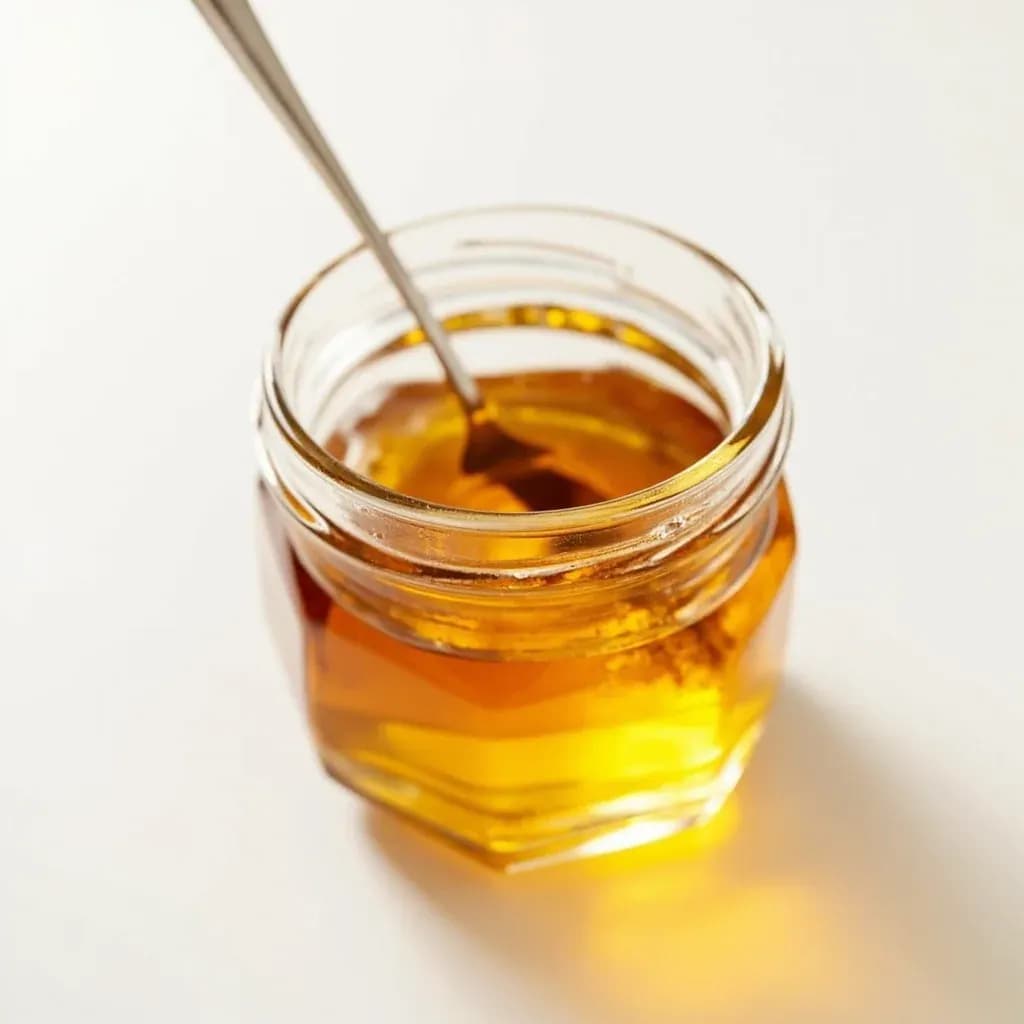
A glass jar for bottling, storing, and selling honey while keeping it sealed and crystallization-friendly.
A honey jar is a glass container, often hexagonal or classic mason-style, used to bottle and store honey. Beekeepers and producers fill them for retail and home use because glass does not absorb flavor and lets the honey's color show. A tight lid keeps moisture out, and gentle warming in the jar reverses the natural crystallization that thick honey develops over time.
A honey jar is a food-grade container—almost always clear soda-lime or flint glass, occasionally amber glass or food-grade PET—engineered to bottle, store, and sell honey without compromising its flavor, color, or shelf life. Unlike a general-purpose canning jar, a dedicated honey jar pairs a thick, non-reactive glass body with a continuous-thread metal screw cap whose plastisol or pulp-and-plastic liner is designed to be filled warm. As the honey cools and contracts, the soft liner is pulled slightly down inside the cap, creating a partial vacuum that locks the lid tight and keeps atmospheric moisture away from the hygroscopic contents. Honey readily absorbs water from the air, and once its moisture content drifts above roughly 18 percent, yeasts can wake up and ferment it—so the seal is doing real work.
The faceted Muth jar, patented by Cincinnati apiarist Charles Muth in 1879, marks the start of standardized North American honey containers designed to move from hive to shelf; the six-sided hex and shouldered Queenline that fill most grocery shelves today followed as commercial beekeeping expanded through the twentieth century. Those faceted and paneled walls aren't purely decorative; they refract light so a buyer can read the honey's color and clarity at a glance. Sizes are quoted by net weight rather than volume, because honey is roughly 1.42 times denser than water, so a one-pound jar holds significantly less than a pint of space. For long-term pantry storage, the right jar matters: glass won't absorb moisture, won't off-gas, and won't cloud the way PET can over years of use.
Alternatives
Types & varieties
Squat, square-shouldered faceted glass jar (8–32 oz) with a glass or metal lid; the traditional beekeeper's jar designed by Charles Muth in 1879.
Six-sided glass jar with a gold metal screw lid; the dominant North American retail honey jar, prized because the panels catch light and show off the honey's color.
Shouldered, slightly tapered jar with vertical panels; popular with hobbyist beekeepers and at fairs for showcasing varietal honey color.
Plain round shoulderless jar (8 oz, 16 oz); economical and easy to label, common for private-label and bulk honey.
Glass jar molded to resemble a traditional woven straw beehive; decorative, often used for gifts and small-batch artisanal honey.
Squeezable PET plastic bear with a flip-top cap; lightweight and unbreakable, though less favored for long-term storage.
Tinted glass that filters UV light; used when honey will sit on a sunny counter or in a display window for long periods.
Wire-bail closure with a rubber or silicone gasket; reusable and airtight, useful for both honey storage and small-batch mead secondary fermentation.
Small 1–2 oz glass jars with clamp or screw lids; used for samples, party favors, hotel service, and tasting flights.
Why the liner matters
The single technical feature that defines a real honey jar is the plastisol liner in the cap. Plastisol is a PVC-based sealing compound that stays slightly soft at room temperature; when you fill the jar with warm honey (95–110 °F / 35–43 °C is the sweet spot) and screw the lid down, the heat softens the liner further and warms the trapped air inside. As everything cools, the contracting air pulls the liner slightly inward, creating a partial vacuum that audibly 'pops' the lid and locks it tight. This vacuum is what keeps atmospheric moisture from migrating into the honey—and because honey is hygroscopic, that seal is doing real work. A standard two-piece mason-jar flat lid and ring can substitute in a pinch, but the seal is less reliable for long storage and the threaded band can corrode where sticky honey residue accumulates in the threads.
Glass versus plastic for long-term storage
For honey that will sit in the pantry for a year or more, glass is the better choice for three reasons: it doesn't absorb ambient moisture the way PET can, it won't scratch or cloud from years of contact with acidic honey, and it won't off-gas or pick up flavors from a garage, basement, or shed. Squeeze-bear PET bottles are convenient and child-friendly, but they're better treated as a short-term dispensing bottle—fill a small bear from a glass master jar as needed, rather than storing bulk honey in plastic for the long haul.
Common uses
Tips & pitfalls
- Sterilize jars in a 200 °F / 93 °C oven for 15 minutes or in boiling water for 10 minutes; drain upside down and fill while still warm to reduce cracking and trapped air bubbles.
- Warm honey to 95–110 °F (35–43 °C) before bottling so it flows smoothly and the plastisol liner can form a good vacuum—never exceed 120 °F / 49 °C, or natural enzymes degrade and HMF levels climb.
- Fill to the correct headspace (about ½ inch / 12 mm) so the liner has room to seat and pull a vacuum as the honey cools.
- Wipe the rim and threads with a clean, damp cloth before capping—honey residue will glue the lid to the jar and can ferment the seal surface, breaking the vacuum.
- Store filled jars at cool room temperature (60–70 °F / 15–21 °C) and away from direct sunlight; refrigeration speeds crystallization and darkens the honey.
- To reliquefy crystallized honey, set the sealed jar in a bowl of warm (not boiling) water for 20–40 minutes—microwaving can scorch the honey and crack the glass.
- Weigh your jars before and after filling to confirm accurate net-weight labeling; honey's density (~12 lb per US gallon) makes volume a poor guide.
- Add a tamper-evident shrink band or breakaway seal around the lid if selling at a market, farm stand, or retail shop, and label with varietal, harvest date, country of origin, and 'best before' guidance.
Good to know
- Primary material
- Clear soda-lime or flint glass; amber glass for UV protection; food-grade PET plastic for squeeze-bear styles.
- Standard lid
- Continuous-thread metal screw cap (gold- or black-painted tinplate) with a plastisol or pulp-and-plastic liner that forms a vacuum seal as the honey cools.
- Common retail sizes (US)
- 1 oz sample, 8 oz (½ pint), 12 oz (¾ pint), 16 oz (1 lb), 24 oz (1½ lb), 32 oz (2 lb); bulk 5 lb and 55 lb drums for beekeepers.
- Net-weight labeling
- Honey is sold by weight, not volume; a 1 lb jar holds about 454 g of honey but occupies less than a pint because honey is roughly 1.42× denser than water.
- Thermal tolerance
- Glass tolerates warm-bath filling up to about 200 °F / 93 °C; sudden temperature swings can crack jars, so warm jars before pouring in hot honey.
- pH compatibility
- Honey is acidic (pH roughly 3.5–5.5) and slow to spoil; glass is non-reactive and won't leach or absorb flavors across years of storage.
- Origin of the Muth jar
- Patented by Cincinnati apiarist Charles Muth in 1879; the classic squat, faceted shape still used by small-scale beekeepers today.
- Regulatory note (US)
- Retail honey jars must be food-grade, lead-free, and tamper-evident; many states require a shrink band or breakaway seal over the lid.
Also called
Honey Pot · Glass Honey Jar
Related

Freezer Bags
Thick, sealable bags built to fight freezer burn

Storage Bags
Resealable bags for fridge storage and marinating

Storage Container
Lidded container for leftovers, prep, and meal kits

Glass Container
Oven-to-fridge glass that won't stain or hold odors

Plastic Container
Lightweight, stackable storage for everyday leftovers

Vacuum Sealer Bags
Airtight bags for long freezing and sous-vide

Reusable Bags
Washable silicone bags that replace single-use plastic

Mason Jar
Sealed glass jar for preserves, pickles, and storage