Heat & Safety
Insulated Pit Gloves
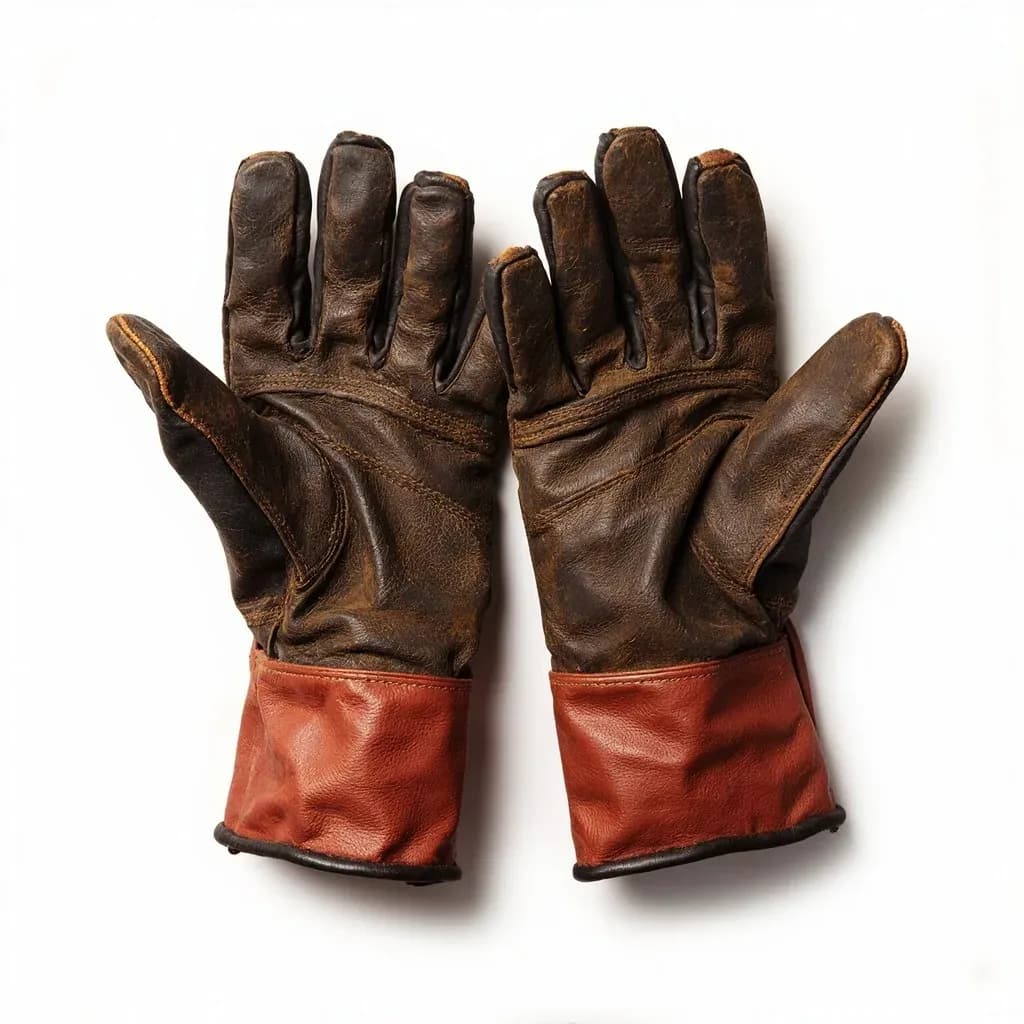
Heavy heat-resistant gloves for handling hot grates, coals, and large cuts at the barbecue pit.
Insulated pit gloves are thick, heat-resistant gloves used at the smoker or barbecue pit. Pitmasters wear them to move blazing-hot grates and coals, lift heavy briskets and pork shoulders, and tend the fire without burns. Many use an aramid or silicone outer with a soft cotton liner, and longer cuffs guard the forearms from radiant heat.
Insulated pit gloves are heavy-duty heat-resistant hand protection built for the specific hazards of live-fire and pit cooking: lifting glowing grates, shifting splits of burning wood, and pulling whole briskets or hogs from radiant-heat environments that exceed 600°F. Unlike a domestic oven mitt, which is sized for a baking sheet and a 450°F oven, a pit glove is engineered for sustained contact with hot cast iron, direct exposure to flame, and the awkward, heavy lifts of offset-smoker and whole-hog work. They are core personal safety equipment for any cook who regularly works around open flame and sustained radiant heat.
What separates a useful pit glove from a kitchen drawer liner is a combination of three specifications: the contact-heat rating of the outer shell, the length of the cuff, and whether the materials are certified food-safe. The best pairs marry an aramid (Nomex or Kevlar) weave or heavy leather shell with a food-grade silicone palm, giving the cook both the radiant-heat tolerance of a welding glove and the cleanability of a kitchen tool. For most backyard and competition pit work, look for a contact rating above 700°F and a gauntlet that reaches at least mid-forearm.
Pit gloves are not a substitute for distance, judgment, or a long-handled tool — they buy you grip and a few extra seconds of tolerance, not immunity. Used well, they let a cook rotate a 200-pound hog or rearrange a charcoal bed without flinching; used carelessly, they give a false sense of security around open flame. Treat them as the active safety layer between you and the fire, and pair them with common sense about radiant heat, dampness, and grip.
Alternatives
Types & varieties
Highest direct-flame rating, often 900°F+; thin and dexterous but offer less wet- and steam-protection; the fiber chars rather than melts.
Non-slip grip and easy to wash, typically rated 425–500°F; less effective against open flame and direct contact with coals.
Combines high heat tolerance with grip and cleanability; the most common premium pit-glove format on the market today.
Traditional pitmaster choice, especially in gauntlet lengths; absorbs moisture and can scorch, but resists sparks and radiant heat well.
Best for wet and steam tasks like opening a pressure canner or handling a kettle lid; lower dry-heat ceiling than aramid.
Wrist cuffs suit kettle and gas grills; 14–18 in gauntlets protect forearms inside offset smokers, brick pits, and whole-hog cookers.
Reading the heat rating
Manufacturers quote two different numbers, and understanding the difference is the single biggest factor in buying the right glove. Contact-heat is how hot a surface the glove can touch for a short time without burning through; radiant- or convective-heat is how the glove handles open flame, hot air, and embers. A glove rated to 932°F contact may still fail quickly in a 600°F airflow with a stiff breeze blowing across the cook chamber. For most offset-smoker and whole-hog work, prioritize a contact rating of 700°F or higher and a gauntlet that covers at least to mid-forearm. If the manufacturer only lists one number, ask which test it comes from — EN 407 breaks the rating into six sub-codes, and a glove that scores well on contact may score poorly on convective heat.
Pit gloves vs. grilling gloves
Marketing treats them as the same product, but a kettle-grill glove and a pit glove are designed for fundamentally different hazards. A kettle lid briefly radiates 400–500°F and the user stays at arm's length; a 250-gallon offset smoker exposes the hand to sustained 600–700°F radiant heat plus direct contact with cast-iron dampers and grates. The moment you start working over real fire — charcoal baskets, wood splits, glowing embers, brick pits — step up to a heavier, longer, higher-rated glove than the one you used for weeknight burgers. The same logic applies to wood-fired ovens and cinder-block hog cookers, where radiant heat off the walls can burn exposed forearms even when the cook never touches a flame.
Care and lifespan
A pit glove is one of the few pieces of cooking equipment where maintenance is genuinely a safety issue. Silicone and aramid shells can be rinsed under hot water with mild dish soap, and many are top-rack dishwasher safe; leather should be brushed off, conditioned sparingly with a leather balm, and never submerged or machine-washed, since water strips the protective oils and stiffens the hide. Replace any glove whose inner lining shows through, whose silicone has cracked, or whose leather has hardened and lost flex — heat damage is not always visible from the outside, and a glove that feels stiff or thin at the fingertips has lost most of its protection. Store gloves hanging or flat in a dry area; a damp leather glove sealed in a pit cabinet will mold and quietly rot between cooks.
Common uses
Tips & pitfalls
- Match the glove to the job: silicone-coated for grip and easy cleanup, aramid for direct flame and radiant heat, leather for sparks and rough surfaces like ash pans and split wood.
- A wet leather or cotton glove conducts heat and steam straight to the skin — never reach into a pit with damp gloves, and never grab a wet towel as a stand-in for one.
- Wrist-length gloves are not enough inside an offset smoker; radiant heat travels up the forearm and will burn skin that the cuff does not cover.
- Test a new pair on a low-temperature task — a warm grate, not a 700°F sear — before trusting them on a competition cook.
- Stop using any glove that is charred through, has melted spots, or feels stiff and thin at the fingertips; heat damage is not always visible on the surface.
- Silicone-coated palms can turn slick when coated in rendered fat; when moving a heavy brisket, grip with the flat of the palm rather than pinching with the fingertips.
- Designate a 'wet hand' and a 'dry hand' glove set if you regularly move between water pans and the firebox, and never use the wet-side glove to grab a hot log.
- Do not assume a glove is food-safe; only models explicitly labeled FDA food-contact or food-grade silicone should touch the finished product — standard leather is not rated for food contact.
Good to know
- Category
- Personal protective equipment / heat protection
- Typical heat rating
- 475°F to 932°F (245°C to 500°C), depending on material and construction
- Common shell materials
- Aramid fibers (Nomex, Kevlar), food-grade silicone, neoprene, heavy cowhide or suede leather, and hybrid silicone-over-aramid constructions
- Typical lengths
- Wrist (~10 in / 25 cm), mid-forearm (~13 in / 33 cm), gauntlet (14–18 in / 35–46 cm)
- Reusability
- Reusable; aramid and silicone versions typically last 1–3+ years of regular pit use; leather wears fastest
- Cleaning
- Silicone and aramid versions are usually hand- or machine-washable; leather should be air-dried only and never soaked
- Relevant standards
- EN 407 (thermal hazards) and EN 388 (mechanical); FDA food-contact status is brand- and material-specific
- Food safety
- Only gloves labeled food-grade silicone or food-safe aramid should contact cooked food directly; standard leather is not rated for food contact
- Cost range
- Roughly $20–$60 for consumer pairs; $50–$150 for professional gauntlet-grade gloves
Also called
BBQ Gloves · Pitmaster Gloves · Grill Gloves
Related

Paper Towels
Disposable sheets for spills, drying, and patting dry

Kitchen Towels
Reusable cloths for drying, gripping, and wiping

Oven Mitts
Heatproof gloves to handle hot pans and trays safely

Disposable Gloves
Single-use gloves for safe, mess-free handling

Cleaning Cloths
Reusable cloths for wiping counters and spills

Tortilla Warmer
Insulated holder that keeps tortillas warm and soft

Trivet
Heatproof stand that shields surfaces from hot pots

Ice Bath Setup
Bowl of ice water that halts cooking and sets color