Storage & Containers
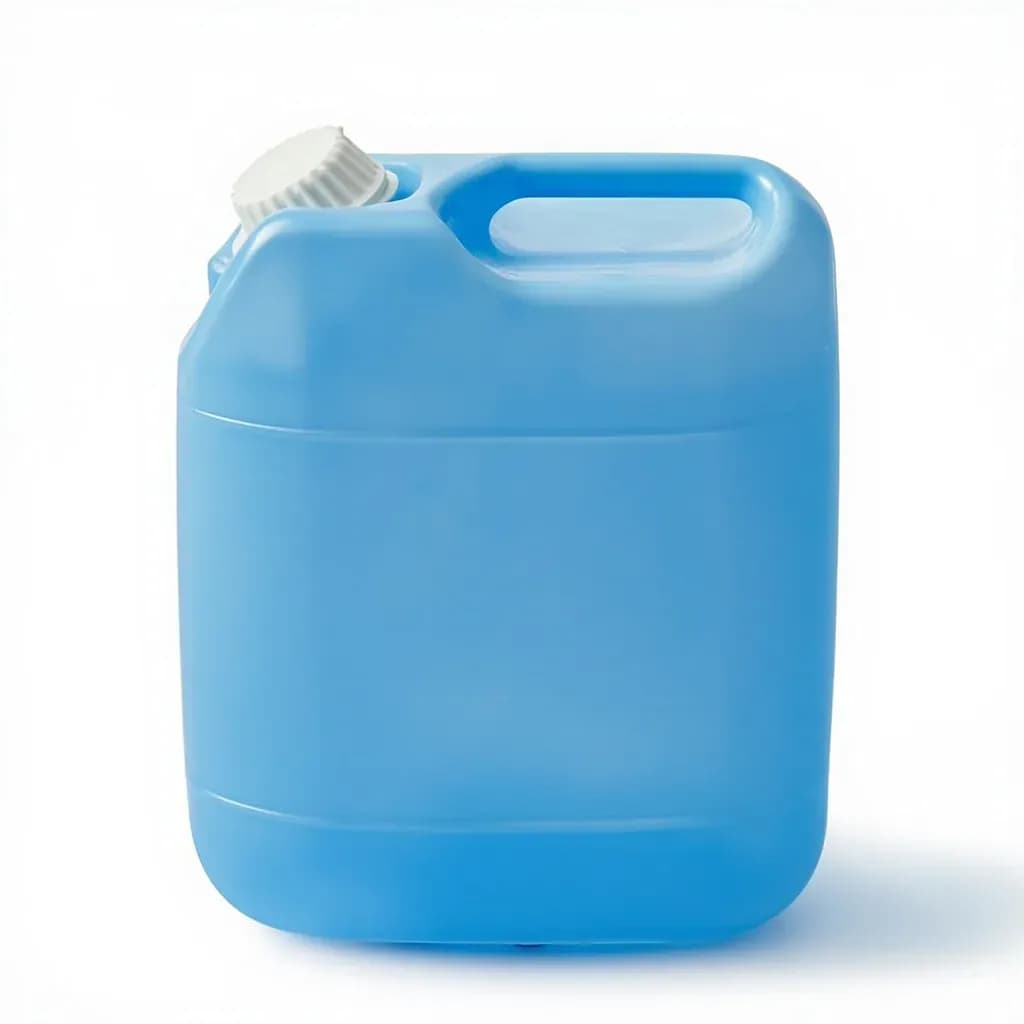
Water Jerry Can
A rugged sealed container for storing and transporting cooking and washing water.
A water jerry can is a stackable plastic or metal jug used to store and carry potable water for cooking, cleaning, and drinking where running water is limited. The screw cap and pour spout keep water clean and easy to dispense. Food-grade versions are kept separate from any used for fuel to avoid contamination.
A jerry can is a sealed, rugged container originally designed for the German Wehrmacht in the late 1930s and now found wherever water or other liquids need to be moved and stored in bulk. To a cook it looks like an oversized jug, but it is actually a piece of field-tested engineering: three handles (one on top, two on the sides) for one- and two-person lifts, an integrated spout with a captive cap, and — most importantly — an internal air-vent tube that runs from the spout up to the top of the can. That vent is what allows the liquid to pour in a smooth, controllable stream from a flat-bottomed, sealed container rather than glugging and splashing. For a household, a base-camp cook, or a sailor maintaining a remote galley, that combination of durability, capacity, and predictable pouring is exactly the answer to 'where do I keep twenty litres of water and how do I get it into a pot without making a mess.'
Modern versions split into two families. The original enameled-steel pattern (faithfully reproduced by makers such as Wavian and Wedco) is nearly indestructible but heavy, prone to rust if the enamel chips, and largely a hobbyist or overlander choice. The blow-molded high-density polyethylene (HDPE) jerry can is what the rest of us actually use: a kilo or so empty, rustproof, food-safe when properly certified, and cheap enough to keep several on hand. Both share the same 20 L NATO footprint — about 5.3 US gallons — which is the practical sweet spot for a single person to carry when full and the standard size for stacking, crates, and vehicle tie-downs.
Alternatives
Types & varieties
The original pattern: enameled steel, three handles, bayonet-style spout with vent. Indestructible but heavy; rusts at any chip in the enamel.
Modern civilian workhorse — light, rustproof, cheap, and food-safe when certified. The default choice for kitchen and emergency storage.
North American moulded-plastic design with a self-venting spout; popular for camping and overlanding kits.
German-made faithful copies of the WWII Wehrmacht can; favoured by preppers and overlanders for authenticity and durability.
Cube-shaped variants designed to pack tightly on pallets and in vehicle cargo areas.
Soft-sided, fold-flat design weighing a few hundred grams; useful where pack volume matters more than rigidity.
Drum-style cans with a side or bottom spigot for dispensing into pots without lifting the full weight.
Plastic carrier that holds two 20 L cans side by side for transport and long-term rotation.
The air-vent mechanism
The single feature that distinguishes a jerry can from a generic jug is its air-vent system. A sealed container will not pour smoothly because as liquid leaves, a partial vacuum forms inside and the stream collapses into an air-lock. The jerry can solves this with a thin tube that runs from the spout up to the top of the can, alongside the main flow. When you loosen the vent cap (or open a vented spout on the North American pattern), air enters through that tube as water leaves through the main opening, and the can pours in a clean, controllable arc. This is why jerry cans can be tipped almost completely over without glugging, and why a standard water bottle or carboy cannot. When shopping, look for a captive vent cap — the small cap that sits on the spout — and learn its two positions: closed for transport, open for pouring. Lubricate the rubber gasket once a year with food-grade silicone grease so the seal stays tight against dust and insects.
Material discipline
The single most important rule for kitchen use is material discipline. Only virgin, food-grade HDPE — typically marked with a #2 recycling code and a 'food safe' or 'potable water' label — should hold drinking or cooking water. HDPE is one of the few plastics that does not leach appreciable quantities of chemicals into water, and it does not absorb flavours in a way that affects drinking water. Fuel, kerosene, and unknown-chemical cans must never be repurposed for water: the plastic absorbs fuel aromatics that are impossible to fully remove, and the residue is unpleasant at best and toxic at worst. If a can has no markings, no recycling code, or any fuel smell, treat it as contaminated and route it to non-food use — chain-saw fuel, white-gas for a camp stove, kerosene — or recycle it. Steel reproductions are exempt from the fuel-leach risk but introduce their own: chipped enamel exposes bare steel that rusts and gives water an iron taste.
Common uses
Tips & pitfalls
- Only use cans explicitly marked food-grade or potable-water safe. A can that previously held gasoline, kerosene, or unknown chemicals should never be repurposed for cooking water — the plastic absorbs fuel aromatics that no amount of rinsing will remove.
- Choose opaque or dark-coloured HDPE for long-term storage. Clear or translucent cans let in light and grow algae within weeks, even in clean water.
- Clean and sanitise cans twice a year with a dilute unscented household-bleach solution (≈ 5 mL per 4 L / 1 tsp per gallon), then rinse thoroughly and let dry before refilling.
- Always engage the air-vent cap when transporting and disengage it when pouring — the vent is what lets the can flow in a steady stream instead of glugging and splashing.
- Rotate stored water every 6–12 months. Jerry cans are excellent containers but not magic ones; water goes stale, and CDC, Red Cross, and FEMA guidance is to refresh the stock annually even in sealed containers.
- Replace HDPE cans showing crazing, a chalky surface, warping, or any fuel or chemical smell. UV degradation makes the plastic brittle and porous long before it visibly cracks.
- Store cans in a cool, dark place — a basement, garage, or shaded closet. Heat accelerates both microbial growth in the water and polymer breakdown in the plastic.
- Label each can with the fill date using a paint pen or waterproof tag. 'Oldest first' rotation prevents forgotten stock, which is the most common failure of any home water reserve.
Good to know
- Origin
- Germany, late 1930s; designed for the Wehrmacht and patented c. 1936–1937.
- Etymology
- 'Jerry' was British WWII slang for Germans; the term 'jerry can' was popularized by Allied troops encountering captured Wehrmacht stock.
- Classic capacity
- 20 L (≈ 5.3 US gal / 4.4 imp gal) is the NATO/military standard. Common consumer sizes are 5, 10, 15, 20, and 25 L.
- Materials
- Original: cold-rolled enameled steel. Modern: blow-molded high-density polyethylene (HDPE).
- Weight (20 L empty)
- Steel ≈ 4.5–5 kg (10–11 lb); HDPE ≈ 1.0–1.2 kg (2.2–2.6 lb). Full ≈ 21–25 kg depending on material.
- Food safety
- For drinking and cooking water, use only virgin, food-grade HDPE marked with a #2 recycling code and 'food safe' or 'potable water' labeling.
- Distinctive design
- Three handles (one on top, two on the sides), integrated pour spout, and an internal air-vent tube that allows splash-free pouring from a sealed container.
- Service life
- Steel cans last decades if kept dry; HDPE cans typically 5–10+ years of regular use before UV embrittlement sets in.
- Storage color
- Opaque or dark colors block light and inhibit algal growth; clear cans grow algae within weeks.
Also called
jerrycan · plastic-water-jerrycan · water-storage-container · rainwater-storage-tank · water jug
Related

Freezer Bags
Thick, sealable bags built to fight freezer burn

Storage Bags
Resealable bags for fridge storage and marinating

Storage Container
Lidded container for leftovers, prep, and meal kits

Glass Container
Oven-to-fridge glass that won't stain or hold odors

Plastic Container
Lightweight, stackable storage for everyday leftovers

Vacuum Sealer Bags
Airtight bags for long freezing and sous-vide

Reusable Bags
Washable silicone bags that replace single-use plastic

Mason Jar
Sealed glass jar for preserves, pickles, and storage