Storage & Containers
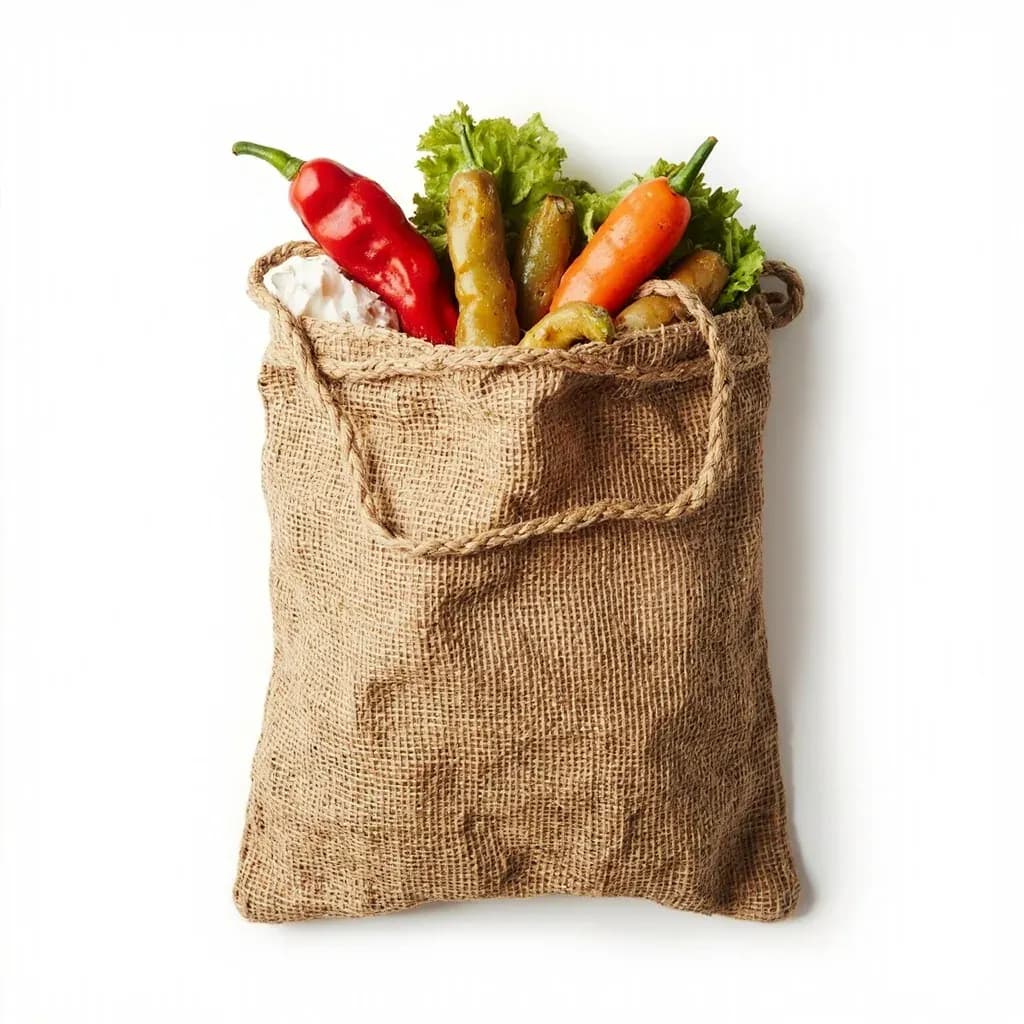
Jute Storage Bag
A breathable woven jute sack for storing dried beans, grains, coffee, and root vegetables.
A jute storage bag is a coarse woven sack made from natural jute fiber. Its breathability makes it ideal for storing dried beans, grains, green coffee, and root vegetables, letting air move so the contents do not sweat or mold. Sturdy and reusable, it is the traditional bulk-shipping sack and often gets a hermetic liner inside for long-term, pest-resistant storage.
A jute storage bag is a sack woven from the long bast fibers of the Corchorus plant, the same material that has carried rice, grain, and pulses across South Asia for centuries. The weave is loose enough to pass air freely, which is the bag's defining feature: dry goods stay cool, residual humidity dissipates rather than condensing, and root vegetables get the dark, ventilated microclimate that delays sprouting and softening.
The flip side of breathability is exposure. A jute sack will not seal out moisture, pests, or odors, and the fibers will absorb ambient smells if stored near anything pungent. In a modern kitchen it is best understood as a microclimate manager rather than a sealed container — outstanding for short- to medium-term storage of dry staples and root crops, and most useful when paired with a rigid jar, tin, or food-safe bucket for long-term keeping. It is inexpensive, fully compostable at end of life, and quietly effective when matched to the right job.
Alternatives
Types & varieties
Traditional loose-weave jute sack, the classic form for rice, grains, and legumes; sometimes sold with a food-grade polyethylene liner
Smaller bag with a cord closure, sized for beans, lentils, coffee, or a bulk-bin portion
Interior food-safe liner (cotton or PE) that prevents fiber shedding and contains fine contents like flour or small seeds
Medium-weave general-purpose variant widely sold in kitchen and craft aisles
Larger, roomier weave sized for potatoes, onions, garlic, and shallots — dark, cool, and well ventilated
Mid-size jute bag with a fold-over or drawstring top, sized for 250 g to 1 kg of whole beans
Pairing jute with rigid containers
A well-run modern pantry almost always combines jute bags with sealed containers, and the combination works better than either alone. The jute provides the breathable microclimate that dry staples and root crops actually need; the rigid jar or tin behind it handles the jobs breathability cannot — long-term rodent protection, exclusion of grain weevils and pantry moths, and keeping aromatic items from contaminating one another. A practical layout is a wooden pantry shelf lined with small jute pouches for the beans, lentils, and rice in active rotation, plus a row of glass jars or food-grade tins holding deeper reserves of the same staples. The bag is also worth using as the outermost layer when decanting bulk-bin purchases at home: let the jute breathe on the counter for a day so residual warmth and humidity can escape before you commit the contents to a sealed container.
Common uses
Tips & pitfalls
- Always let grains, beans, and produce dry completely before bagging — any residual moisture invites mold inside the weave.
- Buy bags labeled food-grade; industrial jute sacking can carry machine-oil residues from non-food supply chains.
- Avoid storing anything pungent nearby — jute readily absorbs and holds onion, spice, and smoke odors.
- For flour, ground spices, or small seeds, line the bag with cotton muslin or use the lined variant to keep fiber lint out of the food.
- Keep bags out of direct sunlight; UV weakens jute fiber and can warm the contents enough to shorten shelf life.
- Air the bag outdoors and shake it out periodically to clear dust and dislodge any pantry moths before they establish.
- Replace the bag every couple of years — fraying seams and thin spots are an early sign the weave is giving up.
- Do not use jute for liquids, oily items, or anything that needs a true moisture barrier.
- A wooden pantry shelf with good air circulation is the ideal spot; plastic bins negate the breathability that makes the bag worth using.
- For very long-term grain storage, pair the bag inside a food-safe bucket or tin to keep rodents and insects out.
Good to know
- Material
- Woven natural jute fiber, a bast fiber from the Corchorus plant (primarily Corchorus capsularis and Corchorus olitorius)
- Origin
- India and Bangladesh are the dominant producers; jute has been cultivated on the Indian subcontinent for centuries
- Also known as
- Gunny sack (traditional loose-weave form), hessian (UK), burlap (US, a broader category often made from jute)
- Key property
- Highly breathable woven construction allows continuous air exchange, keeping contents cool and dry
- Moisture behavior
- Absorbs some ambient humidity then releases it; does not provide a moisture barrier
- Common sizes
- Small pouches (250 g–1 kg), medium sacks (2–5 kg), and large grain or root-vegetable sacks (25–50 kg)
- Lifespan
- Roughly 2–5 years of regular kitchen use before the fibers weaken and seams begin to fray
Also called
Jute Bean Storage Bag · Burlap Sack · Hessian Bag
Related

Freezer Bags
Thick, sealable bags built to fight freezer burn

Storage Bags
Resealable bags for fridge storage and marinating

Storage Container
Lidded container for leftovers, prep, and meal kits

Glass Container
Oven-to-fridge glass that won't stain or hold odors

Plastic Container
Lightweight, stackable storage for everyday leftovers

Vacuum Sealer Bags
Airtight bags for long freezing and sous-vide

Reusable Bags
Washable silicone bags that replace single-use plastic

Mason Jar
Sealed glass jar for preserves, pickles, and storage