Wraps & Liners
Linen Proofing Cloth (Couche)
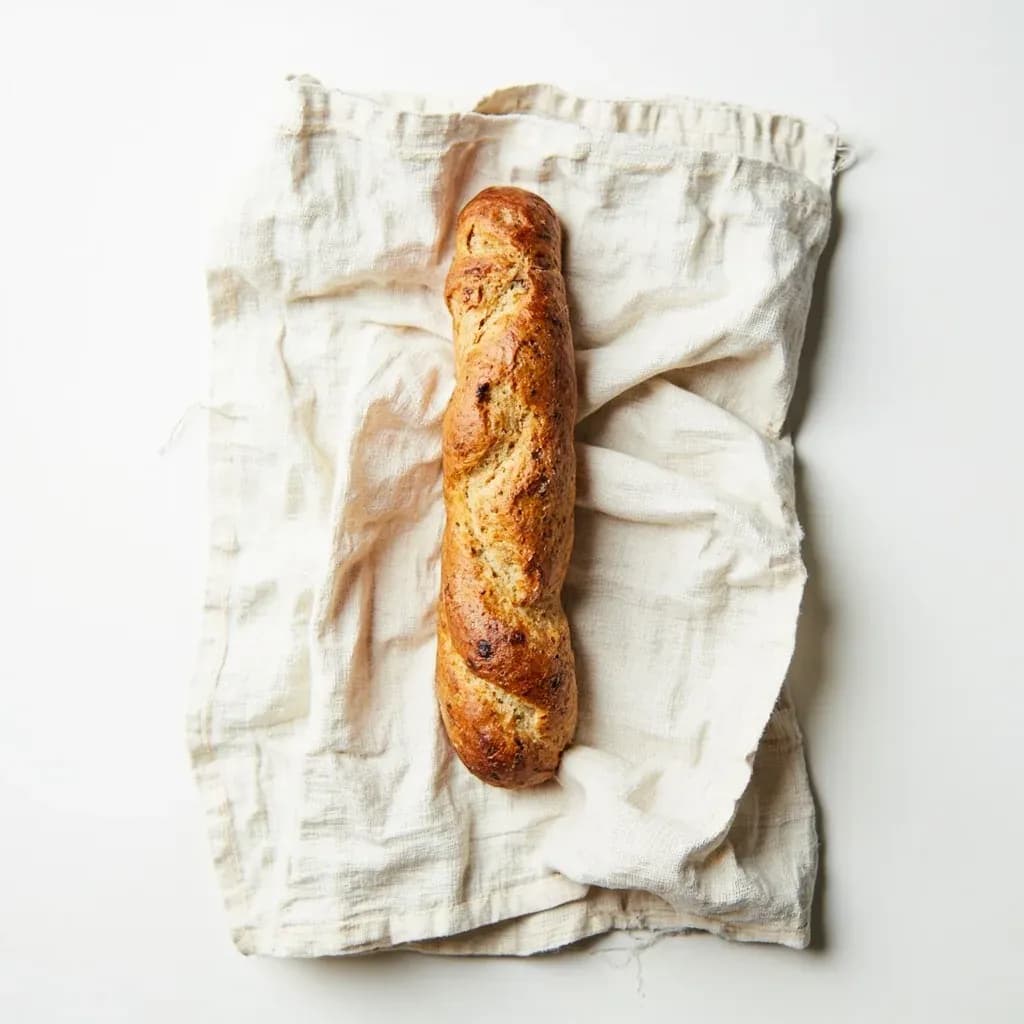
A heavy floured linen cloth that cradles and shapes baguettes and loaves during their final proof.
A linen proofing cloth, or couche, is a stiff heavyweight flax cloth that bakers dust with flour and pleat to hold shaped dough during the final rise. The folds support baguettes and batards so they keep their form and proof against the cloth rather than spreading flat. The natural linen wicks just enough surface moisture to set a good skin without sticking, and it is never washed, just brushed and air-dried.
A couche is a heavy, tightly woven linen cloth that keeps shaped bread dough standing upright, separated, and aerated during the final proof. Without one, a freshly shaped baguette or bâtard sags sideways under its own weight, losing the elongated silhouette that defines those loaves and undermining the oven spring that comes from a well-developed skin. The cloth's deep folds—called plis—form rigid channels between loaves and give the dough something to push against as it rises, directing expansion upward rather than outward.
Made from heavyweight linen (roughly 200–300 gsm), the couche holds its shape under wet dough in a way flimsier fabrics cannot. A generous dusting of flour—traditionally a blend of bread flour and rice flour—prevents sticking without pasting onto a wet surface. The name comes from the French coucher, meaning "to lie down" or "to rest," referring to the dough settling into its folds for the last hour before the oven. Pronounced "koosh," it remains standard equipment in French boulangeries and any serious home bread setup.
A couche is diagnostic as well as functional: if dough sticks stubbornly to the cloth, something is usually off—under-floured fabric, over-hydrated dough, or a skin that didn't form properly during shaping. The tool itself contributes nothing to flavor; its work is purely geometric, shaping the vessel the bread will become.
Alternatives
Types & varieties
Long rectangular linen with deep accordion folds (plis) sized for 4–6 baguettes at once
Wider cloth designed for oval loaves, often with parallel ridge folds rather than perpendicular pleats
Circular linen for round loaves; largely superseded by bannetons for most applications
Rigid wooden frame fitted with heavy canvas; common in high-volume artisan bakeries for batch proofing
Factory-treated with a starch coating for immediate use; less common than untreated linen
Modern rigid alternative; easier to sanitize but lacks the fabric's moisture regulation and grip
How the Plis Work
The genius of a couche is in the folds. When you pleat the linen into deep, sharply creased channels—each fold roughly two to three fingers wide—you create little troughs that cradle a shaped loaf on three sides. The fabric walls hold the dough upright while the channels between loaves keep neighbors from kissing and merging as they expand. The folds should be deep and crisp; shallow pleats let dough sag sideways and lose the elongated profile you shaped it to keep.
The flour in the troughs serves two roles: it prevents the wet skin of the dough from adhering to the linen, and it provides a slightly textured surface that leaves faint ridges on the finished crust where the dough contacted the folds. These markings are cosmetic rather than functional and bear no comparison to the deliberate patterns created by scoring.
- Pleat the couche deeply before flouring—shallow folds collapse under heavy dough.
- Lay each shaped loaf seam-up in its channel so surface tension keeps the skin taut.
- Space loaves at least one finger apart; they will swell.
- Set the couche on a sheet pan or wooden board for easy transport to the oven.
Couche vs. Banneton
For elongated loaves—baguettes, épis, ficelles, bâtards—the couche is unmatched: nothing else holds a long shape with so little investment. For round loaves, however, the banneton (or brotform) wins. A banneton is a coiled cane basket that wicks surface moisture from the dough, building a drier skin that scores cleanly and produces a more dramatic crust. A linen couche offers less aggressive moisture wicking than a cane banneton, so round loaves proved on a couche tend to have a softer, less defined crust than those proved in a banneton.
In short: reach for the couche when shape is the priority, and for the banneton when crust and score definition matter most.
- Couche for: baguettes, bâtards, épis, pan loaves without a tin.
- Banneton for: boules, miches, round sourdoughs where crust and score matter.
- If you need both, prove on the couche for shape support, then transfer carefully to a banneton for the final stretch of proof to develop a drier skin.
Care and Longevity
A well-cared-for couche will last years; a neglected one mildews in a week. The cardinal rule is dryness. After each use, shake out loose flour, hang the couche over a rack or clothesline, and let it air-dry completely before folding. Any trapped moisture breeds mildew, and a mildewed couche will sour every loaf it touches. Wash only when visibly soiled—cold water, mild soap if needed, and absolutely no detergent, bleach, or fabric softener, all of which leave residues that inhibit browning on the next bake.
Replace the couche when the fabric thins, develops holes, or refuses to hold its folds after flouring. A floppy couche is worse than no couche at all.
- Air-dry fully between every use—no exceptions.
- Cold water and mild soap only when soiled; never detergent or bleach.
- Store loosely folded; tight creases become weak points that fray.
- Replace when the fabric thins or stops holding crisp folds.
Common uses
Tips & pitfalls
- Dust the couche generously with a 50/50 blend of bread flour and rice flour—rice flour markedly reduces sticking on wet doughs.
- Knock or brush excess flour off the dough just before loading the oven; loose flour scorches black and tastes acrid.
- Air-dry the couche completely between uses; trapped moisture breeds mildew and sour smells that taint subsequent bakes.
- Wash in cold water with mild soap only; skip detergent, bleach, and fabric softener, all of which leave residues that inhibit crust browning.
- Create sharp, deep folds (plis) when setting up—shallow folds let dough sag sideways and lose shape.
- Lay shaped dough seam-up in the folds so surface tension keeps the loaf skin taut and the top smooth.
- For very hydrated doughs (80%+), use rice flour as the primary dusting—wheat flour absorbs and pastes onto wet skins.
- Stiff, purpose-made linen couches hold shape far better than improvised tea-towel substitutes, which sag under heavy dough.
Good to know
- Material
- 100% linen or heavy linen-cotton blend, tightly woven
- Etymology
- From French coucher ("to lie down" or "to rest")
- Pronunciation
- koosh
- Typical Size
- 35–40 cm wide × 60–100 cm long; commercial rolls run longer
- Fabric Weight
- Heavy, roughly 200–300 gsm; must hold folds without collapsing
- Origin
- France; standard equipment in traditional boulangeries
- Cleaning
- Cold water wash only; no detergent, bleach, or fabric softener
- Storage
- Must be fully air-dried before folding to prevent mildew
Also called
Couche · Bakers Couche · Proofing Linen
Related

Aluminum Foil
Wraps, covers, and tents food for the oven and grill

Parchment Paper
Nonstick liner for clean, even baking and easy release

Wax Paper
Moisture-resistant sheet for wrapping and counter prep

Plastic Wrap
Clings tight to cover bowls and wrap leftovers

Silicone Baking Mat
Reusable nonstick liner that replaces parchment

Cheesecloth
Loose-woven cloth for straining stock and bundling herbs

Beeswax Food Wrap
Reusable wax wrap that molds around bowls and produce

Piping Tips
Shaped nozzles that turn frosting into stars and rosettes