Heat & Safety
Lye-Resistant Gloves
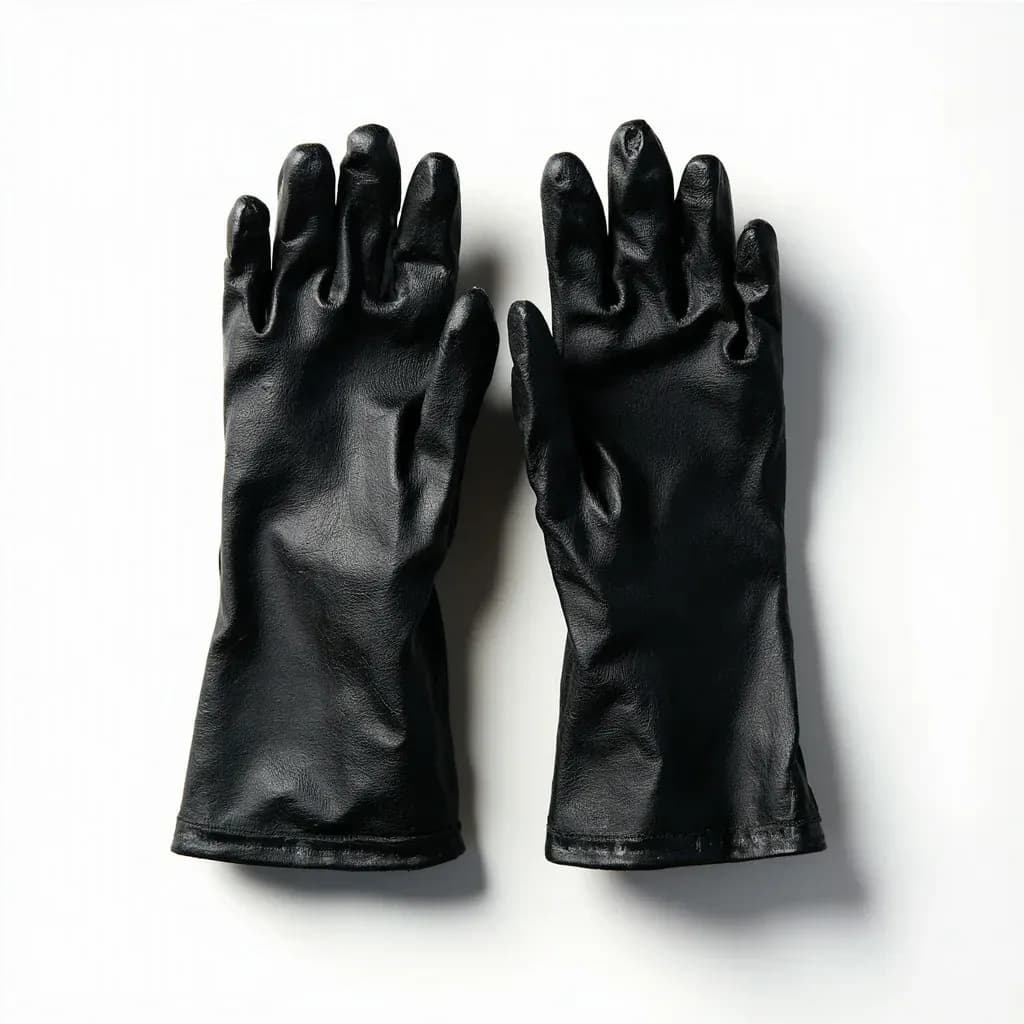
Chemical-resistant gloves that protect hands from caustic lye when making pretzels, soap, or hominy.
Lye-resistant gloves are thick chemical-resistant gloves, usually nitrile or neoprene, that shield the skin from caustic sodium or potassium hydroxide. Bakers wear them when dipping pretzels in lye solution, and cooks use them when nixtamalizing corn or handling food-grade lye for olives and century eggs. Because lye burns on contact, the gloves are essential safety gear alongside goggles whenever a strong alkaline bath is in play.
Lye-resistant gloves are heavy-duty elastomer gloves engineered to withstand prolonged contact with sodium hydroxide (NaOH) and potassium hydroxide (KOH) — the strong bases used in traditional pretzel-making, cold-process soap, and nixtamalization. At a working pH of 13–14, a single splash or dip of food-grade lye can produce a deep chemical burn within seconds. The right glove buys the cook time: a quality butyl rubber gauntlet delivers one to eight hours of permeation protection against 50% NaOH, turning an immersion accident into an inconvenience rather than a trip to the emergency room.
Material is everything in this category. The phrase "chemical-resistant" on a retail label is nearly meaningless without a permeation rating against strong bases, and most general-purpose gloves — latex, thin disposable nitrile, vinyl — begin to swell, soften, and let lye through within minutes of contact with a 3–4% bath. The gloves that genuinely work (butyl rubber, heavy unsupported nitrile of 20 mil or thicker, neoprene, and PVC) were developed for industrial chemical handlers and remain the standard for anyone regularly handling lye in the kitchen.
For most home cooks, a single pair of reusable butyl or thick nitrile gauntlets reserved for lye projects will last for years and cost less than a dinner out. They are not, however, a substitute for splash goggles, a long-sleeve shirt, or an apron, and they do not eliminate the need for a neutralizing agent (dilute vinegar or citric acid) staged on the counter. Treat them as one layer of a deliberate lye-safety setup, not a stand-alone solution.
Alternatives
Types & varieties
The gold standard for concentrated lye work — long cuff, excellent base resistance, slightly reduced tactile sensitivity. Brands include Showa Best, Honeywell North, and Mapa.
20–30 mil unsupported nitrile; cheaper and more dexterous than butyl but breaks down faster in hot, concentrated solutions.
Good general chemical resistance including bases; a reasonable middle ground for occasional use.
Inexpensive and widely available in restaurant supply; offer moderate lye resistance for short, cold tasks but stiffen in cold and degrade in heat.
Cotton-flocked interior absorbs sweat and makes them easier to don and remove during repetitive dipping work.
Single-use heavy nitrile exam gloves — acceptable for very brief contact with dilute lye (e.g., washing hominy) but not for dipping pretzels in a 3–4% bath.
NOT recommended. Latex degrades rapidly in contact with NaOH and offers poor protection.
Choosing the Right Glove
Match the glove to the project rather than buying one pair for everything. A once-a-year Bavarian pretzel session and a weekly cold-process soap batch call for different setups.
- For dipping pretzels in a hot 3–4% NaOH bath or mixing lye water for soap, choose butyl rubber gauntlets with a 10–14 inch cuff that seals over the sleeve. The long cuff protects the inner forearm, which is the most common splash zone when lowering a basket into a bath.
- For nixtamalization or washing hominy, where the lye solution is cooler and contact shorter, 20–30 mil reusable nitrile is usually adequate and offers better feel for stirring and skimming.
- For occasional, low-risk tasks like dissolving a small amount of pickling lime, an inexpensive flock-lined PVC or neoprene glove is acceptable as long as it is intact and rinsed promptly after use.
- For any direct food-contact work, confirm the glove carries an FDA or USDA food-contact approval, since industrial chemical gloves are not always rated for contact with food.
Inspection and Care
A glove that looks fine can be compromised by a single pinhole or chemical attack, so routine inspection is part of the safety protocol.
- Before each use, fill the glove with water, twist the cuff closed, and squeeze gently to check for pinholes, weak seams, or swelling. Any drip means the glove is retired.
- Rinse with clean water after each session, towel dry, and air-dry away from direct heat, UV light, and ozone-generating motors — all three shorten rubber lifespan.
- Reserve lye gloves for lye work only. Cross-contamination with fats, acids, or solvents accelerates degradation and can transfer off-flavors to food.
- Replace gloves at the first sign of discoloration, tackiness, or reduced elasticity. A glove that has absorbed lye may look normal while offering dramatically reduced protection.
Common uses
Tips & pitfalls
- Never use dishwashing gloves, latex gloves, or thin disposable nitrile for concentrated lye — they soften, swell, and let the chemical through within minutes.
- Pair gloves with chemical-splash goggles, a long-sleeve shirt, and an apron; lye burns to the eye or inner arm are far more serious than hand contact.
- Keep a bowl of dilute vinegar or citric acid solution nearby to neutralize splashes on skin or surfaces before rinsing with copious water.
- Always add lye to water, never water to lye — the exothermic reaction can splash concentrated solution violently, even through adequate gloves.
- Let lye solution cool to room temperature before handling when possible — heat accelerates glove degradation and increases burn severity.
- Size up if you are between sizes; chemical gloves run snug, and a tight fit reduces both dexterity and the seal between cuff and sleeve.
- If a glove tears or swells noticeably mid-task, stop immediately, rinse hands thoroughly, and swap gloves — do not continue 'just for a moment.'
Good to know
- Primary purpose
- Hand protection when handling sodium hydroxide (NaOH) or potassium hydroxide (KOH) solutions used in food preparation.
- Caustic hazard
- Food-grade lye (NaOH) is highly alkaline, typically pH 13–14 in solution, and causes severe chemical burns on contact with skin.
- Compatible materials
- Butyl rubber, thick nitrile (≥20 mil / 0.5 mm), neoprene, and PVC resist lye; natural rubber latex and thin disposable nitrile do not.
- Recommended thickness
- Heavy-duty chemical gloves of 20–30 mil (0.5–0.75 mm) for concentrated lye work; gauntlet cuffs extending 10–14 inches up the forearm.
- Food-safety requirement
- Gloves must be FDA/USDA food-contact approved (or equivalent) when used for direct food handling such as dipping pretzels or washing nixtamal.
- Permeation standards
- Look for EN 374 / EN 16523 chemical permeation data or ASTM F739 ratings from the manufacturer; not all 'chemical-resistant' gloves are tested against strong bases.
- Breakthrough time
- Quality butyl gloves typically give 1–8 hours of breakthrough protection against 50% NaOH; thin disposable nitrile can fail in minutes.
- Cost
- Reusable butyl or thick nitrile gauntlets typically run $15–$40 per pair; disposable food-grade nitrile is cheaper but unsafe for prolonged lye contact.
Also called
Caustic-Resistant Gloves · Chemical-Resistant Gloves · Pretzel Lye Gloves
Related

Paper Towels
Disposable sheets for spills, drying, and patting dry

Kitchen Towels
Reusable cloths for drying, gripping, and wiping

Oven Mitts
Heatproof gloves to handle hot pans and trays safely

Disposable Gloves
Single-use gloves for safe, mess-free handling

Cleaning Cloths
Reusable cloths for wiping counters and spills

Tortilla Warmer
Insulated holder that keeps tortillas warm and soft

Trivet
Heatproof stand that shields surfaces from hot pots

Ice Bath Setup
Bowl of ice water that halts cooking and sets color