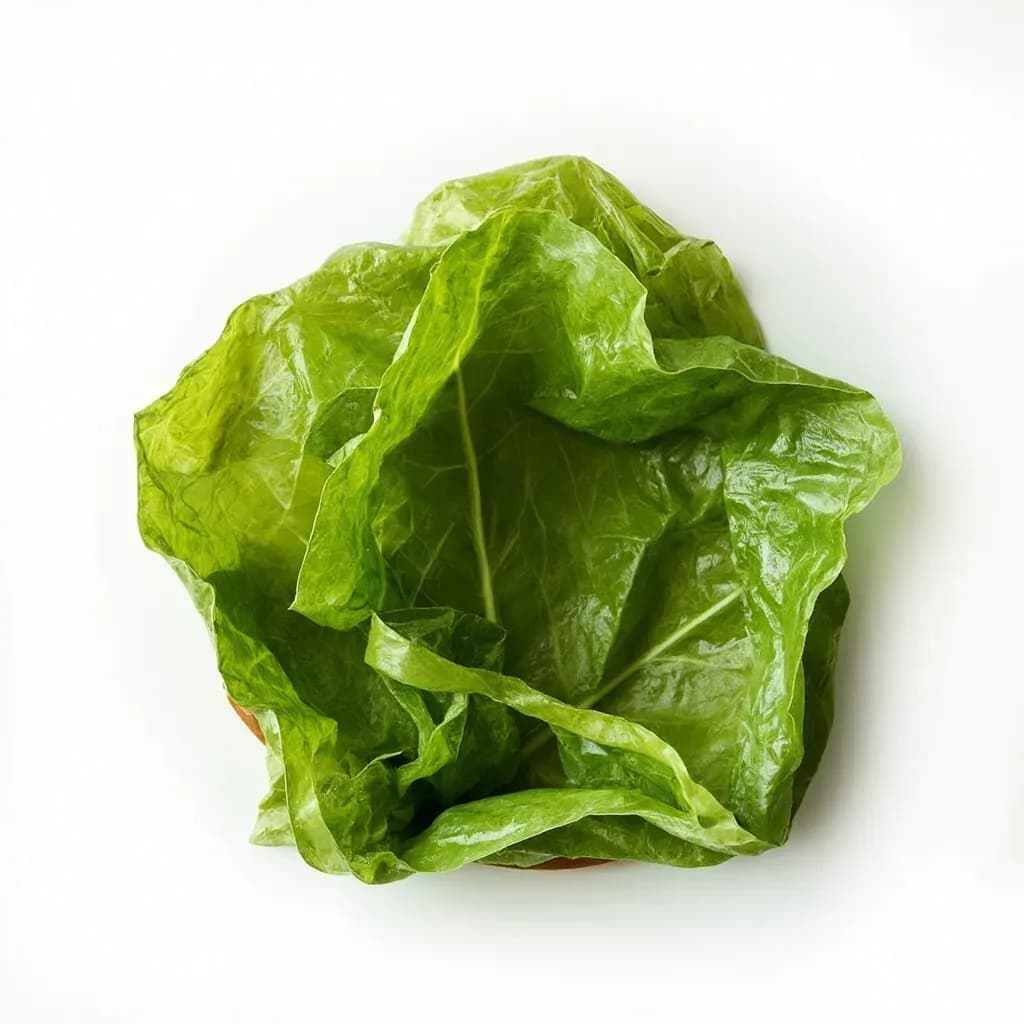
Wraps & Liners
Marantaceae Leaf (Wrapping)
Broad arrowroot-family leaves used to wrap and steam tamales, rice cakes, and parcels for aroma.
Marantaceae leaves come from the arrowroot plant family and are broad, pliable, and food-safe, used across Africa, Asia, and Latin America to wrap food for steaming or boiling. Cooks fold them around rice cakes, tamales, ground-meat parcels, and dumplings, where they hold shape and lend a subtle grassy aroma. The leaves are softened over a flame or in hot water first so they bend without cracking.
Marantaceae leaves are the broad, glossy wrapping leaves of the arrowroot family, used in two distinct culinary hemispheres: Phrynium species (lá dong) in Vietnam and parts of Southeast Asia, and Calathea lutea (bijao, hoja de bijao) in lowland Latin America. They are unrelated to banana, turmeric, or ti leaves despite the visual overlap, and they have their own temperament: supple when warmed, surprisingly strong under long wet heat, and quieter on the palate than banana leaf. The leaves are wrappers, not food, and they are almost always identified in cookbooks by their local name rather than by the family.
A cook chooses these leaves when a parcel must hold together for 8 to 12 hours of simmering (as in bánh chưng) or through several hours of steaming, and when the dish wants a delicate vegetal note rather than the deeper, greener scent of banana leaf. At 30 to 60 cm long and 10 to 25 cm wide, a single leaf will wrap a whole fish, a square of sticky rice, or a fat hallaca with room to spare. Pass the leaf briefly over a flame or dip it in near-boiling water and it folds like heavy paper; handle it cold and it snaps at the midrib.
The two traditions are parallel rather than connected. In northern Vietnam, Phrynium leaves are the sanctioned wrapper for bánh chưng, the square sticky-rice cake cooked overnight for Tết. In Venezuela, Colombia, and Ecuador, Calathea lutea envelopes the Christmas hallaca and Pacific-coast tamales, surviving a long boil in seasoned broth. In both cases the leaf carries ceremonial weight, and freely swapping in banana leaf is a flavor choice the original recipes do not invite.
Alternatives
Types & varieties
The Vietnamese wrapping leaf, traditionally Phrynium capitatum or close relatives; broad, supple, and the only leaf sanctioned for bánh chưng in much of northern Vietnam.
Large Marantaceae leaf cultivated in the Colombian and Venezuelan llanos and along the Pacific coast; the standard wrapper for hallacas, tamales, and steamed fish.
Smaller-leaved Marantaceae species used in regional cookery in parts of Brazil and Peru, especially the Amazon basin.
In parts of eastern India, Nepal, and Bhutan, certain Marantaceae leaves known as Kendu or Keu, or generically as patra, are used to steam rice dumplings and fish; specific botanical identification varies by region and market.
Lá dong and bijao: parallel traditions
These two leaves belong to the same family but grow on different continents and serve unrelated cuisines. Lá dong (Phrynium capitatum and relatives) is the canonical wrapper of northern Vietnam, where it has been used for centuries to encase bánh chưng, the square sticky-rice cake central to the Lunar New Year. In central and southern Vietnam, the same leaves wrap bánh ít and the cylindrical bánh tét. Bijao (Calathea lutea) is cultivated across the Colombian and Venezuelan llanos and the Pacific coast, where it has been the envelope of choice for hallacas — the Christmas tamale of corn dough, stewed meat, and raisins — and for steamed fish and yuca parcels called envueltos. Cooks in each tradition treat the two as distinct ingredients; flavor differs enough that swapping them across cuisines changes the dish.
Long-simmer endurance
What sets Marantaceae leaves apart from most wrappers is their tolerance for the day-long, waterlogged cooking that defines their signature uses. A bánh chưng simmers 8 to 12 hours in its wrapping; a hallaca boils for several hours in seasoned broth. The leaves hold together through this if handled correctly — softened before folding, wrapped with overlapping seams, and tied securely. Aromatic compounds leach gently into the food during the cook, contributing the vegetal note that distinguishes a properly wrapped cake or tamale from one cooked in a substitute. The leaves are not eaten; they are peeled away at the table, often damp, dark olive in color, and sometimes still smelling faintly of grass.
Common uses
Tips & pitfalls
- Wipe, don't soak: soaking leaves them soggy and prone to tearing during wrapping.
- Pass each leaf over an open flame or dip in near-boiling water for 5–10 seconds until it darkens and flexes; an untreated leaf will crack at the midrib when folded.
- Wrap with the veined (underside) facing outward so the smooth, glossy side contacts the food.
- Overlap seams by at least 3–4 cm, and use two or more layers for any parcel that boils more than an hour.
- Tie with food-safe twine, strips of banana leaf, or natural cotton string; synthetic twine can leach into long-simmered foods.
- A greenish tint and gentle grassy aroma on pale foods (white rice, fish) is desirable, not a flaw.
- Don't substitute banana leaf one-for-one in flavor-sensitive recipes — bijao and lá dong are noticeably milder.
- For dried or brittle leaves, steam them for a minute rather than microwaving, which makes them gummy.
- Frozen leaves should be thawed in the refrigerator overnight and re-softened with hot water before use; they tear more easily than fresh.
- Compost them after cooking — they break down quickly and are not typically eaten (unlike lotus leaf).
Good to know
- Plant family
- Marantaceae (the arrowroot family), distinct from Musaceae (banana), Zingiberaceae (ginger/turmeric), and Asparagaceae (ti).
- Principal culinary genera
- Phrynium in Vietnam and parts of Southeast Asia; Calathea (especially Calathea lutea) in Latin America.
- Common regional names
- Vietnamese lá dong and lá giềng; Latin American hoja de bijao, bijao, hoja de huaje, and chombo.
- Typical leaf size
- Roughly 30–60 cm long and 10–25 cm wide, oblong with parallel monocot venation.
- Heat behavior
- Tolerates 8–12 hours of continuous simmering and many hours of steaming without disintegrating, provided seams and ties are sound.
- Aroma imparted
- Subtle grassy, vegetal, faintly resinous note; milder and more delicate than banana leaf.
- Storage
- Fresh leaves keep 7–14 days wrapped and refrigerated; can be wiped clean and frozen flat for months.
- Prep
- Briefly passed over an open flame or dipped in near-boiling water to make pliable before wrapping.
Also called
Arrowroot Leaf · Thaumatococcus Leaf · Wrapping Leaf
Related

Aluminum Foil
Wraps, covers, and tents food for the oven and grill

Parchment Paper
Nonstick liner for clean, even baking and easy release

Wax Paper
Moisture-resistant sheet for wrapping and counter prep

Plastic Wrap
Clings tight to cover bowls and wrap leftovers

Silicone Baking Mat
Reusable nonstick liner that replaces parchment

Cheesecloth
Loose-woven cloth for straining stock and bundling herbs

Beeswax Food Wrap
Reusable wax wrap that molds around bowls and produce

Piping Tips
Shaped nozzles that turn frosting into stars and rosettes