Heat & Safety
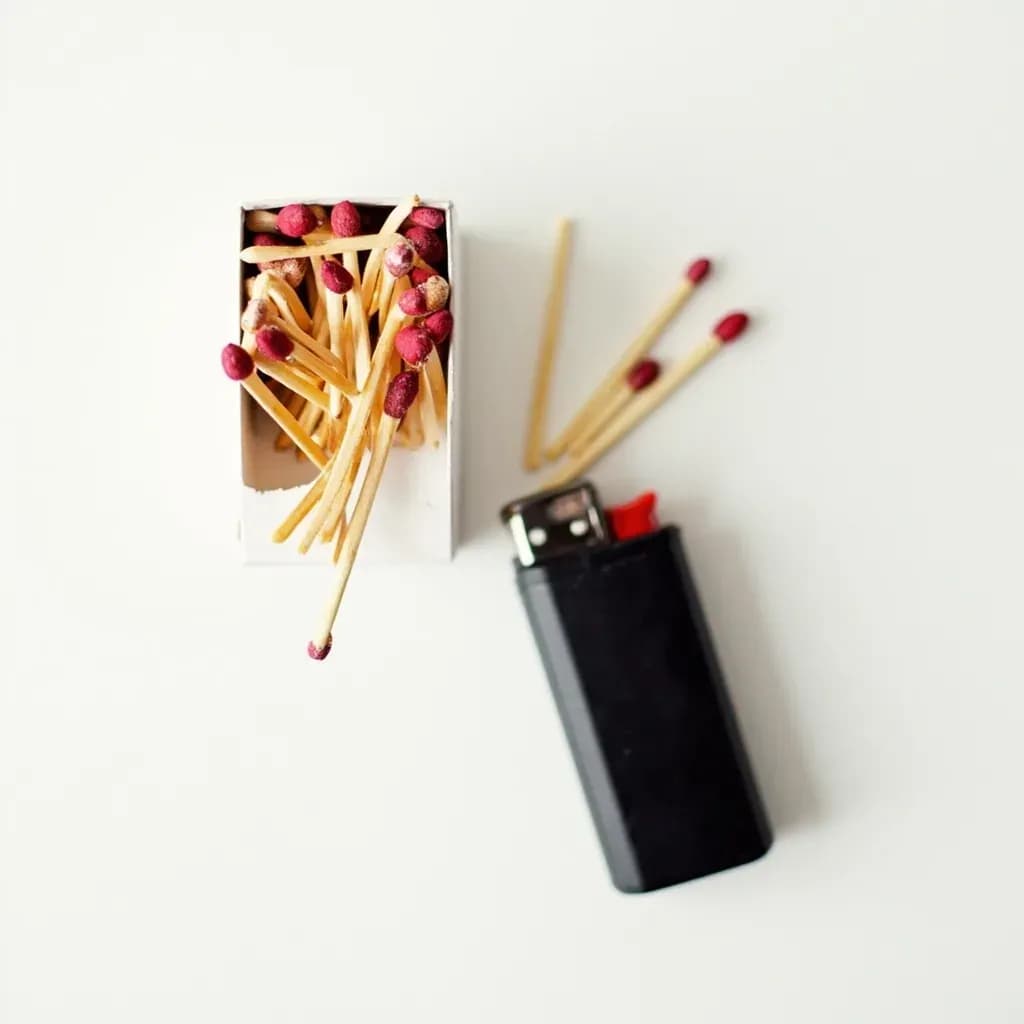
Matches / Lighter
Handheld ignition source for lighting gas burners, grills, candles, and charcoal.
Matches and lighters are handheld ignition tools used to light gas burners, ovens, grills, and charcoal. A long-reach utility lighter is safest for lighting deep burners or a barbecue without burning fingers. Cooks also use a flame briefly to char peppers, singe poultry feathers, or flambé a sauce, keeping the ignition source well away from oil and flammable wraps.
Matches and lighters are the primary handheld ignition sources in the kitchen, serving as the bridge between a heat source and the task at hand. While they may seem mundane, the choice between a long-handled fireplace match and a precision torch lighter dramatically affects control, safety, and results. Butane lighters dominate modern kitchens for their reliability and adjustability, while kitchen matches—typically with shafts of four to eight inches—provide the distance needed to safely reach into chimneys, deep burners, or pilot lights without risking singed fingers.
The safety profile of ignition tools varies considerably. Safety matches contain their ignitable compounds in two separated parts—the match head contains potassium chlorate, while the striking surface holds red phosphorus—and will only ignite on their designated strip, making them substantially safer for general household storage. Strike-anywhere matches, by contrast, can ignite on any rough surface and are appropriately restricted in many jurisdictions. Butane lighters introduce additional considerations: the fuel is pressurized and flammable, and combustion produces carbon monoxide, meaning they should always be used in ventilated spaces. Piezoelectric igniters—those clicks you hear when lighting a gas oven—generate an electric spark with no open flame, making them wind-resistant and reliable but limited to built-in appliances.
The professional kitchen treats ignition seriously. A refillable butane torch with an adjustable flame gives precise control that a standard lighter cannot match, making it indispensable for tasks ranging from quick-searing a duck breast to charring shishitos directly on the burner. Storage matters: lighters should remain upright, away from heat, and at room temperature, as temperature fluctuations degrade both fuel and plastic housing. A properly maintained torch lighter will outlast dozens of disposable lighters and deliver consistent, professional results.
Alternatives
Types & varieties
Red phosphorus striking strip, potassium chlorate match head. Ignites only on designated surface. Red-tipped.
White-tipped. Can ignite on any rough surface. More hazardous, often restricted.
Extra-long shaft (often 4–8 inches) for reaching into charcoal chimneys, fireplaces, or deep burners safely.
Refillable. Standard flame. Common for stovetop ignition.
Adjustable, concentrated high-heat flame. Used for crème brûlée, quick searing, roasting peppers.
Electric spark ignition, no flame. Wind-resistant. Common in gas ovens and some cooktops.
Professional-grade. Delivers precise, high-temperature flame. Preferred by serious cooks for torching tasks.
Lighting Gas Appliances Safely
Gas stovetops and ovens require a reliable ignition source for pilot lights and burners. For stovetop burners, a standard butane lighter gives good control; hold it close to the burner port and depress the gas before igniting. Never use a match with a short shaft—flames can flashback to your fingers when the gas reaches the match head. For oven pilot lights or hard-to-reach burners, a long-handled fireplace match is essential. If your gas appliance has a malfunctioning ignition system, do not attempt to hold a lighter or match in place continuously; this indicates a repair need, not a workaround.
- Hold the lighter or match before turning on the gas, never after
- Use long-handled matches for pilot lights and deep burners
- A clicking ignition that fails to light indicates gas is flowing—stop and ventilate immediately
Torch Lighter Technique for Kitchen Tasks
A torch lighter's adjustable flame gives you control that a standard lighter cannot match. For crème brûlée, hold the torch at a 45-degree angle, 2–3 inches from the surface, and move continuously in small circles. The sugar should bubble, then caramelize to a deep amber within 10–20 seconds. For quick-searing proteins, get the torch closer—1–2 inches—with a slightly larger flame for more heat output. Always purge a new butane torch by pointing it away from you and clicking several times to clear any debris from the nozzle before first use.
- Purge new torches before first use
- Keep torch flame 1–3 inches from surface depending on task
- Move the flame continuously to avoid hot spots
Common uses
Tips & pitfalls
- Never shake a lighter before use—this introduces raw butane into the combustion chamber and produces a weak, sputtering flame instead of a clean burn
- Store matches in a sealed plastic bag with a desiccant packet; humidity renders wood matches useless
- Bleed old fuel from a lighter before refilling by pointing it away from you and pressing the valve for several seconds—stale fuel produces a yellow, sooty flame
- Replace plastic disposable lighters if they become cracked or the mechanism feels sticky; they become fire hazards
- For lighting charcoal chimneys, use fireplace matches with 4–8 inch shafts—standard matches will char your fingertips before the charcoal ignites
- If a torch sputters or produces an uneven flame, the butane is depleted or contaminated; refill with high-purity butane meant for lighters, not lighter fluid meant for Zippo-style lighters
- Test your smoke detector after using a torch lighter indoors—the combustion products can trigger sensitive units
- Keep a dedicated kitchen lighter in a consistent location; using the same lighter for candles and stovetops means it is always charged and ready when needed
Good to know
- Fuel type
- Butane (most common), naphtha (older), piezoelectric (electric spark)
- Flame temperature
- Butane lighter: ~1,977°C at flame tip; torch lighter: up to 1,350°C at source
- Invention
- Safety match patented 1855 by Gustaf Erik Pasch; modern butane lighter developed 1950s
- Storage
- Upright, room temperature, away from direct sunlight and heat sources
- Shelf life
- Matches: indefinite if kept dry; butane lighters: fuel degrades after 1–2 years, plastic housing degrades over time
- Safety concern
- Butane is flammable and produces carbon monoxide; use only in ventilated areas
- Common material
- Matches: wood or cardboard; lighters: plastic, metal, or combination
- Refillable
- Most butane lighters are refillable; disposable lighters are single-use
Also called
matchbox · matchstick · matches-lighter · matchbox-lighter · lighter · utility-lighter
Related

Paper Towels
Disposable sheets for spills, drying, and patting dry

Kitchen Towels
Reusable cloths for drying, gripping, and wiping

Oven Mitts
Heatproof gloves to handle hot pans and trays safely

Disposable Gloves
Single-use gloves for safe, mess-free handling

Cleaning Cloths
Reusable cloths for wiping counters and spills

Tortilla Warmer
Insulated holder that keeps tortillas warm and soft

Trivet
Heatproof stand that shields surfaces from hot pots

Ice Bath Setup
Bowl of ice water that halts cooking and sets color