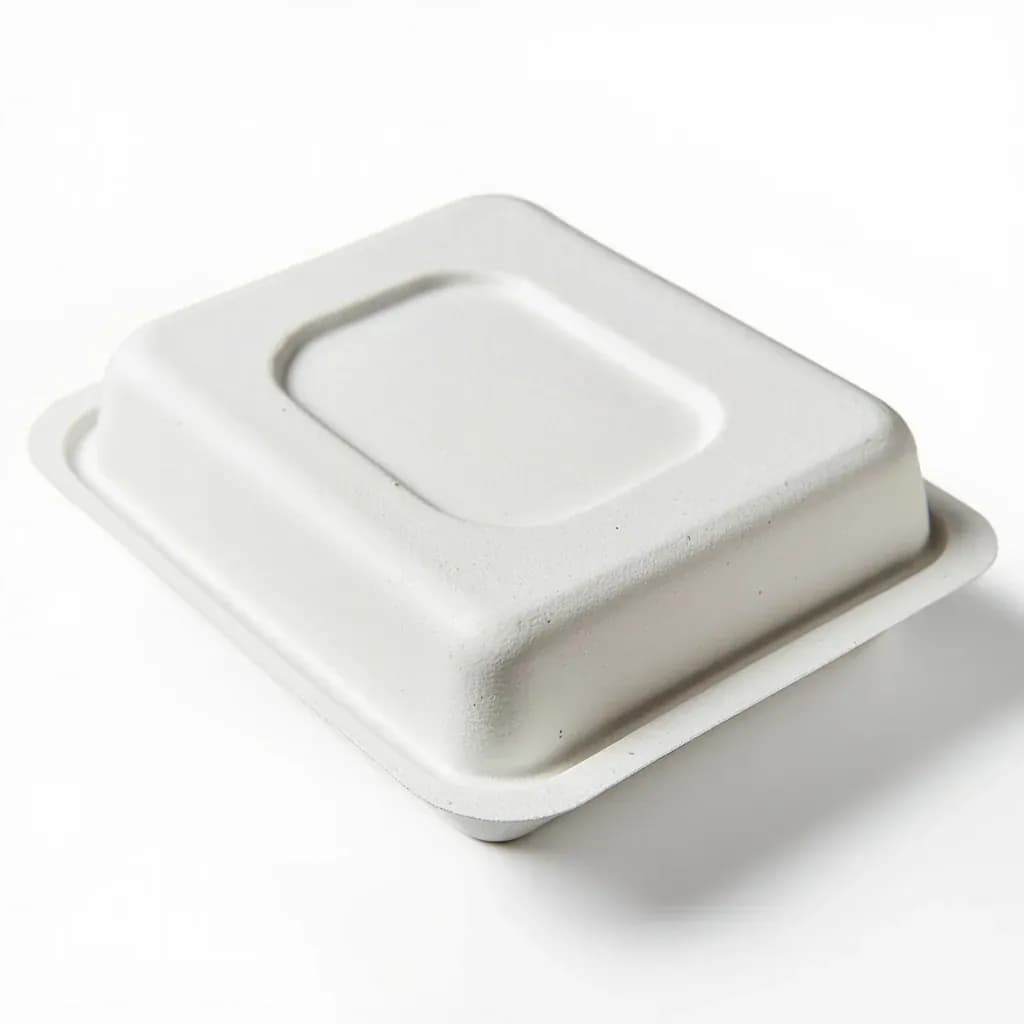
Storage & Containers
Foam Meat Tray
A shallow polystyrene foam tray used to package and display cuts of raw meat, poultry, or fish.
A foam meat tray is a shallow, rigid expanded-polystyrene tray that holds portioned raw meat, poultry, or seafood, usually overwrapped with cling film. Butchers and home cooks use them to display, transport, and store proteins in the fridge. The closed-cell foam absorbs some drip and insulates slightly, though many kitchens now swap them for recyclable molded-pulp trays.
The foam meat tray is the familiar shallow white — or sometimes black, red, yellow, or blue — rectangle of expanded polystyrene (EPS) that sits beneath nearly every cut of raw protein sold in a supermarket case. Strictly speaking it is not "Styrofoam" (a brand name owned by Dow for extruded building insulation), but the colloquial label has stuck. The tray itself is just one part of a three-component package: the foam base, a flat cellulose-and-cotton absorbent pad that soaks up purge and blood, and a tight overwrap of plastic film that holds the lot together and slows oxygen exchange. The foam is light, rigid enough to support a heavy roast without flexing, cheap enough to discard, and naturally white, which makes the color of the meat the visual focus.
That combination of cheapness, hygiene, and good optics explains why the foam tray has dominated retail meat counters for decades, even as it is now one of the most visible targets in the broader conversation about single-use plastics. A cook can ignore most of that debate while shopping, but cannot ignore the material's hard limits: expanded polystyrene softens at roughly 180–200 °F, has poor long-term freezer performance, and is recycled by only a small fraction of municipal programs. In practice this means the tray is fine for a day or two in the fridge, and unacceptable for the oven, microwave, dishwasher, or deep freeze.
For the home cook the tray is therefore best understood as transit packaging — a place for meat to live for the brief stretch between the butcher's case and a proper container at home. Knowing what it will and will not tolerate, and when to repackage, is the entire body of knowledge a cook needs about it.
Alternatives
Types & varieties
The default supermarket tray for beef, pork, lamb, and general use; pairs with a flat absorbent pad under plastic film.
Used by butchers and upscale grocers to make red meat visually pop; otherwise identical construction to the white version.
Color-coded tray traditionally used for chicken and turkey; same dimensions as standard trays but tinted.
Color-coded for pork in many U.S. and U.K. retailers; helps separate species at the counter to reduce cross-contamination.
Used for fish and shellfish to visually distinguish them from red meats; sometimes deeper to hold ice or larger fillets.
Has molded dividers for separating different cuts, organ meats, or a main cut alongside trim.
Taller sides, still under about 2 in, for bone-in cuts, whole chickens, or items that release significant purge.
Foam base with a clear plastic dome lid for ready-to-eat deli items, pre-marinated products, or cut produce.
Modern alternatives and the foam debate
Three replacements have moved from niche to mainstream at retail, and a working cook is likely to encounter all of them.
- Molded-pulp (cellulose) trays: made from recycled paper or sugarcane fiber, they look matte and earthy, hold up well in the fridge, and are increasingly accepted in curbside paper recycling. The trade-off is a softer base that can sag under very heavy cuts and a tendency to absorb some surface moisture from the meat.
- Rigid PET (clear or black) trays: a recyclable plastic with a tighter, crisper look; popular in European and Australian retailers and now common in U.S. premium butchery. Performs much like foam in the fridge and is generally more accepted in municipal recycling than EPS, though clamshell shapes are rejected by some programs.
- Compostable fiber trays: made from materials like bagasse (sugarcane fiber) or pressed palm leaf, sometimes with a PLA (polylactic acid) lining for moisture resistance. They are increasingly mandated under extended producer-responsibility laws, but their compostability depends on industrial facilities, not backyard bins.
Storage and safety at home
A foam tray is a serviceable fridge container for a day or two but a poor one beyond that. The two failure modes to plan for are heat and time.
- Heat: never roast, sear, or microwave in the tray. Transfer to a metal pan, oven-safe dish, or microwave-safe plate first. The plastic overwrap should come off at the same time.
- Time: for any storage longer than a day or two, repackage into glass, stainless steel, or a heavy-duty freezer bag with the air pressed out. The plastic film overwrap will not maintain a tight seal in the freezer, and the absorbent pad becomes a wet, smelly liability the longer it sits.
Common uses
Tips & pitfalls
- Never cook, sear, or microwave meat in the foam tray — it softens around 180 °F and can release styrene, especially with fatty foods.
- When microwaving previously frozen portions, slide the meat off the pad and onto a microwave-safe plate; the absorbent pad is not designed to be heated.
- For freezer storage beyond a week, repackage in freezer paper, a heavy-duty freezer bag with the air squeezed out, or a rigid airtight container; foam becomes brittle and can crack, letting freezer burn in.
- Keep the absorbent pad with the meat while it sits in the fridge for a day or two — it wicks purge away from the surface, which keeps the meat looking and smelling fresher.
- Do not reuse the tray for hot foods, in the dishwasher, or as a permanent serving piece; it is a single-use item and will deform or shed foam fragments under heat and agitation.
- If your municipality accepts EPS recycling, rinse the tray, drop the pad and film in the trash, and place the clean tray loose (not bagged) in the bin — film and soaked pads contaminate the recycling stream.
- Respect the color coding at home as well as in the store: keeping red trays for pork, yellow for poultry, and so on is a small but real defense against cross-contamination on a crowded fridge shelf.
- If you are cutting down on single-use plastic or foam, ask the butcher counter to wrap directly in butcher paper, or bring a clean reusable container; many stores will accommodate either without complaint.
Good to know
- Material
- Expanded polystyrene (EPS); not actually "Styrofoam," which is a brand of extruded polystyrene insulation
- Package components
- Foam base, cellulose/cotton absorbent soak pad, and plastic-film overwrap
- Color coding
- White for general use; black for premium beef; yellow for poultry; red for pork; blue or green for fish (varies by country and chain)
- Common sizes
- From about 6×4 in for steaks and single portions up to 18×14 in or larger for whole turkeys; depth typically ½–1 in
- Heat tolerance
- Poor — softens around 180–200 °F (82–93 °C); not safe in oven, stovetop, or microwave
- Freezer performance
- Short-term only; foam becomes brittle and can crack after extended freezing, and the film overwrap loses its tight seal
- Recyclability
- Limited; few curbside programs accept EPS, and many jurisdictions ban foam packaging outright
- Cost
- A few cents per tray at wholesale, which is why single-use has remained the default
Also called
Polystyrene Meat Tray · Butcher Tray · Styrofoam Tray
Related

Freezer Bags
Thick, sealable bags built to fight freezer burn

Storage Bags
Resealable bags for fridge storage and marinating

Storage Container
Lidded container for leftovers, prep, and meal kits

Glass Container
Oven-to-fridge glass that won't stain or hold odors

Plastic Container
Lightweight, stackable storage for everyday leftovers

Vacuum Sealer Bags
Airtight bags for long freezing and sous-vide

Reusable Bags
Washable silicone bags that replace single-use plastic

Mason Jar
Sealed glass jar for preserves, pickles, and storage