Heat & Safety
Mesquite Smoking Wood
Dense hardwood chunks or chips that give grilled and smoked meats a bold, earthy smoke flavor.
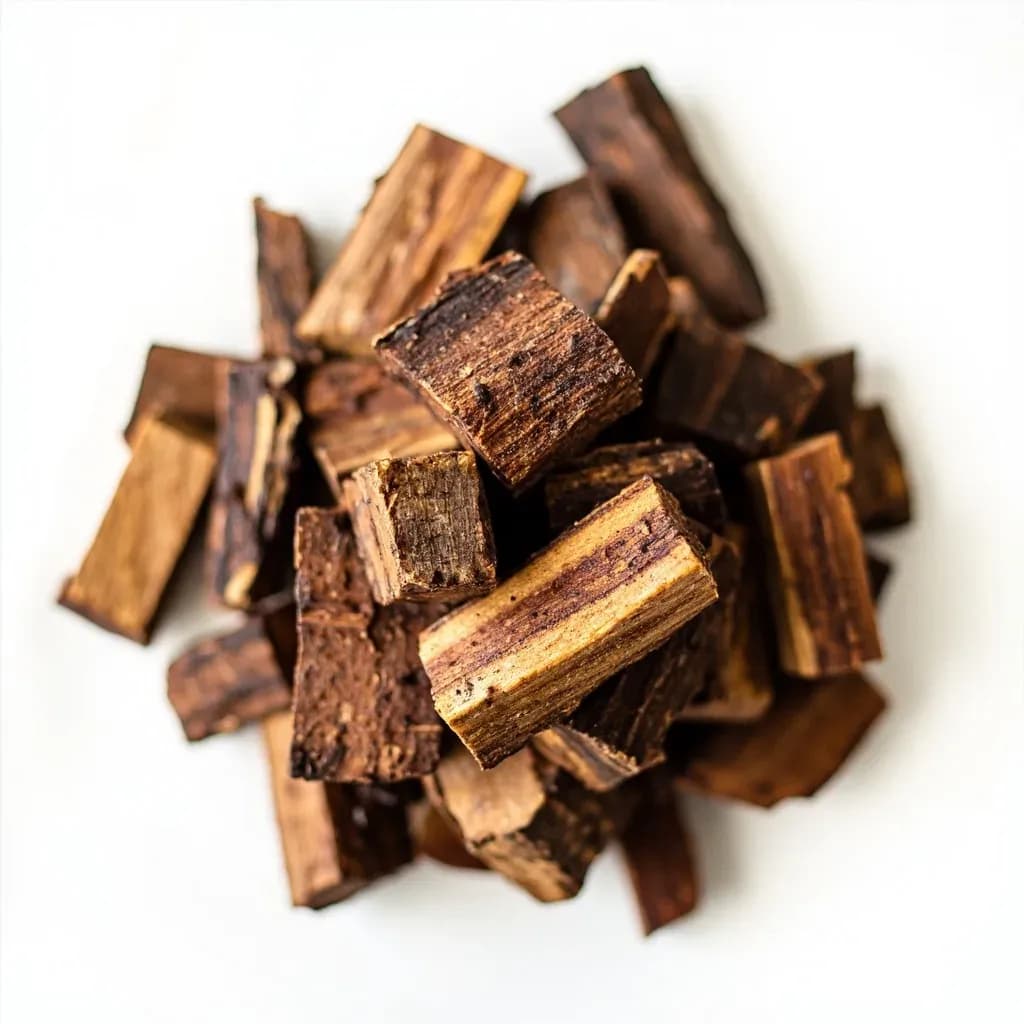
Mesquite smoking wood is the dense hardwood of the mesquite tree, sold as logs, chunks, or chips for grilling and smoking. It burns hot and produces a strong, earthy, slightly sweet smoke prized for beef brisket, steaks, and Tex-Mex barbecue. Because its flavor is intense and can turn bitter if oversmoked, cooks often use it in short bursts or blend it with milder woods.
Mesquite is a dense hardwood from the Prosopis genus — a legume rather than a traditional timber tree — that produces one of the boldest smokes available to a backyard cook. Its high lignin and resin content mean it burns hot and fast, releasing a strong, earthy, slightly sweet smoke that has become synonymous with Texas barbecue, especially beef brisket and smoked sausage cooked over offset stick-burners. The same compounds that give it a clean, almost sweet aroma in a hot, well-ventilated fire are also what make it unforgiving on poorly managed grills.
What separates mesquite from milder woods like apple, cherry, or pecan is sheer intensity. In a properly fed fire the smoke smells like a desert campfire, fragrant and meat-friendly; in a starved fire, or when heavy smoke rolls across cold food for hours, the same organics condense as creosote and turn acrid and bitter. Mesquite therefore rewards cooks who match the wood to the cook — short, hot grilling and faster smokes are where it shines, while long, low-and-slow sessions call for restraint, blending, or both.
Commercially, mesquite is sold as chunks, chips, split logs, pellets, and sawdust briquettes, with kiln-dried retail stock typically running 6–12% moisture. Most U.S. supply comes from Prosopis glandulosa (honey mesquite) harvested in the Southwest and northern Mexico, with smaller volumes of velvet mesquite and imported South American hardwood. Because the trees are small and scrubby, the wood is generally a byproduct of land management or sustainably managed stands rather than old-growth timber.
Alternatives
Types & varieties
The dominant U.S. commercial smoking mesquite; slightly sweeter smoke than other species.
Sonoran-region species with a flavor profile close to honey mesquite.
Imported hardwood widely used for Argentine-style grilling; burns hot and clean.
Small pieces that ignite quickly; best for short smokes and gas grills using a smoker box or foil pouch.
Larger pieces favored in charcoal and offset smokers; combust more cleanly and burn longer than chips.
Compressed sawdust for pellet smokers; consistent burn and easy portioning.
Whole or split firewood for large offset smokers and wood-fired grills.
Why mesquite turns bitter on long cooks
The high resin and lignin content in mesquite is a double-edged ingredient. In a hot, oxygen-rich fire those compounds volatilize into pleasant aromatics that smell like a desert campfire and complement beef and pork. In a cool, starved fire — or when dense smoke lingers on cold meat for hours — the same organics condense on the food surface as creosote, leaving a harsh, tongue-coating bitterness that no amount of resting or sauce will hide. The practical fix is small pieces, an actively vented cooker, and either shortening the smoke phase or blending mesquite with a milder hardwood such as oak or pecan. A clean mesquite fire is recognizable by thin, almost bluish smoke; thick, white, billowing smoke is the warning sign that creosote is being deposited.
Blending mesquite with other woods
Many Texas pitmasters do not run pure mesquite for an entire brisket. They build a base fire with post oak or hickory and add a few mesquite chunks during the first hour or two of the cook, then let oak carry the remainder of the smoke. The same approach scales down to a backyard kettle or offset: toss a single mesquite chunk onto the coals early to lay down the signature flavor, then feed oak or pecan for the rest of the session. The result keeps the recognizably bold mesquite note while softening the finish and avoiding the acrid edge that long pure-mesquite cooks can produce.
Common uses
Tips & pitfalls
- Use mesquite in moderation on delicate proteins like poultry or fish — its smoke is strong enough to overwhelm them quickly.
- Pair mesquite with a milder hardwood (oak or pecan) rather than running it solo through long cooks; this stretches the smoke flavor without depositing bitterness.
- Reserve mesquite for shorter cooks (under 3–4 hours); long, low-and-slow sessions on a closed smoker tend to build creosote on the meat surface.
- Use chunks rather than chips in a charcoal or offset smoker — chips smolder into acrid smoke, while chunks combust cleanly on hot coals.
- On a gas grill, put mesquite chips in a dry smoker box or a punctured foil pouch directly over a burner set to high; never throw loose chips onto lava bars or Flavorizer bars, where they ignite and flare unpredictably.
- Wait for clean, bluish smoke before putting food on the grill; thick, white, billowing smoke carries harsh compounds that will taste bitter on the meat.
- Keep a spray bottle of water within reach when grilling with mesquite — its high resin content makes it prone to flare-ups.
- Store mesquite indoors in a sealed bin or bag — the wood absorbs ambient humidity quickly, and wet wood smolders and produces muddy, off flavors.
- Do not soak mesquite chips before use; the wood is so dense and resinous that water barely penetrates, and steaming it can leave a flat, ashy taste on the food.
- Clean grates and water pans thoroughly after mesquite cooks; the resinous smoke leaves a sticky film that builds up over repeated sessions.
Good to know
- Wood type
- Dense hardwood legume (Prosopis genus)
- Primary species
- Prosopis glandulosa (honey mesquite); also P. velutina and imported Chilean mesquite
- Native range
- Southwestern United States, Mexico, parts of South America
- Smoke intensity
- Strong / bold
- Flavor profile
- Earthy, slightly sweet, campfire-like; turns bitter if overused
- Burn characteristic
- Burns hot and fast due to high lignin and resin content
- Forms sold
- Chunks, chips, split logs, pellets, sawdust briquettes
- Kiln-dried moisture (retail)
- Roughly 6–12%
- Best for
- Beef, pork ribs, lamb, and game; shorter cooks where bold smoke is welcome
- Cultural association
- Signature wood of Texas-style barbecue, especially beef brisket and sausage
Also called
Mesquite Chips · Mesquite Chunks · Mesquite Smoking Chips
Related

Paper Towels
Disposable sheets for spills, drying, and patting dry

Kitchen Towels
Reusable cloths for drying, gripping, and wiping

Oven Mitts
Heatproof gloves to handle hot pans and trays safely

Disposable Gloves
Single-use gloves for safe, mess-free handling

Cleaning Cloths
Reusable cloths for wiping counters and spills

Tortilla Warmer
Insulated holder that keeps tortillas warm and soft

Trivet
Heatproof stand that shields surfaces from hot pots

Ice Bath Setup
Bowl of ice water that halts cooking and sets color