Heat & Safety
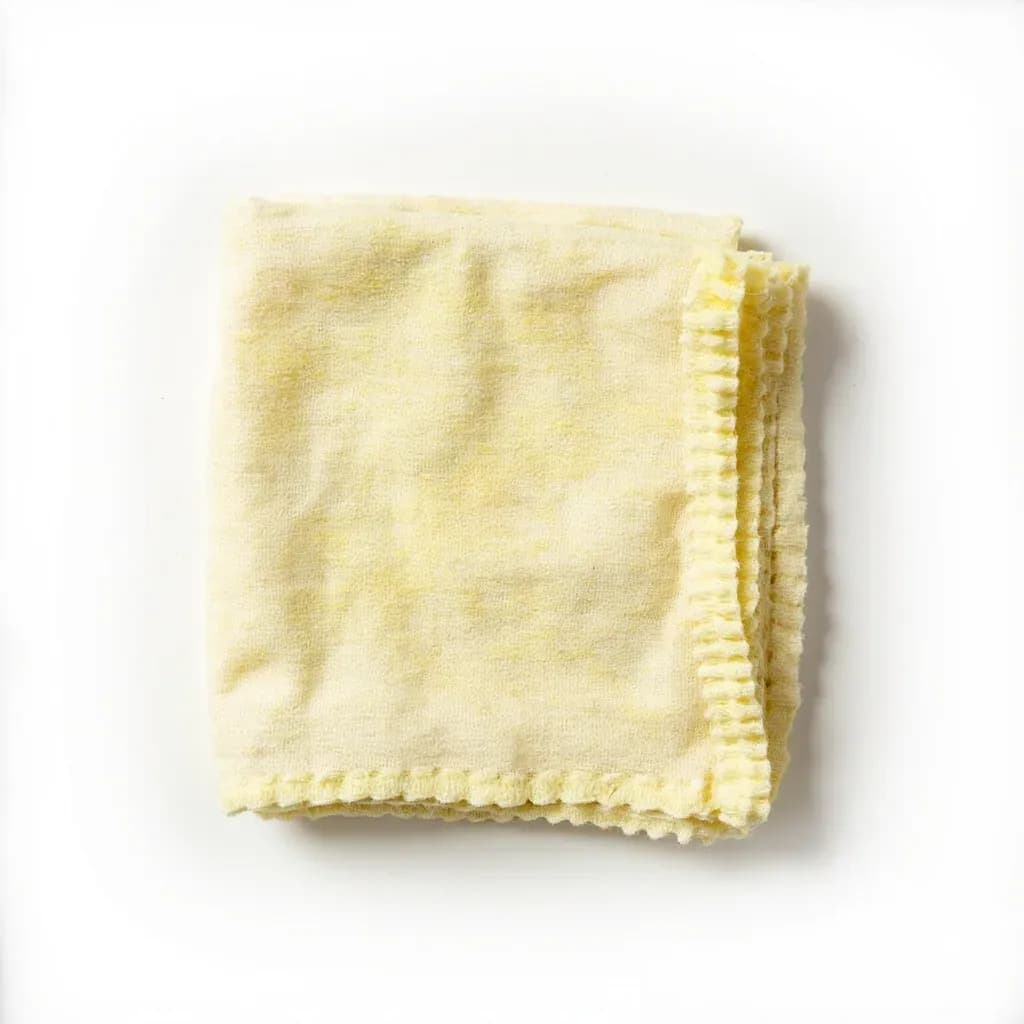
Microfiber Cleaning Cloth
A super-absorbent synthetic cloth that wipes, dries, and polishes surfaces with just water.
A microfiber cleaning cloth is woven from ultra-fine synthetic fibers that trap grease, grime, and water far more effectively than cotton. Kitchens use them to wipe counters, dry stainless steel, and polish surfaces, often with nothing but water. The dense fiber structure lifts and holds dirt rather than smearing it, and the cloths are reusable through many wash cycles.
A microfiber cleaning cloth is a woven or knitted towel made from ultra-fine synthetic filaments — typically a blend of 70–80% polyester with 20–30% polyamide (nylon) — each finer than one denier, or roughly one-hundredth the diameter of a human hair. During manufacturing those filaments are chemically or mechanically split so that each strand splays into a cluster of microscopic wedges and hooks. The result is a fabric with a surface area far larger than its footprint suggests, full of tiny pockets that pull in water, lift grease, and trap dust and fine particles rather than pushing them around the way a cotton rag does. In a kitchen, that mechanism is what lets one damp cloth, used without any spray, leave a stovetop, a stainless hood, or a wine glass essentially streak- and lint-free.
The cloth's behavior is the second half of the appeal. A mid-weight kitchen microfiber (around 250–350 GSM) absorbs roughly seven to eight times its weight in water, so a 12×12 in towel can hold close to a cup of liquid in its fibers. It dries quickly, sheds essentially no lint, and — because the fibers grab oily films mechanically — cuts down on the chemical cleaners you keep near food. The trade-offs are honest ones: microfiber sheds plastic microfibers every time it goes through the wash, and it does not disinfect a surface on its own. Used thoughtfully, it is one of the quietest upgrades a home cook can make to a daily cleaning routine.
Alternatives
Types & varieties
Lightweight with a textured grid pattern; excellent for drying glass, mirrors, and stainless steel without streaks because the recesses hold water away from the surface.
Thick, looped pile with the highest absorbency; the general-purpose choice for wiping spills, drying dishes, and soaking up moisture on counters.
Dense, lint-free surface for final polishing of glass, range hoods, faucets, and any high-shine stainless.
Tightly woven with bound edges; leaves a streak-free finish on mirrors, windows, and oven-door glass using only water.
Has a stiffer nylon scrubbing strip or a nubby texture for dried-on food and stovetop grime, still soft enough for most nonstick finishes.
A large, plush pad format used to lay out washed produce, drain salad greens, or air-dry hand-washed pans.
Sold in red, blue, green, yellow, and white sets following the commercial-kitchen HACCP convention to prevent cross-contamination between raw, cooked, produce, and general areas.
Choosing the right cloth for the job
Most home kitchens only need two or three styles. A plush terry cloth around 300–350 GSM is the everyday workhorse for counters, sinks, and dish-drying. A tightly woven glass cloth is the right pick for wine glasses, stainless hoods, and induction or glass cooktops. For drying leafy greens or draining washed herbs, a large microfiber mat replaces a salad spinner when counter space is tight. Buying a mixed pack in distinct colors lets a cook run a quiet version of commercial color-coding at home.
- Plush terry, ~300 GSM, for spills, dishes, and counters.
- Smooth or glass-weave cloth for stainless and glass surfaces.
- Large drying mat for greens, herbs, and hand-washed produce.
- Color-coded sets to keep raw-meat cloths separate from ready-to-eat surfaces.
Cleaning vs. sanitizing
Microfiber is an outstanding tool for removing soil — grease films, fingerprints, water spots, and loose food debris all lift off mechanically. It is not, on its own, a disinfectant. A wipe-down with a damp microfiber cloth will not reliably kill pathogens on a cutting board that just held raw chicken. The right sequence is mechanical cleaning first, then a food-safe sanitizer (diluted bleach, a quaternary ammonium product, or a hot wash in the dishwasher for the board itself) where the task calls for it. Think of microfiber as the soil-removal step that makes the sanitizer actually effective, not as a substitute for one.
Care and laundering
A microfiber cloth is essentially high-tech plastic, and it behaves like it. The split fibers that give it grip are easily clogged by waxy residue and damaged by heat, so the wash routine matters more than the brand on the package.
- Wash new cloths once before first use to strip factory sizing and loose fibers.
- Use a plain detergent; skip fabric softener, dryer sheets, and chlorine bleach.
- Wash microfiber with microfiber, or put it inside a mesh laundry bag so it doesn't pick up lint from cotton loads.
- Tumble dry on low or hang to dry; high heat can fuse the polyamide and shrink the cloth.
- Replace any cloth that has stopped gripping and started smearing, or that smells sour even after washing.
Common uses
Tips & pitfalls
- Wring a glass cloth until it is just damp, not dripping — too much water is what causes streaks on glass and polished stainless.
- Follow a simple home color system: red for raw meat areas, blue for general surfaces, green for produce, yellow reserved for the bathroom if cloths are shared.
- Keep one cloth strictly for oily or greasy tasks (range hood, stovetop) and a separate one for final polishing — oils clog fibers quickly and a once-used cloth stops performing well.
- Test on a small, inconspicuous area before using on delicate finishes; some anodized aluminum, soft nonstick coatings, and certain specialty surfaces can be scratched, especially by the stiffer scrubbing-cloth variants.
Good to know
- Material
- Synthetic blend, typically 70–80% polyester and 20–30% polyamide (nylon)
- Fiber diameter
- Under 1 denier; generally finer than 1/100th the diameter of a human hair
- Key mechanism
- Chemically or mechanically split fibers form microscopic hooks and a vast surface area that lift grease, dust, and water mechanically
- Absorbency
- Holds roughly 7–8× its own weight in water
- Common kitchen sizes
- 12×12 in (30×30 cm) and 16×16 in (40×40 cm) are the workhorses; drying mats run much larger
- Weight (GSM)
- Typically 200–400 GSM; higher GSM is plusher and more absorbent, lower GSM tends to dry faster and is the usual pick for polishing
- Lint
- Essentially lint-free, unlike standard cotton tea towels
- Wash temperature
- Hot wash up to roughly 60–90 °C (140–194 °F) is generally safe; always check the care label
- Lifespan
- Roughly 300–500 wash cycles; retire a cloth when it stops gripping or starts smearing
- Origin
- Microfiber was developed in Japan in the 1970s; cleaning-cloth applications became widespread in Europe in the 1990s
Also called
Microfiber Cloth · Microfiber Towel
Related

Paper Towels
Disposable sheets for spills, drying, and patting dry

Kitchen Towels
Reusable cloths for drying, gripping, and wiping

Oven Mitts
Heatproof gloves to handle hot pans and trays safely

Disposable Gloves
Single-use gloves for safe, mess-free handling

Cleaning Cloths
Reusable cloths for wiping counters and spills

Tortilla Warmer
Insulated holder that keeps tortillas warm and soft

Trivet
Heatproof stand that shields surfaces from hot pots

Ice Bath Setup
Bowl of ice water that halts cooking and sets color