Storage & Containers
Moisture-Barrier Bag
A sealable foil or laminate bag that blocks humidity to keep dry goods crisp and shelf-stable.
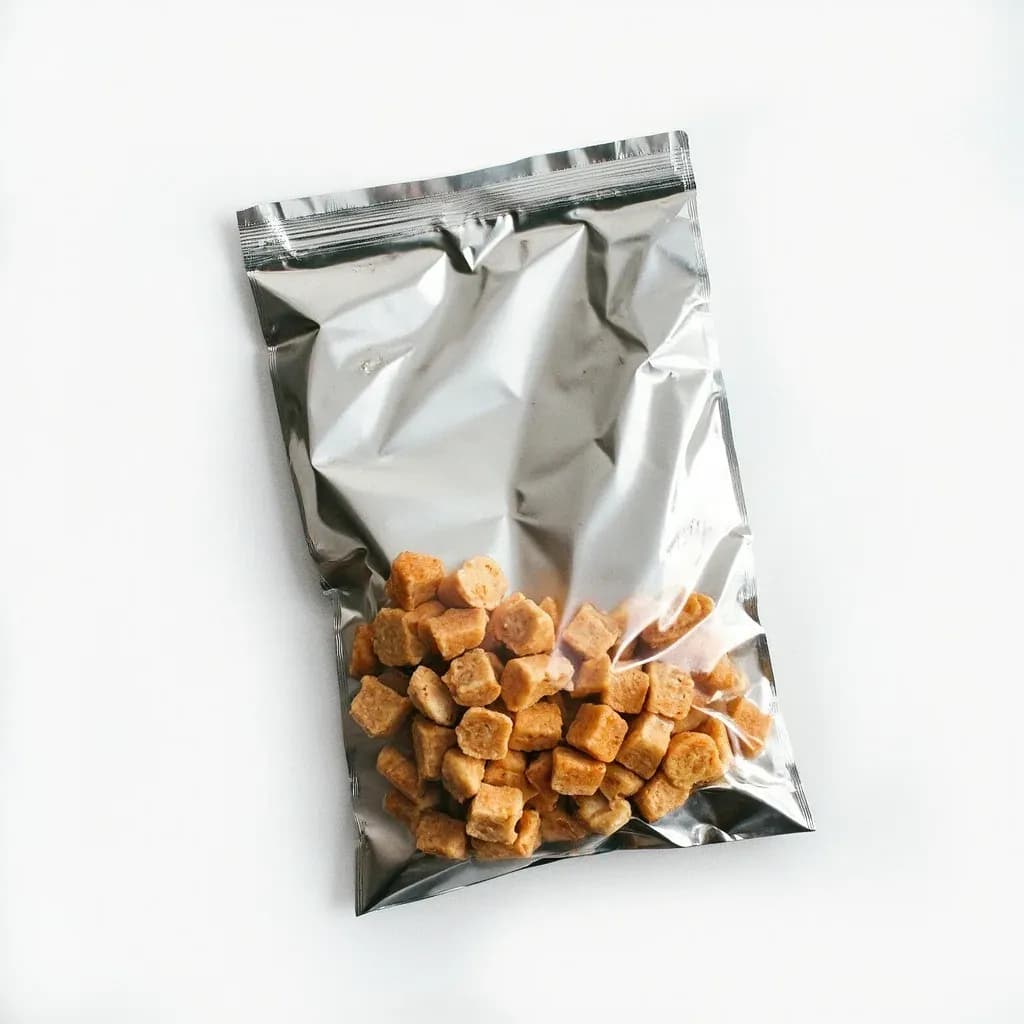
A moisture-barrier bag is a multi-layer foil or metallized-laminate pouch that blocks water vapor, oxygen, and light. Cooks and producers use them to package dried spices, coffee, jerky, and freeze-dried goods so they stay crisp and shelf-stable. Sealed with a heat sealer and often an oxygen absorber, the foil layer is far more impermeable than ordinary plastic film, greatly extending shelf life.
A moisture-barrier bag is a flexible storage pouch engineered to keep water vapor out — and often to keep oxygen and aroma in or out as well. Most are built from a laminate of aluminum foil, metallized polyester (commonly sold as Mylar), and food-grade polyethylene, layers that together block moisture, light, and oxygen far better than ordinary zip-top plastic. They're the workhorse of commercial dried-food packaging and a go-to for home cooks who want pantry staples, dehydrated foods, or cured goods to stay crisp and potent for months.
Use them whenever moisture is the enemy: dried mushrooms, jerky, ground spices, rice, flour, pasta, and any dehydrated fruit or vegetable. The best bags are heat-sealable or have a reliable zip closure plus a secondary seal. For long-term storage of low-moisture foods, pair the bag with a properly sized oxygen absorber packet and you have a near-indestructible home version of commercial shelf-stable packaging.
Alternatives
Types & varieties
Standard heat-seal Mylar-style bag; the most common type for dry goods.
Reusable zip closure with a foil layer; convenient for short- to mid-term storage.
Textured laminate designed for chamber or external vacuum sealers.
Bottom gusset lets the bag sit upright on pantry shelves; great for powders.
Side or bottom gusset expands to hold bulkier items like grains, beans, or jerky.
Simple flat pouch for vacuum sealing or impulse-seal ironing.
Clear with EVOH or silica coating; less opaque but still moisture-proof, so contents stay visible.
Common uses
Tips & pitfalls
- Press out as much air as possible before sealing — trapped oxygen shortens shelf life and dulls flavor.
- For long-term storage, drop in an oxygen absorber sized to the bag's volume (roughly 300–500 cc per gallon).
- Heat-seal with a clothes iron set to low with a layer of parchment between iron and bag, or use a dedicated impulse sealer for a clean, airtight closure.
- Label every bag with contents and date — opaque foil hides what's inside and you will forget.
- Never reuse a heat-sealed bag; the seal creases and the foil can crack, breaking the barrier.
- Squeeze test: a properly sealed bag with little air should feel rigid, like a small pillow, not collapse.
- Double-bag sharp or pointy items like dried pasta, hard jerky edges, or freeze-dried corn to prevent punctures.
- Store filled bags in a cool, dark place; heat and UV degrade even quality laminates over time.
- If using a zip-style bag for long storage, fold the top over and clip it — zips alone are not a true long-term seal.
- For spices, vacuum seal and keep in the freezer, then transfer to a barrier bag for pantry use to preserve volatile oils.
Good to know
- Material
- Multi-layer laminate (aluminum foil, metallized PET/BOPET, food-grade polyethylene)
- Closure
- Heat-sealed, zip-lock, or both
- Typical capacity
- 1 quart to 5 gallons
- Moisture vapor transmission
- Near zero (under 0.01 g/100 in²/24 hr for quality laminates)
- Reusability
- Single-use if heat-sealed; reusable if zip-style
- Temperature tolerance
- Roughly -40°F to 250°F (varies by brand)
- Contents shelf life
- 5–25 years when sealed with an oxygen absorber
- Common trade name
- Mylar bag (BOPET film)
Also called
Foil Barrier Bag · Mylar Bag · Moisture-Barrier Pouch
Related

Freezer Bags
Thick, sealable bags built to fight freezer burn

Storage Bags
Resealable bags for fridge storage and marinating

Storage Container
Lidded container for leftovers, prep, and meal kits

Glass Container
Oven-to-fridge glass that won't stain or hold odors

Plastic Container
Lightweight, stackable storage for everyday leftovers

Vacuum Sealer Bags
Airtight bags for long freezing and sous-vide

Reusable Bags
Washable silicone bags that replace single-use plastic

Mason Jar
Sealed glass jar for preserves, pickles, and storage