Storage & Containers
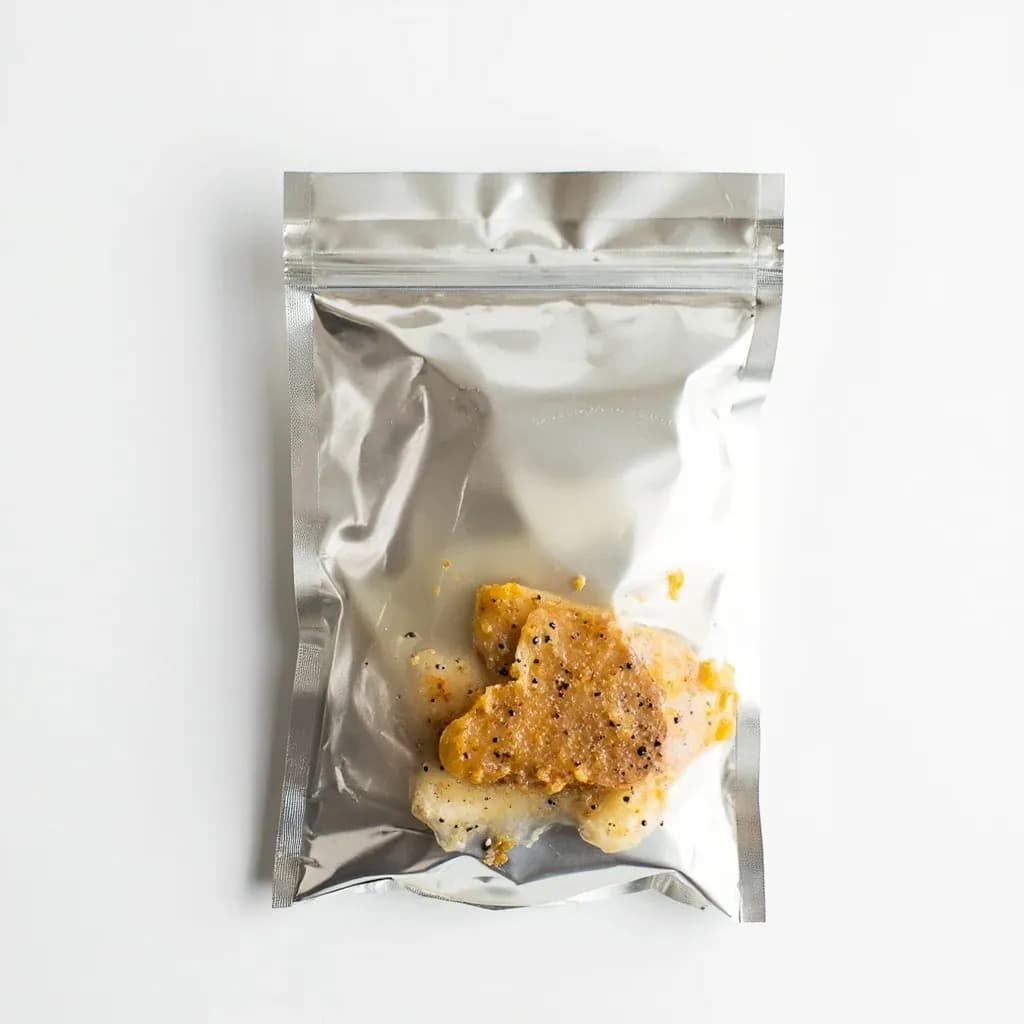
Mylar Storage Bag
Metallized barrier bag for long-term storage of dry foods and grains.
A metallized polyester (Mylar) bag that blocks light, oxygen, and moisture for long-term storage of dry staples like grains, beans, flour, and dehydrated foods. Sealed with a heat sealer alongside an oxygen absorber, it can keep contents stable for years. The opaque barrier prevents the light- and air-driven spoilage that clear plastic allows.
Mylar storage bags are metallized plastic pouches built from biaxially-oriented polyethylene terephthalate (BoPET) with a microscopically thin layer of aluminum or aluminum oxide bonded to the film. That metal skin is what gives the bag its identity in the kitchen: it blocks nearly all oxygen transmission and all light, two of the main agents that age dried food. A standard polyethylene zipper bag, by contrast, leaks enough oxygen to push its way through a pound of rice in a matter of months. The Mylar version drops that rate by several orders of magnitude, which is why a properly packed bag of wheat berries can sit on a shelf for a decade or more and still grind into flour.
In practical terms, a Mylar bag is only as good as the system around it. The bag is the wall, but you also need a dry food (10% moisture or less), an oxygen absorber matched to the bag's volume, and a clean heat seal. Skip any one of those and the shelf life collapses from years to months. Most home cooks reach for Mylar for two reasons: emergency preparedness (rice, beans, oats packed in 1- to 5-gallon bags and tucked into a closet) and everyday pantry protection for things that degrade quickly in the presence of light and air, like coffee, tea, nuts, and powdered milk.
Mylar is technically a DuPont trademark from 1952, but the word is used generically the way "Kleenex" or "thermos" is, and the food-storage market sells many competing metalized-PET bags under the same name. Real long-term bags are multi-layer laminates (PET, foil, and a food-grade inner sealant) and are clearly labeled food grade; cheap clear PET pouches sold as "Mylar" without the metallized layer are a different product and won't buy you the same protection.
Alternatives
Types & varieties
Pillow-style pouch heat-sealed across the top; the workhorse for rice, beans, pasta, and dehydrated fruit in pint to gallon sizes
Has a bottom gusset so the bag sits upright on a shelf; common for retail-style display of dried herbs, coffee, and snacks
Side or bottom gussets expand the interior volume; the standard 1- to 5-gallon size used for bulk grain
Sized to drop into a standard HDPE food-grade pail; the workhorse of long-term emergency food storage, with the bucket providing rodent and puncture protection
Multi-layer PET/aluminum foil/LLDPE construction; thicker and more puncture-resistant than plain metalized film, and the real choice for decade-scale storage
Has a plastic zip closure for convenience; the zip is not airtight, so it is fine for short-term pantry use (weeks to months) but not a substitute for heat-sealed long-term storage
Sold in some places as 'Mylar' but without the metal layer; offers moisture and odor barrier only and will not preserve oxygen-sensitive foods for more than a few months
The Three-Part System
A Mylar bag is the wall, not the whole building. To get the 10-to-30-year shelf life the bags are famous for, you need three things working together, and the absence of any one of them drops the timeline to months.
- A multi-layer foil–Mylar bag of at least 3.5 mil, food-grade certified
- An oxygen absorber matched to the bag volume: 100 cc for pint, 300 cc for quart, 500 cc for gallon, 1000–2000 cc for 5-gallon
- Food at 10% moisture or less — for grains specifically, 6% or less is needed to kill any weevil eggs already in the bin
What Not to Store in Mylar
The bag is brilliant at keeping oxygen and light out, but it does not control moisture inside, and it does not stop fat oxidation in warm conditions. A few categories of food need extra care.
- Anything wet or moist: dried foods only; anything above 10% moisture can grow Clostridium botulinum in the oxygen-free environment
- High-fat foods at room temperature: whole-wheat flour, brown rice, nuts, and seeds go rancid faster than the bag's oxygen barrier can compensate, so refrigerate or freeze them
- Brown sugar and powdered sugar: both need special care in low-oxygen storage; keep them in the original bag with a moisture-regulating insert instead
- Iodized salt: the iodine can corrode the metalized layer over years; use non-iodized salt if you plan to keep a bag for a decade or more
Sealing Technique
A clean heat seal is what makes the bag actually airtight. The two most common home methods are a clothes iron and a countertop impulse sealer; both work if you set them up correctly.
- Round off the bottom corners of the bag with scissors before sealing — the corner points are the most common place for pinholes and seal failures
- Fill the bag, then press it flat from the bottom up to push out as much air as possible; the remaining oxygen is the absorber's job
- Fold the top edge over a half inch to create a clean sealing surface and run the iron or sealer across it slowly
- Let the seal cool for 10–15 seconds under flat pressure; pulling it apart while warm causes micro-wrinkles that leak
Common uses
Tips & pitfalls
- Always add an oxygen absorber, even for foods like salt and sugar that don't seem to need one; the residual air in a heat-sealed bag is still enough to degrade quality over years
- Use only food-grade bags; non-food-grade Mylar may contain recycled material, anti-static coatings, or unrated adhesives that can leach into food
- Round the bag's bottom corners with scissors before sealing to eliminate the most common puncture points
- Press the bag flat from the bottom up before sealing so the oxygen absorber can do its work faster and the heat seal isn't strained by trapped air pockets
- Store sealed bags in a cool, dark, dry place — below 70°F and below 60% relative humidity is the standard for maximum shelf life
- Never microwave a Mylar bag; the metal layer will arc and can ignite
- For 5-gallon bucket storage, drape the bag over the bucket rim before adding the oxygen absorber last, then fold the bag cleanly over the rim and seat the lid on top
- Inspect sealed bags once a year for pinholes, seal failures, and insect damage; a healthy bag looks identical to the day you sealed it
- Label every bag with contents and packing date using a permanent marker or UV-resistant label so you can rotate stock without opening anything unnecessarily
Good to know
- Material
- Metalized BoPET (biaxially-oriented PET) with an aluminum or aluminum-oxide layer, usually laminated with a food-grade inner sealant
- Storage-grade thickness
- 3.5–7 mil; anything under roughly 3 mil is too thin to count as long-term storage
- Oxygen transmission
- Less than 0.05 cc O2 per square meter per day at room temperature, several thousand times lower than standard polyethylene
- Sealing method
- Heat seal with a clothes iron (dry/linen setting), impulse sealer, or hair straightener at 250–300°F
- Required pairing
- Food-grade oxygen absorber (100–2000 cc depending on bag size) for any storage intended to last more than a few months
- Shelf life contribution
- Properly sealed with an oxygen absorber, dry grains and legumes are commonly rated for 10–30 years
- Temperature tolerance
- Usable from roughly -40°F to 300°F; not microwave-safe and not recommended for boiling
- Cost
- Roughly $0.50–$2.00 per quart-size bag retail; 5-gallon bucket liners run $3–$8 each
Also called
Mylar Storage Bag · Mylar Bag · Foil Barrier Bag
Related

Freezer Bags
Thick, sealable bags built to fight freezer burn

Storage Bags
Resealable bags for fridge storage and marinating

Storage Container
Lidded container for leftovers, prep, and meal kits

Glass Container
Oven-to-fridge glass that won't stain or hold odors

Plastic Container
Lightweight, stackable storage for everyday leftovers

Vacuum Sealer Bags
Airtight bags for long freezing and sous-vide

Reusable Bags
Washable silicone bags that replace single-use plastic

Mason Jar
Sealed glass jar for preserves, pickles, and storage