Wraps & Liners
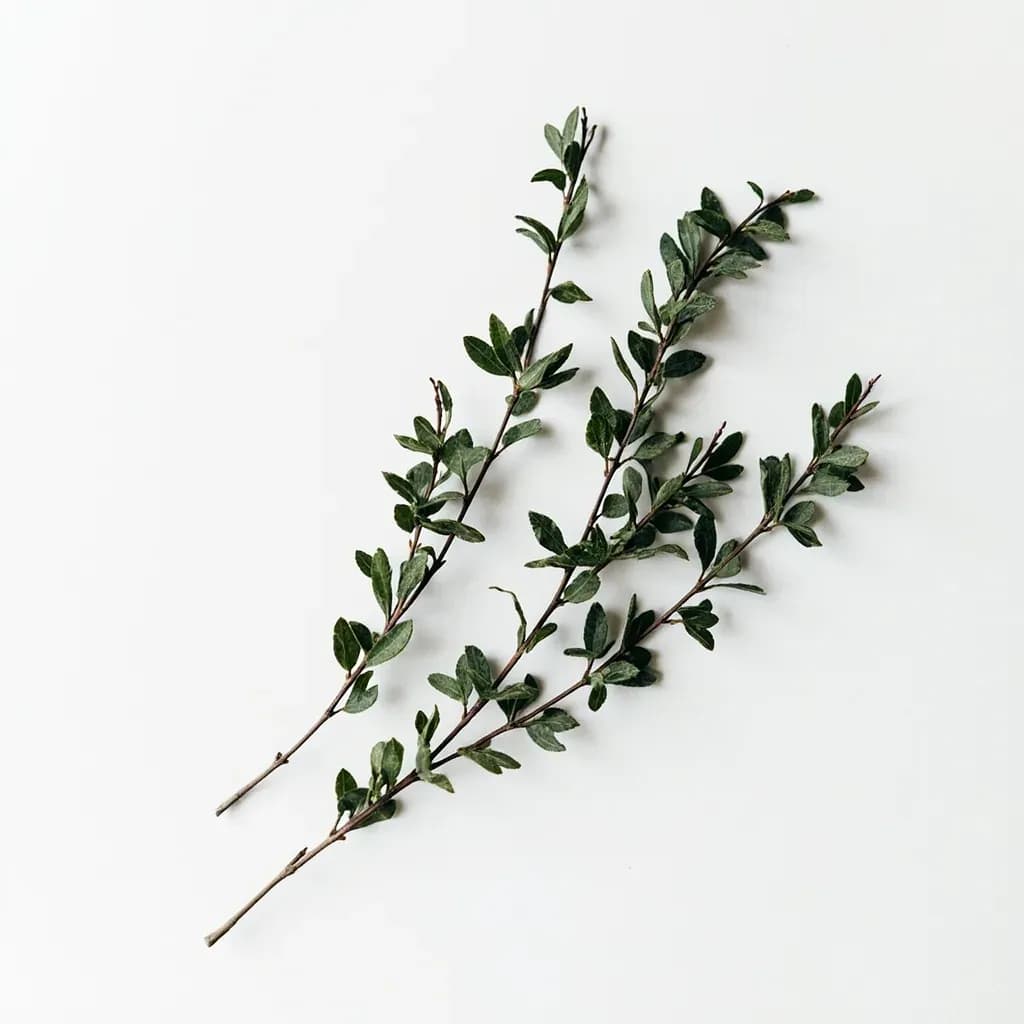
Myrtle Branches
Aromatic myrtle branches used to wrap or bed roasted meats, imparting a resinous Mediterranean scent.
Myrtle branches are leafy aromatic stems used as a natural flavoring wrapper and bed for cooking. In Sardinian and Mediterranean cooking they are layered around hot roasted suckling pig or poultry so the steam carries their resinous, eucalyptus-like aroma into the meat. The branches are not eaten; they act as a fragrant liner that perfumes the dish as it rests.
Myrtle branches are fresh, leafy cuttings of Myrtus communis, a shrubby evergreen native to the Mediterranean basin. In the kitchen they function simultaneously as a wrap, a fuel, and a seasoning: when laid beneath or bound around meat and exposed to gentle heat, the volatile oils in the leaves smolder slowly and perfume both the surface of the food and the rendered fat collecting underneath. The aroma is dominated by 1,8-cineole (eucalyptol) and myrtenyl acetate, which read as resinous, slightly cooling, and faintly sweet — closer to bay and eucalyptus than to rosemary, juniper, or thyme, and without the sharp tannin of an oak or hickory smoke.
The branches are central to Sardinian and Corsican roast suckling pig, where the animal is laid directly on a bed of myrtle, juniper, and bay and the smoldering aromatics are treated as integral to the dish as the salt and the fat. The same plant supplies the dark berries macerated into mirto, one of southern Italy's defining liqueurs, so the branches sit at the rustic, whole-plant end of that flavor family. Because the leaves smolder cool and release fragrance gradually rather than charring in flames, myrtle works for long, slow pit-roasts as well as quick fish grills — but only when the cuttings are genuinely fresh. Dried twigs ignite too fast and deliver a harsher, tarry smoke that tastes of resin rather than herbs.
In practice, myrtle is less a background seasoning than a structural element of the cook: it is chosen before the fire is lit, and the cut, thickness, and moisture of the branches determine whether the smoke is sweet or acrid. Understanding that single distinction — fresh leafy wood for slow smolder, older or dried wood only for brief aromatic fuel — is what separates a proper porceddu-style roast from a bitter, piney one.
Alternatives
Types & varieties
The default culinary myrtle: small, glossy dark-green leaves and dark purple-black berries; strongest resinous smoke and the variety most associated with Sardinian porceddu.
A broad-leaved selection with a softer, more herbal and less peppery aroma; better suited to delicate fish wraps where wild myrtle would dominate.
Same species, lighter berry color; the foliage is slightly sweeter and is favored in some Sardinian households for wrapping lamb shoulder.
A low-growing form with finer stems; thin twigs work well as small skewers for prawns or scallops but burn through quickly.
Selecting and storing fresh branches
The success of a myrtle-fired cook depends almost entirely on the condition of the wood at the moment it meets the heat. Cut in the morning, when essential oils are most concentrated in the leaves, and choose stems that are finger-thick, still flexible enough to bend without snapping, and densely clothed in healthy, undamaged leaves. Bark-cracked, leafless, or visibly weathered stems should be set aside — they will not smolder well and will tip the smoke toward bitter. Avoid any plant that may have been treated with pesticides: roadside shrubs, ornamental nursery stock, and florist supply are all unreliable sources. A kitchen-garden or wild Mediterranean stand, or a trusted greengrocer specializing in Sardinian or Corsican produce, is the safer choice.
Fresh branches keep five to seven days refrigerated if wrapped in a slightly damp cloth inside a perforated plastic bag; the moisture slows leaf desiccation without encouraging rot. Dried branches belong in a different category: they are brittle, burn fast, and are best reserved for sachets or short aromatic boosts rather than as a primary wrap or bed.
- Cut in the morning for peak oil content
- Choose finger-thick, flexible, fully-leafed stems
- Reject bark-cracked or leafless wood
- Wrap fresh branches in a damp cloth inside a perforated bag
- Keep dried branches for sachets, not open-flame wraps
How myrtle behaves on the fire
Myrtle burns the way good kindling should: slowly, with a thin ribbon of fragrant smoke rather than the thick white plume of softwoods or the heavy char of hardwoods. That behavior comes from the leaf oils, which vaporize at relatively low temperatures and continue to release aroma as long as the leaves stay green and moist. The smoke reads sweet and slightly cooling to the nose because 1,8-cineole dominates, with myrtenyl acetate adding a rounded, sweet-herbal undertone. There is no sharp tannin and very little acrid edge, which is why the smoke sits comfortably on fatty meats — suckling pig, lamb shoulder, mackerel, eel — without competing with the fat.
- Smolders rather than flames; best with embers or low radiant heat
- Releases aroma gradually over 30–60 minutes of gentle heat
- Pairs naturally with juniper, bay, mastic, lentisk, and fennel fronds
- Citrus peel or a fennel bulb nearby lifts the resinous character
- Adds almost no bitter or tannic edge to the meat surface
Common uses
Tips & pitfalls
- Source branches from unsprayed wild or kitchen-garden plants; florist and roadside ornamentals are likely treated with chemicals you do not want on food.
- Soak bundles in water for 15–20 minutes before any open-flame use to slow combustion and prevent leaf scorch.
- When using myrtle as a skewer, strip the lower 3–4 cm of leaves so you have bare wood to handle.
- Layer myrtle with juniper and a few bay leaves; myrtle alone is fragrant but can read one-note over a long cook.
- Add a fresh bundle in the final 20–30 minutes of a long roast rather than at the start — the volatile oils fade with prolonged heat.
- Never reuse branches; the second heating releases bitter, tarry notes that no amount of citrus or fennel will rescue.
- For fish, lay a single thin layer of myrtle on the grill, not a thick mat — the delicate smoke lifts the oils without overwhelming them.
- If myrtle is unavailable, a 50/50 blend of fresh rosemary stems and bay leaves is the closest functional stand-in for both aroma and physical behavior.
Good to know
- Botanical name
- Myrtus communis (family Myrtaceae)
- Native range
- Mediterranean basin — Sardinia, Corsica, Liguria, Spain, Greece, North Africa, the Levant
- Form
- Fresh, leafy woody cuttings, typically 20–40 cm long and 3–8 mm thick
- Aroma profile
- Resinous, slightly peppery, eucalyptus- and bay-like, with a sweet herbaceous finish
- Key aromatic compounds
- 1,8-cineole (eucalyptol) and myrtenyl acetate — the same family of compounds that gives bay leaf its lift
- Heat behavior
- Slow-smoldering, low-spark; delivers a thin, fragrant smoke rather than heavy char
- Storage (fresh)
- Wrap in a slightly damp cloth inside a perforated bag; keeps 5–7 days refrigerated
- Reusability
- Single use only — leaves blacken and turn bitter on the second heating
Also called
myrtle sprigs · mirto branches
Related

Aluminum Foil
Wraps, covers, and tents food for the oven and grill

Parchment Paper
Nonstick liner for clean, even baking and easy release

Wax Paper
Moisture-resistant sheet for wrapping and counter prep

Plastic Wrap
Clings tight to cover bowls and wrap leftovers

Silicone Baking Mat
Reusable nonstick liner that replaces parchment

Cheesecloth
Loose-woven cloth for straining stock and bundling herbs

Beeswax Food Wrap
Reusable wax wrap that molds around bowls and produce

Piping Tips
Shaped nozzles that turn frosting into stars and rosettes