Heat & Safety
Nitrile Food Gloves
Disposable latex-free gloves that protect hands and food during prep and handling.
Nitrile food gloves are disposable, latex-free gloves worn during food prep to keep hands clean and protect food from contamination. Cooks use them when handling raw meat, mixing by hand, deboning, or working with staining or spicy ingredients like chilies and beets. Being latex-free, they suit kitchens managing latex allergies, and they're changed between tasks to avoid cross-contamination.
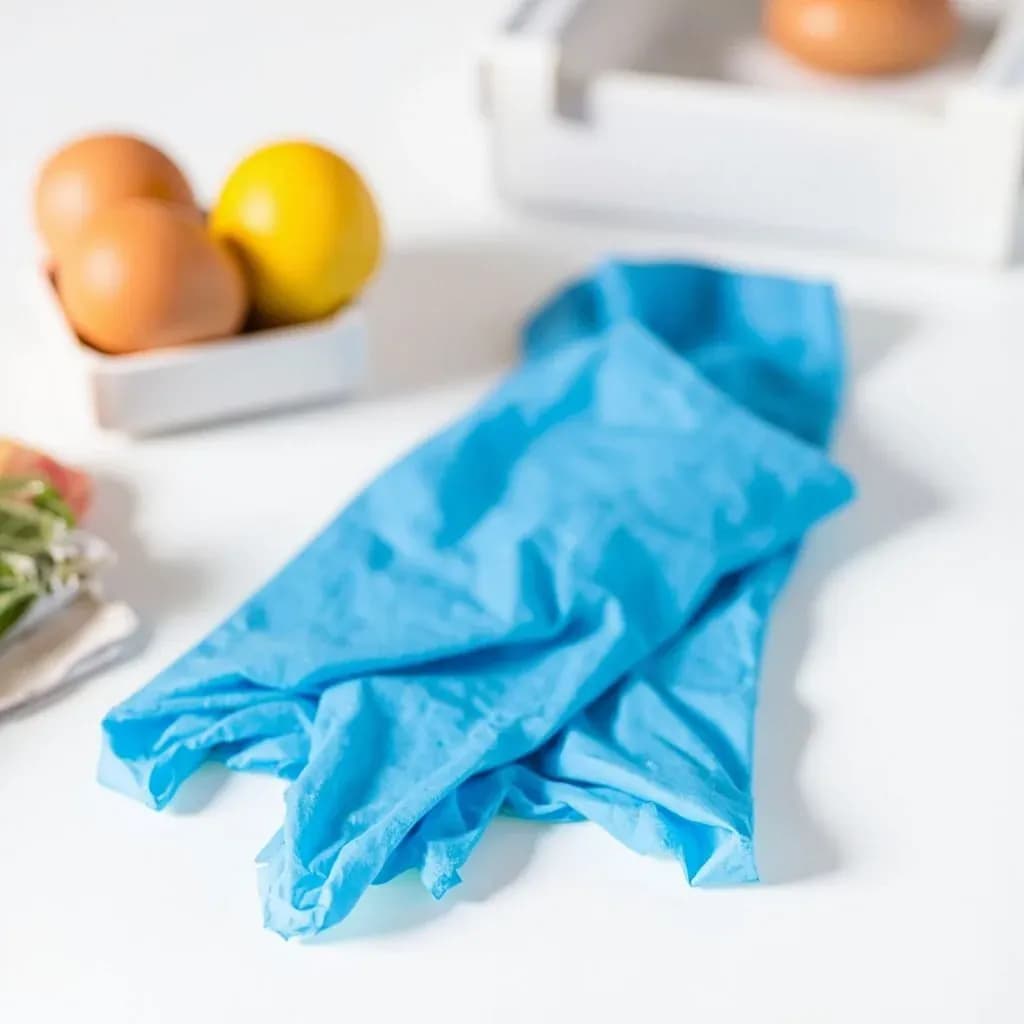
Nitrile food gloves are disposable, latex-free protective barriers made from nitrile butadiene rubber (NBR), a synthetic polymer derived from petroleum. They became the dominant glove in commercial food service during the 1990s after widespread latex allergies made natural rubber unsuitable for professional kitchens. Unlike latex, nitrile offers superior puncture resistance, reliable chemical barrier performance against fats and oils, and a consistent tactile feel that lets cooks handle small or delicate items with confidence. The material resists degradation from petroleum-based products, many cleaning agents, and animal fats — making it far more durable than vinyl or polyethylene alternatives for kitchen work. Nitrile gloves are available in a range of thicknesses, lengths, and colors, and they serve as both a personal protective item and a food safety tool, critical for preventing cross‑contamination during raw‑protein handling and allergen‑sensitive prep.
The color of a nitrile glove is not merely aesthetic; in professional kitchens, it is a functional part of food safety systems. Blue is the industry standard because its high visibility makes lost gloves easier to detect in food. Black is preferred in high‑end and visual‑forward kitchens, where the dark color masks staining from turmeric, paprika, or beet juice. Color‑coded glove policies — assigning specific glove colors to specific food categories — are a practical enforcement mechanism for HACCP‑based cross‑contamination prevention.
Nitrile gloves are not a substitute for hand washing, nor are they burn protection. They offer brief heat resistance up to approximately 400 °F (204 °C), meaning they can safely stir a boiling liquid or retrieve an item from a steamer, but will degrade if exposed to open flame, hot oil at high temperatures, or prolonged contact with heated surfaces. Selecting the right thickness for the task — lighter gloves for plating, heavier for butchery — is the most practical decision a cook makes with this tool.
Alternatives
Types & varieties
Most common in commercial kitchens; high visibility aids detection if dropped into food
Preferred in professional and high‑end kitchens; masks staining from spices like turmeric and paprika
Standard for food service; eliminates powder‑related contamination and allergy concerns
Delicate prep tasks, food service plating, brief tasks requiring tactile sensitivity
General food prep; the most common thickness for everyday kitchen use
Butchery, dishwashing, heavy cleaning, handling sharp implements or broken glass
Enhances grip on wet or greasy items; essential for tasks requiring precision and control
Food‑grade is certified specifically for food contact; exam‑grade meets medical standards and is also acceptable for food use
Color‑Coding as a Cross‑Contamination Tool
Many commercial kitchens assign specific glove colors to specific food categories as part of their HACCP safety plan. A common scheme: red for raw meat, blue for fish, green for vegetables, and white for ready‑to‑eat or garnished items. This visual system makes it immediately obvious — even from across a busy kitchen — whether a cook has handled raw proteins and may be carrying contaminants to a ready‑to‑eat surface. When transitioning between tasks, a glove change is mandatory in commercial settings when switching from raw to ready‑to‑eat foods. The color‑coding reinforces this habit without requiring constant verbal communication.
- Red = raw meat (beef, pork, lamb)
- Blue = fish and seafood
- Green = vegetables and plant‑based items
- White or yellow = ready‑to‑eat foods and garnishes
Thickness and Task Selection
Choosing the correct mil (thousandth of an inch) rating directly affects both safety and dexterity. Too thick, and you lose the fine touch needed for trimming or garnishing. Too thin, and a knife slip or exposed bone edge can puncture the glove mid‑task, defeating the purpose entirely. Match the glove to the risk level of the task before you begin, not after a puncture occurs.
- 2–3 mil: Plating, garnishing, brief service tasks, allergen‑sensitive prep
- 4 mil: Standard food prep — chopping, mixing, general handling
- 6–8 mil: Butchery, breaking down carcasses, handling sharp bones, dishwashing
Common uses
Tips & pitfalls
- Always wash hands thoroughly with soap before donning gloves — gloves trap warmth and moisture against skin, creating an environment where bacteria can multiply. Wearing gloves over dirty hands worsens contamination rather than preventing it.
- Select thickness based on task before you begin: lighter gloves for plating and quick tasks, heavier gloves for butchery and tasks involving sharp tools or rough surfaces.
- Change gloves between tasks, especially when switching from raw to ready‑to‑eat foods. Glove changes are mandatory in commercial kitchens during these transitions — do not skip them to save time.
- Snip or trim long fingernails before wearing gloves — sharp edges easily puncture nitrile, particularly at the fingertips, rendering the barrier useless.
- Avoid prolonged contact with surfaces above 400 °F (204 °C); nitrile will soften, degrade, and may leach chemicals into food. It is not burn protection under any circumstances.
- Store gloves away from heat sources, fluorescent lights, and ozone‑producing equipment such as motors and air purifiers — ozone causes nitrile to deteriorate prematurely and lose elasticity.
- Pull gloves on using the folded cuff as a bridge to avoid tearing fingertips on rings or fingernails. Never snap or pull aggressively against the fingertips.
- If double‑gloving for heavy‑duty tasks, don the inner glove first and ensure the outer glove cuff overlaps and seals over it completely — a gap at the wrist defeats the purpose.
Good to know
- Material
- Nitrile butadiene rubber (NBR), a synthetic polymer derived from petroleum
- Latex‑Free
- Yes — safe for individuals with latex allergies
- Standard Thickness
- 4 mil for general food prep; 2–3 mil for light‑duty; 6–8 mil for heavy‑duty
- Heat Resistance
- Safe for brief contact with foods up to ~400 °F (204 °C); not suitable as burn protection
- Barrier Strength
- Excellent against fats, oils, and petroleum‑based products; poor resistance to ketones, strong acids, and aldehydes
- Colors
- Blue (industry standard for visibility), black, purple, green, white
- Powder
- Powder‑free is standard for food service; eliminates contamination and allergy concerns
- Regulation
- Must comply with FDA 21 CFR regulations for food contact surfaces
- Shelf Life
- 2–3 years when stored in a cool, dry location away from ozone sources
- Disposal
- Single‑use only; discard after removal, do not reuse
Also called
nitrile-gloves · Nitrile Gloves · disposable-nitrile-gloves
Related

Paper Towels
Disposable sheets for spills, drying, and patting dry

Kitchen Towels
Reusable cloths for drying, gripping, and wiping

Oven Mitts
Heatproof gloves to handle hot pans and trays safely

Disposable Gloves
Single-use gloves for safe, mess-free handling

Cleaning Cloths
Reusable cloths for wiping counters and spills

Tortilla Warmer
Insulated holder that keeps tortillas warm and soft

Trivet
Heatproof stand that shields surfaces from hot pots

Ice Bath Setup
Bowl of ice water that halts cooking and sets color