Wraps & Liners
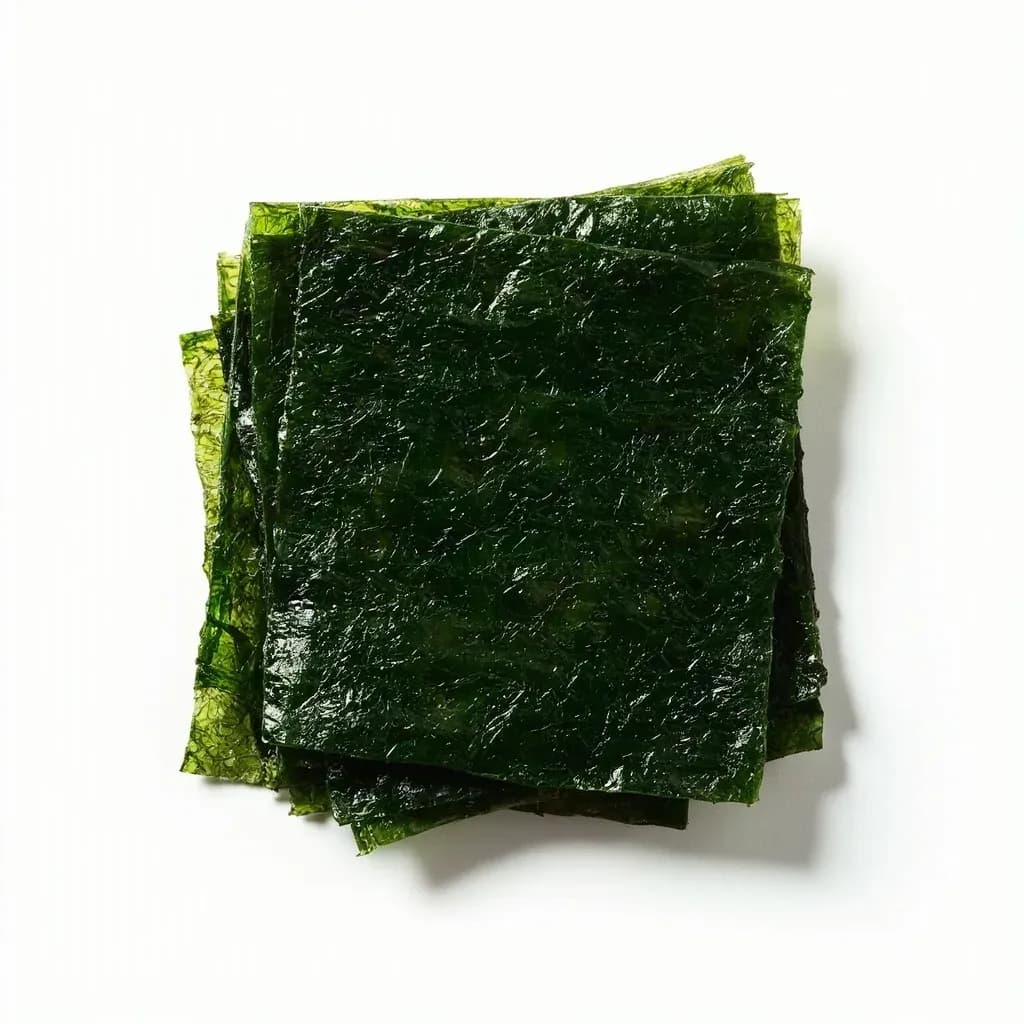
Nori Sheet
Thin dried seaweed sheet used to roll sushi, wrap rice balls, and garnish Japanese dishes.
Nori is a sheet of dried, pressed seaweed used as an edible wrapper in Japanese cooking. It is most familiar as the dark wrap around sushi rolls and onigiri, and toasted strips are crumbled over rice and noodles for umami. Sheets are kept dry and crisp until use; brief toasting revives them, and they soften quickly once they contact moist rice.
Nori is the paper-thin, toasted sheet of dried edible seaweed that gives sushi and rice balls their signature wrapper and a quiet, smoky umami finish. It is made from species of red algae in the genus Pyropia, washed and shredded into a slurry, then machine-pressed and dried into sheets roughly the size of a paperback page. The result is almost weightless — a sheet you can crumble between your fingers — yet it carries concentrated oceanic savor, vitamins, and a startling amount of iodine. Good nori should feel dry and brittle in the package, snap cleanly when bent, and smell of the sea rather than the fish counter; anything rubbery or musty has lost its character.
The sheet does two jobs at once: it is a structural wrapper that holds rice and fillings together, and a seasoning that contributes salt, glutamates, and a faint toastiness. Because it is so thin, it is also brutally sensitive to moisture. Steam, wet hands, vinegar-heavy sushi rice, or a humid drawer will turn a crisp sheet leathery in seconds, which is why experienced sushi cooks move fast once the rice goes down. Nori also has a personality on each face — a slightly rough, matte side that grips rice, and a smoother, shinier side that finishes a roll with a clean gloss.
Beyond sushi, nori is a workhorse garnish across Japanese and Korean cooking and a quietly useful pantry item in Western kitchens. A few torn strips change a bowl of plain rice, a sheet slipped under grilled fish crisps up like a savory parchment, and crumbled nori brings a saline crunch to pasta, popcorn, or avocado toast. The same moisture rules apply everywhere: keep it sealed, keep it dry, and revive what has gone soft with a quick pass over a flame.
Alternatives
Types & varieties
The standard pre-roasted sheet sold for sushi; green-black, crisp, faintly smoky
Unroasted raw dried sheet with a longer shelf life; toast briefly before eating
Pre-seasoned with soy sauce, mirin, and sometimes sugar; sold as a snack or rice-ball wrapper
Briefly grilled over charcoal for a smoky fragrance; considered a luxury grade
Pre-shredded into thin strips for topping rice, salads, and gunkan-maki
A reddish, frilly seaweed (a different species from true nori) used decoratively in gunkan-maki and on sushi plates
Korean parallel, often brushed with sesame oil and salt before drying; richer and slightly oilier
Sold in different grades; often pressed into rounds or thin sheets for soups and stir-fries
First-flush premium grade from the earliest winter harvest; deepest color, cleanest aroma
Reading nori quality
A good sheet is loud in a quiet way — it should snap rather than bend, and the color should be a dark, almost black green with no reddish or brownish patches. The aroma is the other giveaway: clean nori smells of the seashore and faintly of toast, never of brine concentrate or low tide. A sheet that folds limply, looks dull, or carries a heavy fishy odor has either been stored badly, sat too long in a humid shop, or was made from a lower-grade harvest. Premium ichiban-nori from the first winter cutting is noticeably better in all three respects, and the price premium is usually justified when the nori is the star, as in plain maki or onigiri. For wrapped rolls where fillings dominate, a mid-range yakinori performs admirably and saves money.
- Dark green-black color signals a clean, early-harvest sheet
- A clean, dry snap on the bend beats a limp fold every time
- Reddish or brown tints indicate oxidation or sun damage — pass
- A heavy "fishy" smell suggests poor storage, not stronger flavor
- Buy in small quantities; nori degrades faster than almost any other dried pantry item
Toasting and refreshing
Most packaged yakinori is already toasted, but it loses aroma and crispness within weeks of opening. The fix is fast and dramatic: a single pass over a gas flame, or a few seconds in a dry skillet, brings the snap and the smoky green-tea perfume back. The window between "perfect" and "burnt" is small, so watch the sheet rather than the clock.
- Hold the sheet 15–20 cm above a gas flame for one to two seconds per side
- In a dry skillet over medium heat, 5–10 seconds per side is enough
- The sheet is ready the instant it turns a more vivid green and crackles audibly
- Stop immediately at the first wisp of smoke — scorched nori tastes of char, not toast
- Toast only what you will use in the next few minutes; heat-driven crispness fades as the sheet cools and absorbs humidity
Common uses
Tips & pitfalls
- Revive soft or store-bought nori with a one-second pass over a gas flame per side, or a few seconds in a dry skillet — the moment it greens and crackles, it is done
- Use completely dry hands when handling; a drop of water is enough to make a sheet tear and go limp
- Work quickly once rice touches the sheet; the longer it sits, the soggier it gets, especially with hot or vinegar-heavy sushi rice
- Store opened packages in a rigid airtight tin with the included silica gel packet — that little desiccant is doing real work and should not be thrown away
- Buy in small quantities and rotate often; premium nori is wasted when it sits half-used in a humid kitchen for months
- Spread rice on the rough matte side for better grip, and let the smooth shiny side face outward for a glossier finish on the finished roll
- If a sheet cracks mid-roll, lightly mist the rice or dab the nori with a damp folded towel — most sushi chefs keep a small bowl of water and a cloth at the station for exactly this
- Fan finished maki for about thirty seconds before cutting; the nori sets up and a wet knife glides cleanly instead of dragging and tearing the wrapper
- Watch iodine intake: a few sheets a day is fine for most adults, but daily large handfuls can exceed safe limits, particularly for anyone with thyroid concerns
Good to know
- Origin
- Edible red algae of the genus Pyropia, harvested in Japan, Korea, and coastal China
- Form
- Washed, shredded, and pressed seaweed dried into paper-thin sheets, usually pre-toasted
- Standard size
- Full sheet about 19 × 21 cm (7.5 × 8.25 in); half sheet about 9.5 × 19 cm
- Grading
- Ichiban-nori (first winter harvest, premium) is darkest and most aromatic; niban-nori is the second cut; avoid reddish or brown tones, which signal oxidation or sun damage
- Two sides
- A rougher matte side (rice goes here) and a smoother, shinier side (faces outward on the finished roll)
- Iodine
- Exceptionally high — a few sheets supply a large share of daily needs; overconsumption is a real concern, especially for those with thyroid conditions
- Shelf life
- Sealed packages keep 6–12 months; once opened, use within a few weeks if stored airtight and dry
- Storage
- Rigid airtight tin with the included desiccant, cool and dark, refrigerated after opening; keep well away from steam and humidity
Also called
seaweed sheet · sushi nori · dried laver
Related

Aluminum Foil
Wraps, covers, and tents food for the oven and grill

Parchment Paper
Nonstick liner for clean, even baking and easy release

Wax Paper
Moisture-resistant sheet for wrapping and counter prep

Plastic Wrap
Clings tight to cover bowls and wrap leftovers

Silicone Baking Mat
Reusable nonstick liner that replaces parchment

Cheesecloth
Loose-woven cloth for straining stock and bundling herbs

Beeswax Food Wrap
Reusable wax wrap that molds around bowls and produce

Piping Tips
Shaped nozzles that turn frosting into stars and rosettes