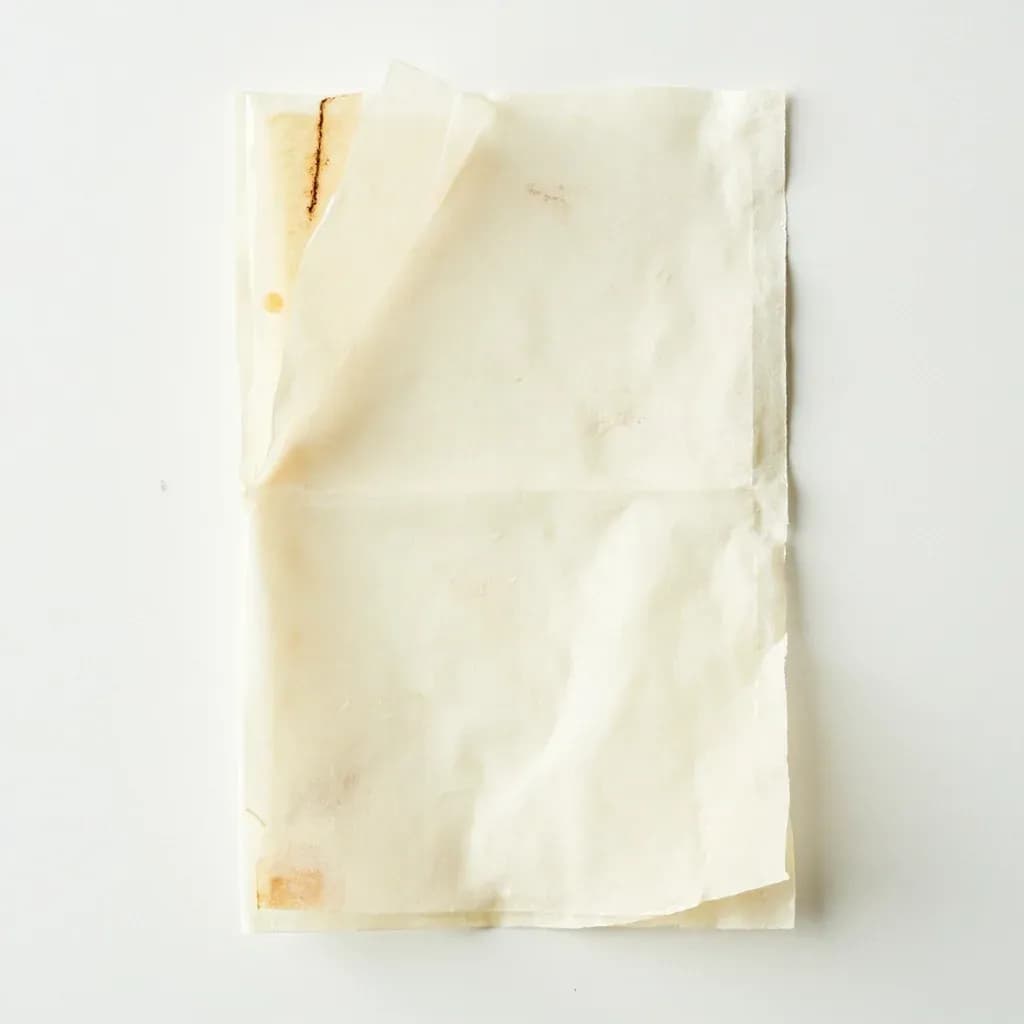
Wraps & Liners
Oil-Absorbing Blotting Paper
Absorbent sheets pressed onto fried foods to soak up surface grease.
Oil-absorbing blotting paper is a soft absorbent sheet laid over or under fried and oily foods to wick away excess surface grease before serving. It lightens the texture of tempura, fritters, and pizza and keeps plates from going slick. Plain paper towels do the same job in most home kitchens.
Oil-absorbing blotting paper is a specialized kitchen supply designed to lift excess surface grease from fried foods, preserving crisp texture and improving appearance. Developed from Japanese tempura tradition, these absorbent sheets use capillary action to draw liquid oil upward from fried surfaces before it can make breading or batter soggy. Unlike paper towels, which are designed for wiping and may leave fibers, blotting paper is engineered purely for absorption—it has no adhesive or treated surfaces that would interfere with oil wicking.
The practical effect on fried foods is two-fold: it reduces the visibly greasy appearance that many diners find unappealing, and it extends the window of crispness by removing surface oil that would otherwise migrate into the breading as the food cools. For home cooks, this means fried chicken stays crunchy longer on the serving platter; for professional kitchens, it means more consistent plate presentation without the glossy oil sheen. The paper is inexpensive, stores indefinitely when kept dry, and works equally well for pan-fried and deep-fried items.
Blotting paper comes primarily in two formats: pre-cut sheets around 15 × 15 cm (6 × 6 in) for individual portions, and continuous rolls that allow tearing custom lengths. Material options range from plain unbleached wood pulp to silicone-treated varieties that resist sticking to oily or hot surfaces. All are single-use by design—reusing them means redepositing oil rather than removing it. The paper contributes zero calories and no flavor; its only function is mechanical oil removal.
Alternatives
Types & varieties
Specifically designed for tempura; traditionally made from washi-style paper; comes in sheets or rolls; highest absorbency and heat tolerance
Generic absorbent paper sold in restaurant supply stores; plain or printed; comes in sheets or rolls; suitable for any fried food
One side coated with food-safe silicone; prevents sticking to oily surfaces; slightly less absorbent than untreated but easier to handle
Individually cut squares or rectangles; convenient for portion control and single-service use; common in commercial packaging for takeout fried foods
Continuous roll; user tears off desired length; more economical for high-volume use; common in professional kitchens
Why Blotting Works
Blotting paper succeeds where paper towels fail because it is engineered for passive absorption, not aggressive wiping. The untreated wood pulp fibers create a dense, porous structure that wicks oil through capillary action—liquid moves into the narrow spaces between fibers without pressure. Paper towels, by contrast, have a textured surface designed to scrub surfaces and pick up debris; they may smear oil rather than lift it, and their loose fibers can shed onto food. The key difference is intent: blotting paper is a one-way vessel for oil, designed to be laid gently and left alone.
- Capillary action pulls oil upward into the paper, not sideways across the surface
- Gentle placement preserves the paper's pore structure; pressing collapses it
- Absorption continues for 30–60 seconds after placement; give it time
Blotting vs. Draining
Draining on a wire rack alone allows air circulation and some oil runoff by gravity, but it does not actively remove surface oil. Fried foods drained only on racks often look glistening and can develop a thin layer of liquid oil on the surface as they cool. Blotting paper draws this oil away before it settles. For foods with complex surfaces—craggy tempura, fried chicken with bone, battered onion rings—blotting is more effective than simple draining because it reaches into crevices where oil pools.
- Wire rack: allows air circulation, no active oil removal, food must be turned for even drainage
- Blotting paper: active absorption, no turning required, works on all surfaces simultaneously
- Combine both: drain on rack, then blot for best results on large or irregular items
Common uses
Tips & pitfalls
- Apply blotting paper immediately after removing food from hot oil—within 10–20 seconds while food is still at peak temperature and the oil is still liquid on the surface
- Do not press down on the paper; lay it gently on top of the food and let capillary action draw the oil upward
- Replace saturated sheets with fresh ones if heavy oil remains; a single sheet may not absorb enough for high-oil items like whole-fried fish
- Use 2–3 sheets for large items like fried chicken pieces; one sheet per 100–150g of food is a reasonable ratio for thorough absorption
- For tempura, Japanese cooks typically place one sheet directly on the wire rack or bamboo skewers and set the pieces on top, allowing air circulation as well as oil absorption
- Avoid using regular paper towels as a substitute—they are designed for wiping, not absorbing pooled oil, and may leave fibers on the food
- Store blotting paper in an airtight container or sealed bag after opening to prevent moisture absorption from the air, which reduces effectiveness
- For breaded fried foods, apply blotting paper before the breading cools and sets—this prevents the breading from sticking to the paper
- When using roll form, tear sheets to size before frying to avoid handling wet or oily sheets with wet hands near hot oil
Good to know
- Material
- Unbleached or virgin wood pulp; some varieties coated on one side with food-safe silicone for nonstick performance
- Common Names
- Oil-absorbing paper, blotting paper, grease-absorbing paper, fry paper, Japanese abura-fuki (tempura paper)
- Origin
- Japanese cuisine; tempura tradition where it has been standard practice for centuries
- Typical Size
- Sheets: 15 × 15 cm (6 × 6 in); rolls: 10–30 cm (4–12 in) wide
- Heat Resistance
- Safe to 200–220 °C (400–425 °F); silicone-treated grades tolerate higher temperatures
- Use
- Single use only—discard after oil absorption; not washable or reusable
- Storage
- Keep dry, sealed, away from humidity and direct sunlight; indefinite shelf life when stored properly
- Caloric Impact
- Zero—purely mechanical, contributes no calories or flavor
Also called
oil-absorbing-paper · oil-absorbing-sheet · grease blotting paper
Related

Aluminum Foil
Wraps, covers, and tents food for the oven and grill

Parchment Paper
Nonstick liner for clean, even baking and easy release

Wax Paper
Moisture-resistant sheet for wrapping and counter prep

Plastic Wrap
Clings tight to cover bowls and wrap leftovers

Silicone Baking Mat
Reusable nonstick liner that replaces parchment

Cheesecloth
Loose-woven cloth for straining stock and bundling herbs

Beeswax Food Wrap
Reusable wax wrap that molds around bowls and produce

Piping Tips
Shaped nozzles that turn frosting into stars and rosettes