Storage & Containers
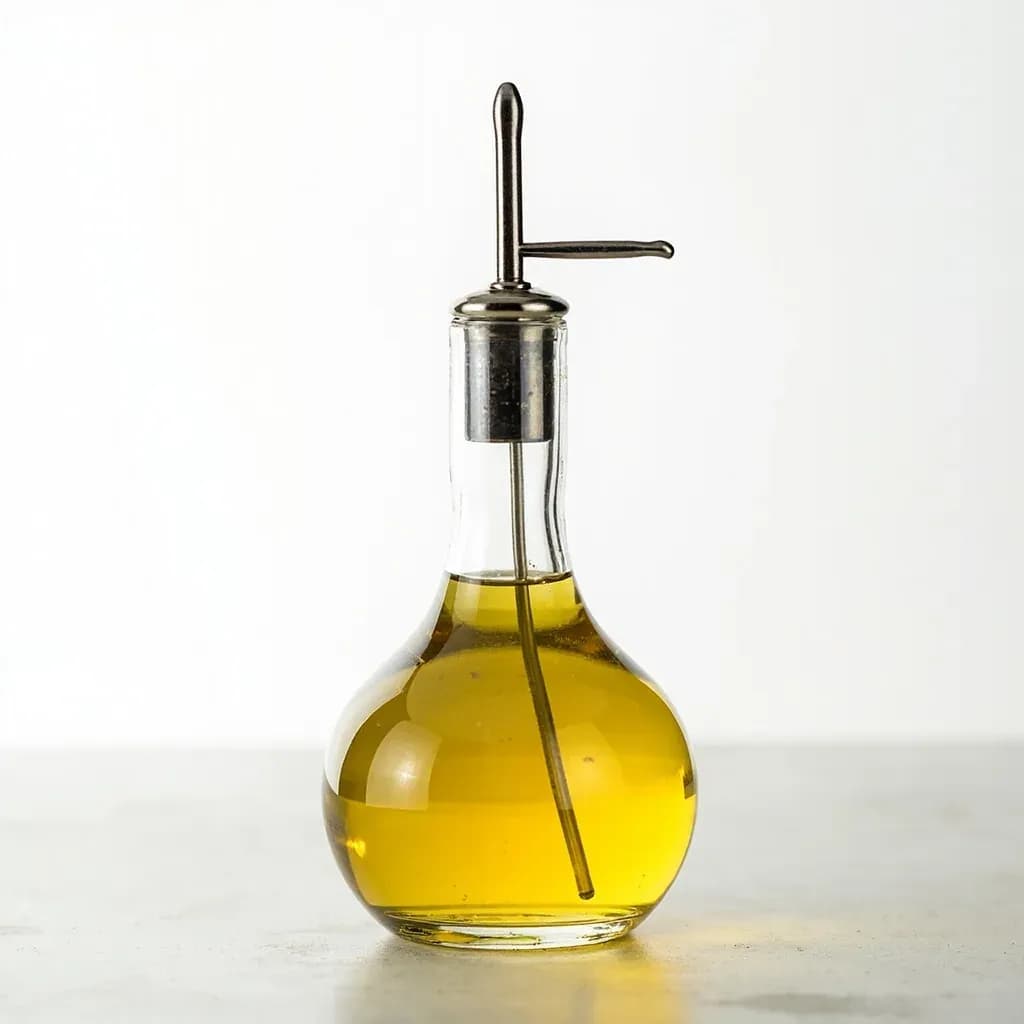
Olive Oil Cruet (Oliera)
Spouted table vessel that holds and pours olive oil with a controlled, drip-free stream.
An olive oil cruet, or oliera, is a small bottle or jug with a narrow spout designed to dispense oil cleanly at the table or workstation. It lets a cook drizzle a steady controlled stream over salads, bread, and finished plates without glugging. Many have a non-drip pour spout and a tinted body that shields the oil from light to slow rancidity.
The olive oil cruet — the oliera in Italian — is a finishing tool, not a storage vessel. It is the small table-top bottle from which good extra-virgin oil is drizzled, slowly and deliberately, over pasta, bread, soup, or grilled vegetables after the cooking is done. Its job is to present oil at the table in a form that pours in a thin, controllable stream and stops cleanly when you set the bottle down, so the tablecloth stays unmarked and the diner stays in control of how much oil lands on the plate.
The defining engineering detail is the spout. A well-made cruet pours a steady thread of oil without leaving a ring on the linen; a poorly cut one trails drips after the pour ends. Most modern drip-free cruets use a small metal pourer collar with an internal baffle or a grooved lip that channels the last drops back into the bottle; vintage all-glass cruets achieve the same effect with a small glass pin or ball seated in the neck. The classic Italian oliera pairs the oil cruet with a matching vinegar or balsamic vessel on a single frame, so the diner can dress bread or salad at the table with one motion.
Capacity is intentionally small — usually 150 to 500 ml — so that the oil is used up within a few days, well before it can oxidize in the warm, lit conditions of a dining table. Treat a cruet the way you treat a pepper mill at the table: a working bottle that you top up from a tin or dark bottle whenever the oil inside starts to taste flat, rather than a vessel you store oil in long-term.
Alternatives
Types & varieties
Twin glass bottles for oil and vinegar/balsamic joined on a chrome, wrought-iron, or wooden frame; the iconic mid-century Italian table cruet, also made in Tuscan ceramic and hand-blown Venetian glass.
A bulbous glass carafe-style pourer used at Spanish and Portuguese tables, with a pinched lip that controls the stream; not to be confused with the larger oil-storage garrafa.
Modern German, Scandinavian, and contemporary Italian cruets with a small stainless or chrome pourer collar containing an internal baffle; the spout is angled and grooved so drips run back into the bottle.
All-glass cruet with a built-in pouring lip and a small glass ball or pin in the spout neck to restrict flow; a common vintage form.
Simple bottle with a tapered cork or wooden stopper and a small spout; rustic, favored in trattorias and for unfiltered or fresh-pressed oils that need to breathe.
Hand-painted or plain terracotta and ceramic cruet, often a single bottle with a short spout; keeps oil slightly cooler and shields it from light.
Borosilicate glass with silicone or stainless pourers from design-led brands (Menu, Stelton, Eva Solo, Normann Copenhagen) that reinterpret the form for contemporary tables.
Anatomy of the Drip-Free Spout
The reason an oliera does not leave an oil ring on the table is small, mechanical, and easy to take for granted. Two designs dominate. The modern metal-collar pourer screws into the neck of the bottle and contains either a fixed baffle plate or a hinged cap that opens only when the bottle is tilted past a certain angle; oil flows over the baffle in a thin sheet, and a groove cut into the underside of the spout lip runs that last film back into the bottle rather than letting it drip. The older all-glass pourer relies on a small glass pin or ball seated loosely in the neck; the pin slows the flow to a controlled thread and, because it sits inside the bottle, the stream breaks cleanly when the bottle is righted.
What both designs share is a deliberate mismatch between bottle capacity and pour rate. A cruet is engineered to deliver a thin, slow stream — never the gush you want when filling a pan. That is why a cruet is the wrong tool for anything beyond finishing: refilling a frying pan, dressing a salad for four, or topping up a stockpot all demand more volume than the spout can comfortably deliver.
- A dripping spout almost always means a dirty or damaged baffle, not a defective bottle; unscrew and wash the collar before blaming the glass.
- Glass-pourer cruets with the internal pin are fragile — drop the bottle and the pin can crack the neck from inside; treat them as tabletop glassware, not utility bottles.
- Replace metal pourers rather than trying to bend the lip back into shape; the groove geometry is precise and does not survive being pinched with pliers.
Setting the Italian Table
In traditional Italian dining the paired oil-and-vinegar oliera is part of the mise en place of the table itself, set out before the bread basket arrives. The frame sits to the right of the diner or in the center of the table, oil on one side, balsamic or wine vinegar on the other. Bread is torn, not sliced, and dipped — first a thread of oil, then a few drops of vinegar, or both together — before the antipasto is served. The cruet stays on the table through the meal, refilled as needed, because every course from pinzimonchio to grilled vegetables to bistecca expects a finishing pour.
This is also why the bottle is small and the spout is fine: an Italian table is dressed repeatedly, in small amounts, by the person eating. A cruet that poured like a kitchen oil can would be wrong for that job — too much oil, too fast, and no control over where it lands on the plate.
- For pinzimonchio (raw vegetables dipped in oil), the cruet sits at the center of the platter so each diner pours their own; the slow stream keeps oil off the tablecloth.
- Refill the cruet from a tin, dark bottle, or ceramic jug rather than from a large clear bottle that has been sitting on the counter — light and heat have already started to work on the bulk supply.
- If you are serving two very different oils (say, a delicate Ligurian for fish and a peppery Sicilian for grilled vegetables), use two separate cruets; mixing in one bottle muddies both.
Common uses
Tips & pitfalls
- Choose glass or glazed ceramic; oil absorbs off-flavors from plastic and reacts with bare copper or low-quality metals.
- Keep cruets out of direct sunlight and away from the stove — light and heat are the two fastest paths to oxidized, rancid oil.
- Refill only what you will use in 3 to 5 days; treat the cruet like a working bottle, not a storage vessel.
- Prime the spout before first use by pouring a small amount, letting it run back, then pouring again — this charges the groove and prevents the first-use drip.
- Unscrew and hand-wash the metal pourer regularly; oil residue builds up in the baffle and is the usual cause of sticking and dripping.
- Do not fill to the neck — leave a finger's width of headspace so the oil can expand and the pourer seats properly.
- Match spout size to oil viscosity: a fine spout for green, peppery oils; a slightly wider one for thicker, mature oils.
- Never store a cruet with a wet interior; trapped moisture will cloud the oil and encourage microbial growth at the spout.
- Avoid washing with strong-smelling detergents — a trace of citrus or soap will flavor the next pour for days; rinse with hot water and a neutral soda wash if needed.
- If a vintage Italian oliera has a stuck pourer, soak the spout in warm (not boiling) water for 10 minutes — the metal expands before the glass and frees the threads.
Good to know
- Also called
- Oliera (Italian), ampollina dell'olio, cruet à huile, garrafa (in some Spanish and Portuguese contexts)
- Form
- Small table-top bottle with a restricted-orifice pourer, designed for drizzling finishing oil at the table
- Typical capacity
- 150–500 ml (5–17 fl oz) for single units; 200–350 ml per bottle in paired oil-and-vinegar sets
- Common materials
- Glass (most traditional, non-reactive), stainless steel, glazed ceramic, occasionally pewter, silver, or chrome-plated metal
- Spout design
- Restricted-orifice pourer, often a small metal collar with an internal baffle or grooved lip that returns drips to the bottle
- Traditional pairing
- Italian oliera is almost always a double vessel — olive oil on one side, aceto balsamico or wine vinegar on the other, mounted on a single frame
- Light protection
- Dark green or amber glass shields oil from light; clear glass cruets should be kept out of direct sun to slow oxidation
- Not for
- Long-term oil storage; deep-frying transfers; or anything that requires pouring more than ~30 ml at a time
Also called
oliera · oil bottle · oil dispenser
Related

Freezer Bags
Thick, sealable bags built to fight freezer burn

Storage Bags
Resealable bags for fridge storage and marinating

Storage Container
Lidded container for leftovers, prep, and meal kits

Glass Container
Oven-to-fridge glass that won't stain or hold odors

Plastic Container
Lightweight, stackable storage for everyday leftovers

Vacuum Sealer Bags
Airtight bags for long freezing and sous-vide

Reusable Bags
Washable silicone bags that replace single-use plastic

Mason Jar
Sealed glass jar for preserves, pickles, and storage