Storage & Containers
Order Ticket / Check Pad
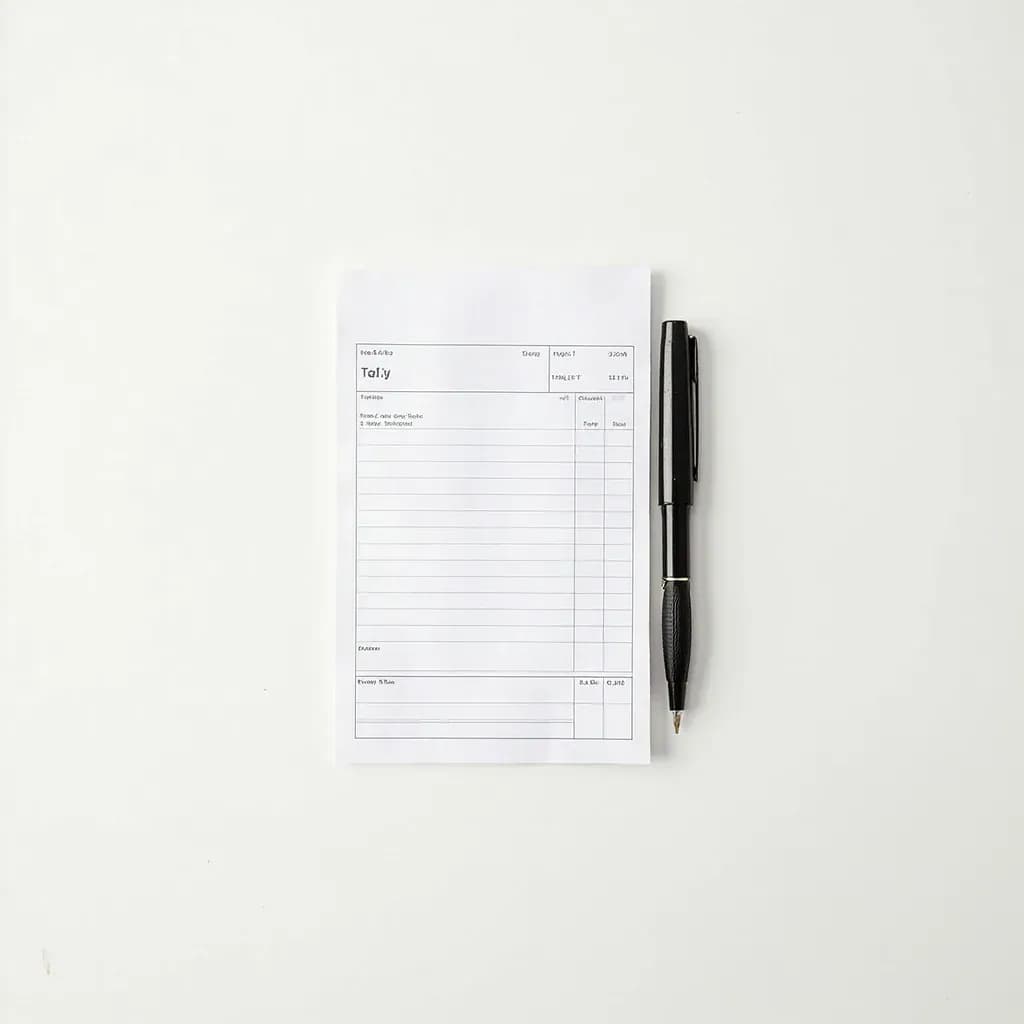
Paper docket pad used to write up and route customer orders from front-of-house to the kitchen line.
An order ticket pad is a paper docket used to record what a customer ordered and pass it to the cooks. Servers write the order, tear off the slip, and clip it to the kitchen rail so the line can fire dishes in sequence. Carbonless duplicate pads keep one copy for the table check while the kitchen works from the other, keeping service organized during a rush.
The order ticket — also called a guest check pad — is the original interface between the dining room and the kitchen: a pre-numbered, usually carbonless paper pad on which servers hand-write each table's order and then route copies to the line, the bar, and the expediter. Despite the rise of POS printers and kitchen display systems, paper tickets remain standard in most full-service American restaurants, both as a primary ordering tool in casual operations and as a redundancy layer when the network drops or a printer jams. One writing action produces a complete chain of communication, accountability, and payment: the top sheet is perforated so the server can tear it off and hand it to the guest as the check, while duplicate copies keep the kitchen, the bar, and the server's own records in sync.
Physically, the standard pad is around 4.25" × 7", bound or glued at the top, and backed with stiff chipboard so it can be written on while standing. NCR (no-carbon-required) paper, developed by the National Cash Register Company in the 1950s, replaced the old carbon-interleaved sheets and is now nearly universal; pressure from a ballpoint transfers a clean copy onto the sheet below. Multi-ply pads layer a white original with a yellow duplicate and (optionally) a pink or green triplicate, each color routed to a different station. Pre-numbered sequencing, a tax line, a tip guideline, and often a pre-printed restaurant logo round out a tool that is at once humble, durable, and central to how a service runs.
Alternatives
Types & varieties
One sheet only; used in casual settings or where a separate bill presentation method is in play.
Original to the kitchen, duplicate retained by the server as the bill; the workhorse of casual full-service dining.
Original to the kitchen, duplicate to the bar or expediter, triplicate to the server; used in larger operations with multiple stations.
Pressure from the pen transfers a copy without carbon paper — cleaner, faster, and now the industry default.
Thin carbon sheets between paper layers; cheaper but smudgy and largely phased out.
Pre-printed 1–100 sequence for accountability, void tracking, and end-of-shift reconciliation.
Pre-printed with the restaurant's logo, address, phone, and tax info; doubles as a marketing touch when the check is presented.
No pre-printing; used in small operations or those relying on a POS-printed header.
Wire spiral at the top; lays flat, survives being shoved into an apron pocket, and outlasts glued bindings.
Reading the color code
The white / yellow / pink convention on triplicate pads is a near-universal shorthand in U.S. restaurants. White is the original and almost always goes to the kitchen, where it is read by the line and then filed on the check spike until the table is closed. Yellow is the duplicate, traditionally routed to the bar for drinks, the salad station for cold items, or the expediter for final plating. Pink, on a triplicate, is the third copy — usually kept by the server as the running check and later presented to the guest. Memorize the routing your house uses; the worst service errors come from a bartender reading the cook's copy or a server grabbing the wrong sheet to present.
- White = kitchen / line
- Yellow = bar, cold station, or expediter
- Pink = server's working check / final bill
- Deviate from the convention only after training the whole team
When to reach for paper in a digital kitchen
Many operations have moved to POS-printed dockets and KDS screens, but the paper pad is far from obsolete. The cases where it still earns its place are worth knowing.
- Casual and bar settings where the speed of a hand-scrawled ticket beats typing into a tablet.
- Backup ordering when Wi-Fi drops, the printer jams, or the POS freezes mid-rush.
- Training new servers, who learn abbreviations and station routing faster on paper than on a screen.
- Off-premise and catering work, where a single written order can be passed between drivers, runners, and event leads without a screen.
Common uses
Tips & pitfalls
- Always write the table number, server initials, and cover count at the top of every ticket — omitting any of these is the single most common cause of a lost order in service.
- Keep a short, consistent list of kitchen abbreviations (NO ON, X-SIDE, MED RARE, FIRE, HOLD) and use them on every ticket; inconsistent shorthand is worse than no shorthand at all.
- Press firmly when writing on NCR pads; a faint duplicate on the bar or expediter copy is unreadable and will be cooked from memory, which is how mistakes happen.
- Tear the top sheet along the perforation cleanly — a ragged or crooked edge looks unprofessional when handed to the guest as a check.
- Stash open tickets on a check spike or in a ticket rail, grouped by table number and course; loose tickets on the pass get splashed, slid, and lost.
- Write modifiers in a dedicated box or circle them so the cook cannot miss them; a verbal 'no onions' called across the line is not a system, it is a hope.
- If you run both paper tickets and a POS, the server should confirm the two match before firing the order; mismatched tickets are how double-fires and lost mods start.
- Never stack loose tickets on a flat surface — a wet glass, a candle, or a splash of sauce will destroy the carbon copy beneath and blind the next station to the order.
Good to know
- Type
- Paper-based order management tool for front-of-house to back-of-house communication
- Standard sizes
- 3.5" × 5.5" (bar tabs), 4" × 6" (casual), and 4.25" × 7" (full-service industry standard)
- Ply count
- 1-part (single), 2-part (duplicate), or 3-part (triplicate)
- Paper system
- NCR (no-carbon-required) carbonless; legacy carbon-interleaved pads still exist but are rare
- Color coding
- White top sheet; duplicate typically yellow/canary; triplicate often pink or green — each color routes to a different station
- Construction
- Glued or spiral-bound at the top, backed with chipboard so the pad can be written on while standing
- Numbering
- Pre-numbered sequentially (commonly 1–100) for sales tracking, voided-check audits, and theft prevention
- Pre-printed fields
- Often includes restaurant name, address, phone, tax line, tip guideline, and signature line
- Cost
- A 100-ticket pad runs $3–$10 wholesale; carbonless versions slightly more than carbon-interleaved
Also called
check pad · docket pad · guest check pad · order pad
Related

Freezer Bags
Thick, sealable bags built to fight freezer burn

Storage Bags
Resealable bags for fridge storage and marinating

Storage Container
Lidded container for leftovers, prep, and meal kits

Glass Container
Oven-to-fridge glass that won't stain or hold odors

Plastic Container
Lightweight, stackable storage for everyday leftovers

Vacuum Sealer Bags
Airtight bags for long freezing and sous-vide

Reusable Bags
Washable silicone bags that replace single-use plastic

Mason Jar
Sealed glass jar for preserves, pickles, and storage