Wraps & Liners
Oven Roasting Bag
Heat-safe sealed bag that steam-roasts meats and vegetables while keeping the oven clean.
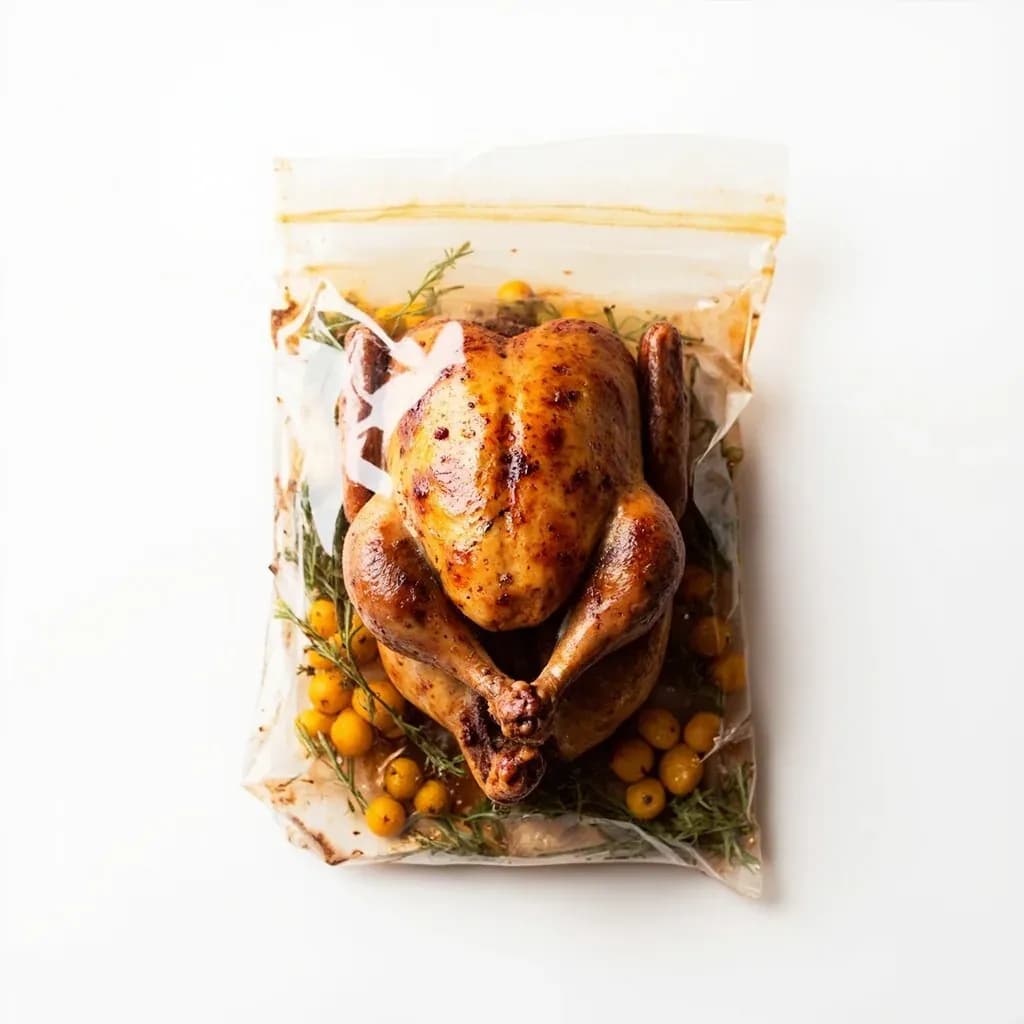
An oven roasting bag is a heat-resistant nylon or PET pouch that holds meat, poultry, or vegetables as they cook, trapping steam to keep food moist and tender. It shortens roasting time and contains splatter so the oven stays clean. Cooks tie it shut, vent it with a few slits, and keep it from touching oven walls or heating elements.
An oven roasting bag is a heat-resistant, FDA-approved nylon bag designed to seal food inside a contained cooking environment. The bag is closed with a nylon tie, placed in a roasting pan, and roasted in a conventional oven. What makes it effective is the steam generated by the food itself: as the food cooks, escaping moisture builds pressure inside the sealed bag, creating a moist-heat cooking chamber that tenderizes while retaining juices. This steam-roasting approach cooks food faster than open-air roasting—up to 25–30% faster—while keeping the oven entirely clean. The result is fork-tender meat and evenly steamed vegetables, though skin will not achieve the same crispness as open-air roasting. Bags are single-use only; reuse risks microscopic tears and plastic leaching into food.
Alternatives
Types & varieties
Typically 14×18 inches; fits 1–2 small birds or a single pork loin
Typically 20×24 inches; designed for birds up to 20–24 lbs
The dominant brand; includes flour and ties with each bag
Generally equivalent to name brands; check temperature rating on package
Higher heat tolerance for outdoor grilling use; not all are oven-safe—verify before purchasing
Why Add Flour to the Bag
This is the most critical step most beginners skip. A tablespoon or two of flour added to the empty bag before introducing food absorbs moisture that contacts the bag's interior surface during cooking. Without it, steam pressure can cause the bag to burst open mid-cook, creating a mess and a safety hazard. The flour is not for the food—it serves solely as a heat-stable anti-burst agent. Shake the bag gently to distribute the flour evenly along the bottom before adding your ingredients.
- Always add flour before adding food
- 1–2 tablespoons is sufficient for chicken-size bags; 2–3 for turkey-size
The Steam-Cooking Principle
Oven bags work by trapping the moisture that naturally escapes from food as it cooks. This is distinct from pressure cooking—there is no pressurized seal—but the result is similar: food cooks in its own steam, which tenderizes connective tissue in cuts like pork shoulder and keeps lean proteins like chicken breasts from drying out. The sealed environment also circulates juices back into the food rather than letting them drip away, yielding exceptionally moist results.
- No additional liquid is typically needed
- The food's own moisture creates the cooking medium
- Results are similar to braising but hands-off
Common uses
Tips & pitfalls
- Add 1–2 tablespoons of flour inside the bag before adding food to prevent the bag from bursting open from steam pressure
- Squeeze excess air from the bag before sealing, but do not overfill—leave room for the bag to expand
- Place the bag in a roasting pan for stability; the bag alone in the oven can shift or melt on oven walls
- Let the bag rest for 1–2 minutes after removing from oven before cutting it open to avoid steam burns
- Cut the bag open with scissors facing away from your face and hands
- Do not use in convection ovens on the fan-only setting, as circulating hot air can cause uneven heating and potential bag contact with heating elements
- Double-bag for very fatty cuts or long cooks to prevent fat degradation weakening the plastic
- Check that the bag is approved for oven use at your intended temperature—some generic bags melt at lower temperatures
Good to know
- Material
- Heat-resistant nylon or polyester film, FDA-approved for cooking use
- Temperature Limit
- Typically 400°F (204°C); some varieties up to 450°F (230°C)
- Standard Sizes
- Chicken (~14×18 in.) and Turkey (~20×24 in.)
- Cooking Advantage
- Traps steam, reducing cooking time by up to 25–30% compared to open roasting
- Closure
- Nylon tie strip included with each bag
- Cleanup
- Contains all drippings; bag is disposable
- Origin
- First marketed in the United States in the 1960s; Reynolds is the dominant brand
- Shelf Life
- Indefinite until opened; check for degradation if stored long-term
Also called
oven-bags · oven-cooking-bag · baking-sleeve · baking-roasting-bag · baking-paper-bag-roast · Roasting Bag
Related

Aluminum Foil
Wraps, covers, and tents food for the oven and grill

Parchment Paper
Nonstick liner for clean, even baking and easy release

Wax Paper
Moisture-resistant sheet for wrapping and counter prep

Plastic Wrap
Clings tight to cover bowls and wrap leftovers

Silicone Baking Mat
Reusable nonstick liner that replaces parchment

Cheesecloth
Loose-woven cloth for straining stock and bundling herbs

Beeswax Food Wrap
Reusable wax wrap that molds around bowls and produce

Piping Tips
Shaped nozzles that turn frosting into stars and rosettes