Heat & Safety
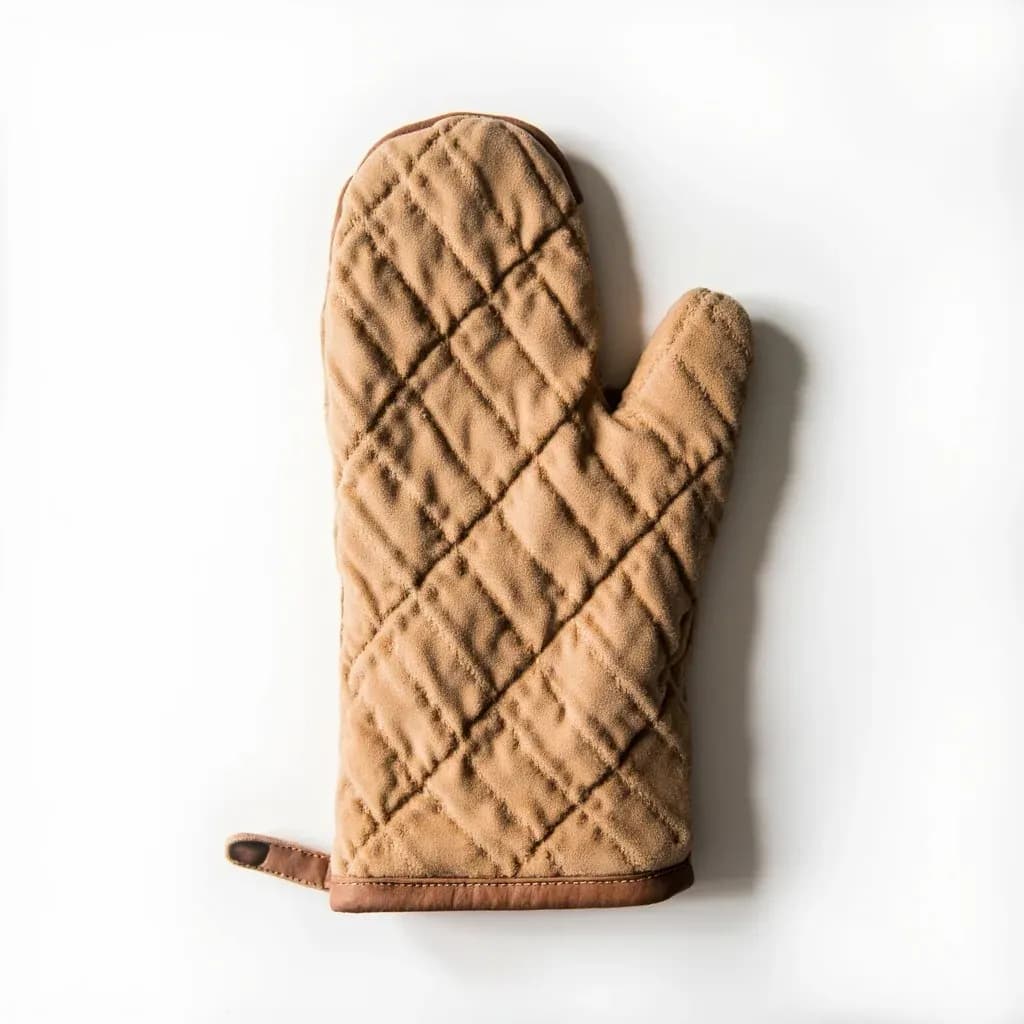
Oven Mitt / Glove
Insulated mitt that protects hands when handling hot pans, trays, and ovenware.
An oven mitt is a thickly insulated glove or mitt worn to handle hot pans, baking trays, and pots without burning the hands. Cooks use a pair to pull roasts from the oven, lift simmering stockpots, and move grill grates. Silicone and heat-rated fabric mitts resist higher temperatures and grip better, and dry mitts are essential since dampness conducts heat straight to the skin.
An oven mitt (or glove) is an insulated hand covering designed to protect the skin from contact with hot cookware, bakeware, and oven surfaces. Unlike simple cloth pads, a properly rated mitt creates a thermal barrier between your hand and temperatures that would otherwise cause immediate burns. The essential principle is simple: heat flows toward cooler areas, and the insulation in a mitt slows that transfer long enough for you to move a searing-hot pan safely across the kitchen. Without one, you are relying on the brief window before conduction overwhelms your skin's pain response—too often that window closes before you can react.
Mitts come in two structural forms. The mitt style is ambidextrous and slips on like a mitten, covering the thumb alongside the fingers. The glove style fits either the left or right hand individually, offering more dexterity at the cost of a slower donning. Both work on the same principle: an insulating fill (batting, foam, or aramid fiber) trapped between an inner lining and an outer shell. The outer shell—cotton, silicone, or woven aramid—determines the maximum safe temperature, moisture resistance, and cleanability. No mitt is invincible; each has a temperature ceiling and a time limit on safe contact, and both degrade with use, washing, and exposure to moisture.
The single most important thing to understand: fabric mitts lose their thermal resistance dramatically when wet. Water conducts heat far more efficiently than air trapped in batting. A mitt that feels dry but has absorbed moisture from washing, kitchen spills, or perspiration will transfer far more heat to your hand than its temperature rating suggests. This is not a rare failure mode—it is a leading cause of kitchen burns. Treat your mitts accordingly.
Alternatives
Types & varieties
Small, flat pad (approx. 7×7 in), held with the bare hand or tucked between palm and cookware. Ideal for quick grabs.
Mitten-shaped, thumbed design, typically 12–14 in long. Ambidextrous. Most common residential style.
Full hand-and-finger coverage, often textured for grip. Silicone shell over insulation; highly heat and moisture resistant. Dishwasher safe.
Extended length (up to 17 in), heavier insulation, rated for highest temperatures. May use aramid or other heat-resistant fibers.
Made with woven aramid fibers (e.g., Kevlar, Nomex). Thin, flexible, and rated to 500–800°F for brief contact. Often used in professional kitchens.
Cotton or cotton-polyester shell with quilted layers or batting fill. Washable and comfortable. Check temperature rating—many are lower than silicone.
Why Temperature Ratings Differ and What They Mean
A temperature rating does not mean a mitt is safe at that temperature indefinitely. It means the material will not fail (melt, scorch, or ignite) at that temperature under ideal dry conditions. Actual safe contact time depends on the thickness of insulation and the mass of the hot object. A heavy cast iron skillet at 400°F will transfer more heat in five seconds than a thin baking sheet at the same temperature. Grill and smoker work compounds this: radiant heat from coals or flames can spike effective temperature beyond the surface temperature of the metal. Choose a mitt rated at least 200°F above your expected surface temperature when working near live fire.
- A higher rating always provides a larger safety margin, not more time at temperature
- Radiant heat (from grills, broiler elements) can exceed contact temperature—factor this in when buying
Inspection and Replacement
Inspect your mitts before any heavy-use session. Hold each mitt up to a light source and look for thin spots, holes, worn seams, or compressed batting. Even a small hole near the thumb crotch—a high-stress zone—creates a direct path for heat. If you see any scorch marks, replace the mitt immediately, regardless of age: the fibers are carbonized and compromised. Fabric mitts typically last one to three years with regular use; silicone lasts five or more; aramid fiber three to five years. Replace sooner if you notice any degradation in grip, stiffness in the shell, or a persistent smell that washing does not resolve.
- Hold mitts to light before each use—light passing through means heat can pass through
- Replace at the first sign of scorching, even if the mark is small
Common uses
Tips & pitfalls
- Inspect your mitts before every heavy-use session: hold them up to light and check for thin spots, holes, or worn seams—heat travels through compromised insulation quickly.
- Replace fabric mitts the moment you see any scorch marks, even if small; the fibers are compromised and will fail at the next contact.
- Never fold or bunch a pot holder when grabbing a hot surface—a gap in coverage means direct heat to skin.
- Use a mitt on each hand when handling extremely heavy or awkwardly shaped cookware like a full roasting turkey in a heavy pan.
- Keep a backup pair within easy reach; if one falls in a drip pan or becomes damp, you should not need to improvise.
- For grill and smoker work, choose a mitt rated at least 200°F higher than your expected surface temperature to account for radiant heat spikes.
- Store mitts flat or on a hook, not crammed in a drawer under weight, to preserve the loft and integrity of insulation.
- Test a mitt's grip on a cool surface before trusting it with a load; textured silicone and some aramid weaves grip better than smooth cotton.
Good to know
- Typical Temperature Rating
- Fabric: 200–400°F; Silicone: up to 500°F; Aramid fiber (e.g., Kevlar): 500–800°F for short bursts
- Standard Length
- 12–14 inches from wrist to fingertip; "long" styles extend to mid-forearm
- Hand Orientation
- Mitt: ambidextrous. Glove: left or right hand specific.
- Care
- Fabric mitts: machine wash cold, air dry. Silicone: wipe clean or wash with soap and water. Never submerge in water if filled with batting.
- Inspection Frequency
- Check for wear, holes, and water saturation before each major use
- Lifespan
- Fabric: 1–3 years with regular use; silicone: 5+ years; aramid: 3–5 years
- Wet Use Safety
- Never use a wet or damp mitt—it conducts heat and can cause severe burns
Also called
oven-glove · oven-gloves · oven-mitts · pot-holder-mitt
Related

Paper Towels
Disposable sheets for spills, drying, and patting dry

Kitchen Towels
Reusable cloths for drying, gripping, and wiping

Oven Mitts
Heatproof gloves to handle hot pans and trays safely

Disposable Gloves
Single-use gloves for safe, mess-free handling

Cleaning Cloths
Reusable cloths for wiping counters and spills

Tortilla Warmer
Insulated holder that keeps tortillas warm and soft

Trivet
Heatproof stand that shields surfaces from hot pots

Ice Bath Setup
Bowl of ice water that halts cooking and sets color