Storage & Containers
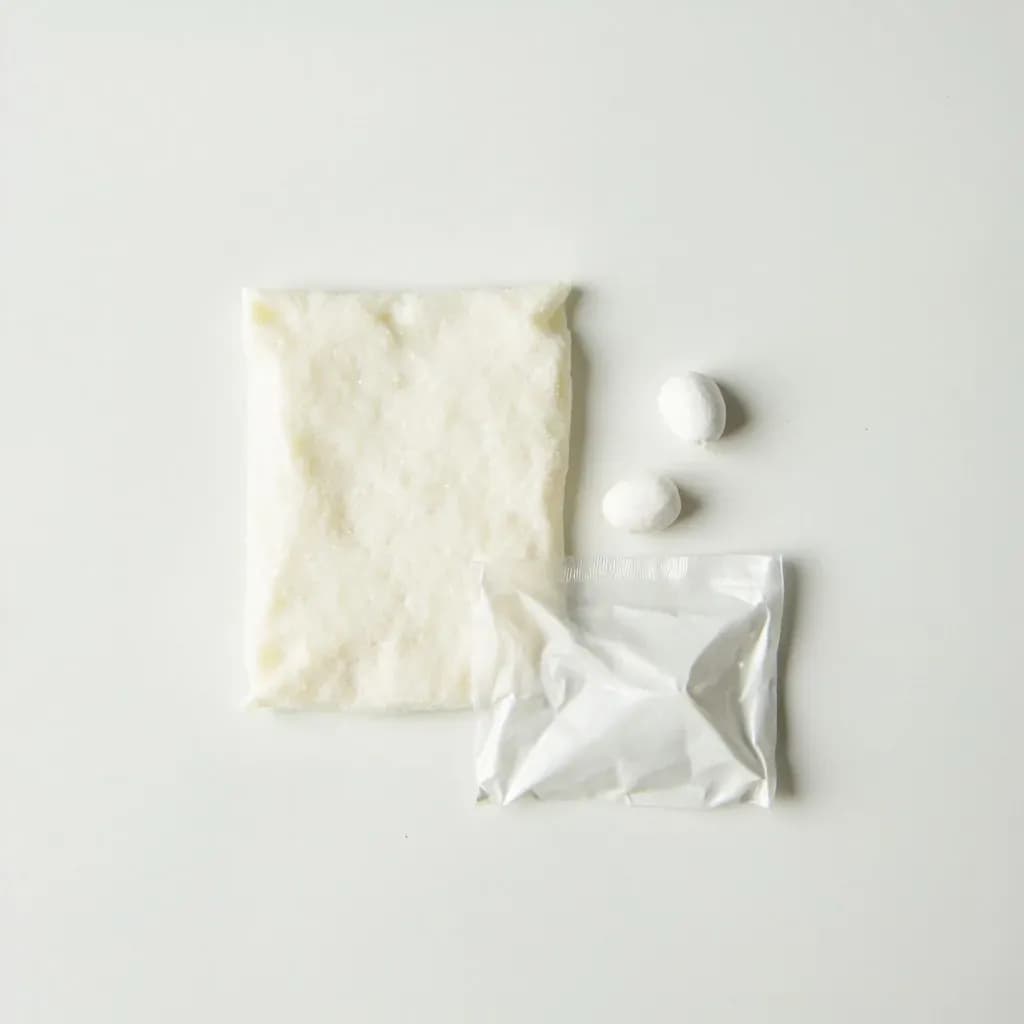
Oxygen Absorber Packet
Small sachet of iron powder that scavenges oxygen inside sealed packaging to prevent spoilage and rancidity.
An oxygen absorber is a tiny breathable packet of food-safe iron powder dropped into sealed jars, mylar bags, or vacuum pouches. As it rusts it pulls residual oxygen out of the headspace, which stops mold growth, slows fat rancidity, and protects color and flavor in dried goods, grains, jerky, and spices. They are sized by cubic-centimeter (cc) capacity to match the container volume and should be added and sealed quickly since they begin working on contact with air.
An oxygen absorber packet is a small, sealed sachet of iron powder (usually with a touch of salt as a catalyst and sometimes activated carbon) that quietly rusts its way through the headspace of a sealed container, converting free oxygen into iron oxide. Once ambient moisture inside the package reaches the iron, the metal begins to oxidize, and because rust takes up oxygen atoms from the air rather than from the food, the packet steadily strips oxygen out of the sealed environment — typically pulling the level below 0.01%. The practical consequence is dramatic: aerobic mold spores cannot germinate, the unsaturated oils in nuts, seeds, and whole grains stop going rancid, and the color and aroma of spices and dried herbs hold for months or years instead of weeks.
The catch is that an oxygen absorber is one component of a system, not a magic trick. The food must be dry (low water activity), the container must be genuinely oxygen-impermeable (mylar, a well-sealed mason jar, or metal), and the packet must be sized to the headspace — a 50cc sachet in a five-gallon mylar bag will be exhausted long before it has done meaningful work. Used correctly, absorbers extend the safe, tasty shelf life of dry staples like rice, beans, oats, flour, and dehydrated produce by years; used incorrectly, in a thin plastic bag or over a wet food, they do little and may leak rust.
The sachets themselves are non-toxic and approved for incidental food contact, but they are not meant to be eaten — they are gritty, mildly metallic, and unpleasant. Always remove the packet before serving or cooking, and keep it away from children and pets who might mistake the small sachet for a flavor packet or tea bag.
Alternatives
Types & varieties
The everyday kitchen type: iron plus salt catalyst in a porous sachet, activated by ambient humidity.
Contains a color dye (often pink-to-blue or clear-to-dark) that changes as the iron oxidizes, so you can tell at a glance whether the packet is still active.
Sized for pint and quart mason jars and small mylar pouches of herbs, spices, or seeds.
Sized for gallon mylar bags, 5-gallon buckets, or batch-storing several jars at once.
Combines iron with silica or clay desiccant for very dry long-term storage of jerky, powdered milk, or freeze-dried items.
The original Japanese formulation, widely cloned. Buy from suppliers that explicitly label packets food-grade for direct food contact.
Sizing the packet to the container
The cc number on a packet refers to how much oxygen it can absorb, not its physical size — and the right number depends on the empty air space, not the volume of food. A rough guide for the home cook:
- Pint mason jar (about 250 ml headspace when half full): 50–100cc packet.
- Quart mason jar (about 500 ml headspace when half full): 100–300cc packet.
- Half-gallon mylar bag: 500–1000cc packet.
- 1-gallon mylar bag: 1500–2000cc packet.
- 5-gallon mylar bag inside a pail: 1500–2500cc packet, sometimes two packets for margin.
- When in doubt, oversize slightly rather than undersize — an exhausted packet leaves oxygen behind, while a slightly large packet simply finishes its work early.
The dry-food + barrier + absorber system
Oxygen absorbers do their best work as the third leg of a stool. Skip any leg and the system wobbles.
- Dry food: target water activity below about 0.6 for safety. Oven-drying at 160°F/71°C until brittle, using a dehydrator, or storing commercially dried goods all qualify. Moist foods like jam, fresh bread, or oil alone will not be protected.
- Oxygen barrier: mylar bags (PET or metallized) heat-sealed with a household iron or impulse sealer, mason jars with new lids and clean rims, or sealed metal cans. Thin plastic zip-top bags, plastic buckets alone, and loosely capped glass jars let oxygen back in faster than the iron can remove it.
- Absorber: dropped in just before final sealing, used quickly once removed from its foil pouch, and removed before serving.
- Bonus step: an oxygen indicator strip in a sample jar lets you check whether your barrier is still holding months later.
What absorbers do and don't do
Knowing the limits is as important as knowing the benefits.
- Do prevent: aerobic mold growth, oxidative rancidity in oils, color and flavor loss in spices and dried herbs, insect eggs hatching (the larvae cannot survive very low oxygen).
- Do not prevent: anaerobic bacterial growth in moist foods, enzymatic browning in fresh produce, insect entry from outside the package, fat oxidation that has already started before packaging.
- Do not replace: proper drying, clean packaging, headspace management, or good lids. They are a finishing step, not a substitute for safe technique.
Common uses
Tips & pitfalls
- Keep packets in their original vacuum-sealed foil pouch until the moment you use them — opening the pouch starts the clock, and small sizes exhaust in 30–60 minutes of room air.
- Pair every packet with a truly oxygen-impermeable container. In a thin zip-top bag, oxygen seeps back in faster than the iron can remove it, and you will have paid for rust.
- Match the cc rating to the empty headspace, not the volume of food. A half-full gallon jar of beans has less air than a jar packed with pasta.
- Do not touch the sachet with wet hands or rest it directly on damp food. Free water overwhelms the chemistry and the packet can leach rust-colored iron oxide onto the food.
- Pull the packet out before serving or cooking. The sachet is non-toxic but gritty, mildly metallic, and unpleasant to bite into — easy to mistake for a seasoning packet in a cluttered pantry.
- Discard any packet that arrives hard and lumpy in its unopened pouch; it has already absorbed oxygen and will do no work for you.
- A faintly pulled-in lid on a mason jar within hours of sealing is a good sign — the absorber is working and the slight vacuum is helping your other seals.
- Buy from suppliers that explicitly label packets as food-grade and tested for direct food contact. Industrial-grade absorbers exist and are not interchangeable with kitchen ones.
- Never heat an absorber packet — no microwave, no oven, no autoclave. The plastic sachet can scorch and the chemistry is not designed for high temperatures.
- For very long storage (a year or more), tuck an oxygen indicator strip into one sample jar so you can check the barrier's integrity without opening the rest of the batch.
Good to know
- Material
- Iron powder with a salt catalyst (and sometimes activated carbon), sealed in a porous food-grade sachet of Tyvek or similar film.
- Mechanism
- Oxidation of iron: 4Fe + 3O2 → 2Fe2O3. The rust locks oxygen into a solid, removing it from the headspace.
- Capacity rating
- Stated in cubic centimeters of oxygen absorbed (50cc–3000cc), not packet size. Match the rating to the air volume in the container.
- Trigger
- Ambient humidity inside the sealed package starts the reaction; the packet does not need water added.
- End oxygen level
- Drops sealed headspace to roughly 0.01% oxygen when used with an impermeable barrier.
- Shelf life (sealed)
- 12–24 months in the original vacuum-pouched foil bag; starts exhausting within an hour once exposed to room air.
- Single-use
- Yes — after activation the iron is fully rusted and the packet becomes hard, lumpy, and inert.
- Temperature range
- Effective from about 0°C to 50°C; do not expose to oven, microwave, or other high heat.
- Required container
- An oxygen-impermeable barrier such as mylar (PET/metallized) bags, mason jars with good lids, or sealed metal cans.
- Origin
- Developed in 1960s Japan by Mitsubishi Gas Chemical (Ageless), now widely made for industrial and home storage.
Also called
O2 absorber · oxygen absorbing packet · Oxysorb
Related

Freezer Bags
Thick, sealable bags built to fight freezer burn

Storage Bags
Resealable bags for fridge storage and marinating

Storage Container
Lidded container for leftovers, prep, and meal kits

Glass Container
Oven-to-fridge glass that won't stain or hold odors

Plastic Container
Lightweight, stackable storage for everyday leftovers

Vacuum Sealer Bags
Airtight bags for long freezing and sous-vide

Reusable Bags
Washable silicone bags that replace single-use plastic

Mason Jar
Sealed glass jar for preserves, pickles, and storage