Storage & Containers
Pail Liner Bag
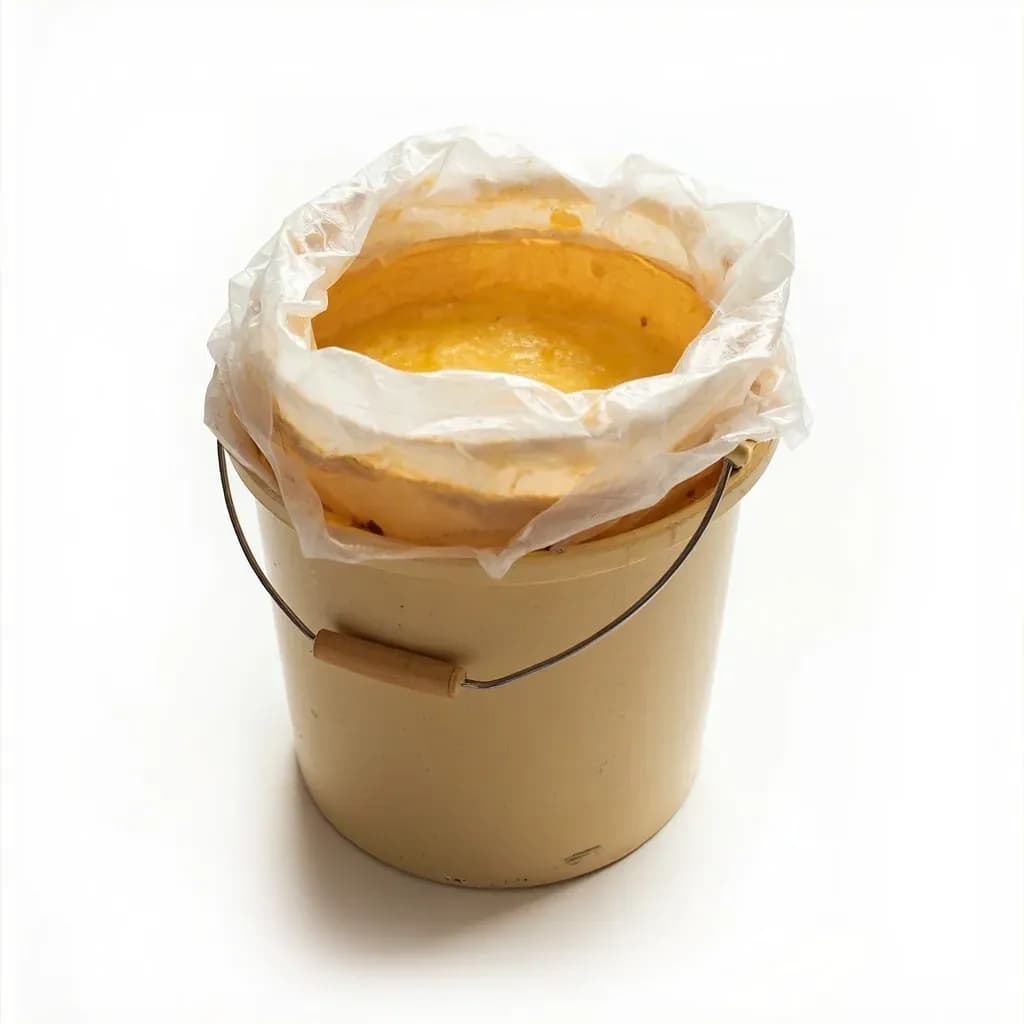
Food-grade plastic liner that fits inside a bucket or pail to hold bulk liquids and ease cleanup.
A pail liner bag is a food-grade plastic sack that drops into a bucket or bottling pail to keep the contents off the bare container. It is used for bulk liquids, honey, brines, doughs, and ferments, letting the cook lift out or pour the product and discard the liner instead of scrubbing. The liner also keeps a reused pail sanitary between different batches.
A pail liner bag is a food-grade plastic sleeve designed to drop inside a standard bucket, turning it into a disposable or semi-disposable container. In professional kitchens, breweries, butcher shops, and catering operations, the liner does the messy work: it holds the brine, fermenting wort, ice bath, or transport liquid, and when the job is done, the bag comes out and the bucket goes back into service without a full wash. The convenience is real, but the bag is only as good as its food-contact rating — a liner meant for construction debris will leach plasticizers and odors that have no business near food, so the FDA 21 CFR mark (or equivalent in your country) is the first thing to check.
Most pail liners are made from low-density or linear low-density polyethylene (LDPE/LLDPE) in thicknesses from about 1.5 mil for economy use up to 3–4 mil for brining a whole turkey or holding fermenters under pressure. Standard PE softens well below boiling, so it is a cold-to-warm tool, not a cooking tool. For high-heat work — most notably sous vide — a separate class of multi-layer nylon bags rated to roughly 195–220°F steps in, and these are sometimes used the same way (suspended in a water bath inside a larger vessel) even though they aren't shaped to fit a bucket.
The practical value of a pail liner is less about the bag itself and more about what it lets the cook do: switch a single food-grade bucket between brining a whole turkey, fermenting a five-gallon batch of cider, holding ice for a seafood display, and transporting stock to a pop-up, with cleanup measured in seconds rather than minutes.
Alternatives
Types & varieties
Thin, low-cost poly bag for cold storage, ice baths, or short brines; the everyday workhorse in restaurant prep.
3–4 mil LDPE/LLDPE built to hold a whole turkey or ham plus several gallons of brine without splitting at the seams.
Sized to fit a food-grade bucket primary fermenter; used for beer, wine, mead, cider, kombucha, hot sauce, and small-batch vinegar.
Multi-layer nylon or nylon-poly pouch rated to roughly 200°F; not a bucket liner by design but used the same way inside a water-bath vessel for sous vide.
Oversized bag that drops into a Cambro or beverage tub to hold display ice, then lifts out for a fast drain-and-clean.
Gusseted bottom lets the bag sit flat in a square bucket; favored for transport, catering, and any job where the bag needs to stand on its own before filling.
Choosing the right liner
Match three things before you buy: the food-contact rating, the size, and the wall thickness. The food-contact rating is non-negotiable — anything unmarked or marked only for industrial use is unsafe for brines, ferments, or ice that touches food. Size matters more than most cooks expect: a liner that is too large folds in on itself, traps air, and is far more likely to spill when the bucket is moved. Thickness is driven by the job. Economy 1–1.5 mil bags are fine for a single afternoon of cold storage or an ice bath. Brining a whole bird, fermenting a five-gallon batch under CO₂ pressure, or any freezer use calls for 3–4 mil. For sous vide or any application above 180°F, switch to a high-heat nylon bag and follow its own rating.
- Cold storage or ice bath: 1.5–2 mil PE, any standard food-grade liner.
- Brining a whole turkey, ham, or brisket: 3–4 mil heavy-duty liner, sized exactly to the bucket.
- Fermenting beer, wine, cider, or kombucha: 3–4 mil liner, sealed to the rim with the bucket lid.
- Sous vide or any use above 180°F: dedicated nylon or nylon-poly bag, not a standard PE liner.
Closure methods
The closure you choose affects how well the bag holds liquid, gas, and freezer air. A simple overhand knot or a zip tie works for a brine that will be opened in a day or two. For ferments, the most reliable seal is to fold the bag over the bucket rim and clamp the lid down — the bucket lid becomes the seal, and the bag acts as the flexible liner inside it. For long freezer storage, an impulse heat sealer gives the cleanest, most airtight closure; double-seal across the top to prevent freezer burn. Bags with an integrated drawstring or twist-tie channel are convenient but generally not airtight enough for long-term storage or active ferments under pressure.
Common uses
Tips & pitfalls
- Confirm 'food grade' or FDA 21 CFR compliance on the box or bag; unmarked liners may contain recycled industrial plastic that off-gasses or leaches.
- Size the liner to the bucket — an oversized bag folds and traps air pockets that cause punctures and messy spills when the bucket is lifted.
- Press the liner flat against the bucket walls before filling, working out air pockets that can balloon and burst under the weight of liquid.
- Tuck the bag over the rim before filling, then fold the excess over the outside; this keeps the rim clean and gives you a grip for lifting the loaded bag out.
- When brining a whole turkey, line the bucket first, add the brine, then lower the bird in last — this reduces the chance of the carcass puncturing the bag on the bucket's bottom seam.
- For ferments, squeeze out headspace air and clamp the bucket lid down over the folded bag — the lid acts as the seal and the bucket becomes a simple, effective fermenter.
- Do not use standard PE liners for sous vide, boiling, or any application above about 180°F; the plastic will soften and may fail without warning.
- Discard a liner after raw-meat brine, fish wash water, or any allergen-heavy job; reusing it for ready-to-eat food is a cross-contamination risk.
- Store unused bags flat, cool, and out of direct sunlight — UV degrades polyethylene and weakens the bag over time.
Good to know
- Category
- Storage & Containers / Food handling supply
- Common materials
- Food-grade LDPE or LLDPE for cold/warm use; multilayer nylon for high-heat applications like sous vide
- Standard sizes
- Sized to common pails: 2-gallon, 3.5-gallon, 5-gallon, and 6-gallon
- Wall thickness
- 1.5–4 mil; 1–1.5 mil for economy, 3–4 mil for brining and fermenting
- Temperature range (PE)
- Roughly 0°F to 180°F (–18°C to 82°C); not suitable for sous vide or boiling
- Temperature range (nylon)
- Nylon or nylon-PE bags rated to about 195–220°F (90–104°C)
- Regulatory standard
- Genuine food-grade liners meet FDA 21 CFR for food contact in the US
- Closure options
- Twist tie, zip tie, rubber band, impulse heat sealer, or integrated drawstring
Also called
Hive Bottling Pail Liner · bucket liner · pail liner
Related

Freezer Bags
Thick, sealable bags built to fight freezer burn

Storage Bags
Resealable bags for fridge storage and marinating

Storage Container
Lidded container for leftovers, prep, and meal kits

Glass Container
Oven-to-fridge glass that won't stain or hold odors

Plastic Container
Lightweight, stackable storage for everyday leftovers

Vacuum Sealer Bags
Airtight bags for long freezing and sous-vide

Reusable Bags
Washable silicone bags that replace single-use plastic

Mason Jar
Sealed glass jar for preserves, pickles, and storage