Wraps & Liners
Pallet Shrink Wrap
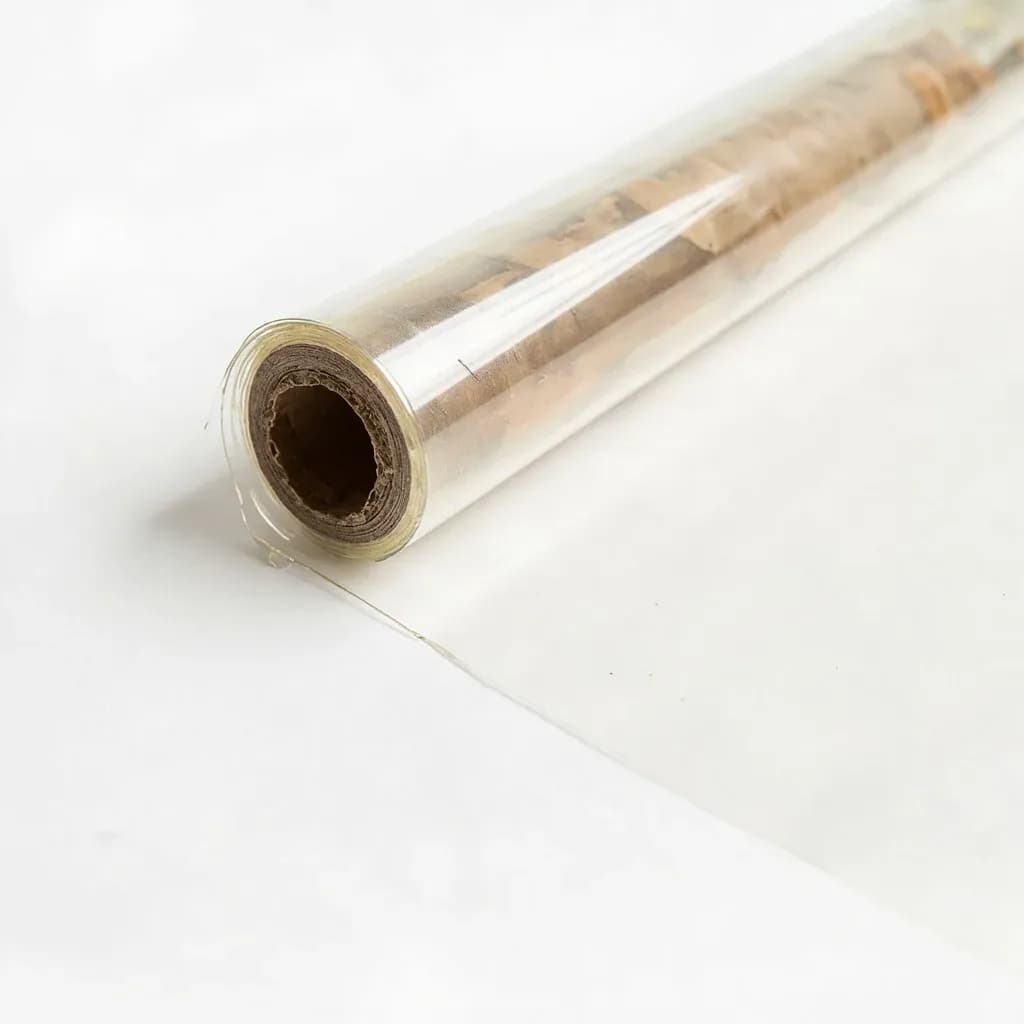
Heavy stretch film wound around stacked goods to bind a pallet of stock for storage and transport.
Pallet shrink wrap is a wide roll of clingy stretch film used to secure boxes and bulk goods onto a pallet. Commercial kitchens and suppliers wrap incoming or outgoing stock so cases stay stacked and protected from dust and shifting during handling. The film clings to itself under tension, so no tape or ties are needed, and it is peeled away in one pass when the pallet is broken down.
Pallet shrink wrap — the workhorse film wound around nearly every pallet of canned tomatoes, flour, or produce that arrives at a commercial kitchen — is, despite its name, not a shrink product at all. It is stretch film: a thin coextruded linear low-density polyethylene (LLDPE) that grips itself under mechanical tension, with no heat required. Calling it "shrink wrap" is a long-standing misnomer that confuses operators who also use heat-gun film on retail trays and meal-kit components. Knowing which is which matters; the two films are not interchangeable, and treating a pallet like a tray is a fire risk.
The film works because polyethylene has residual tack on one face — the roll-out side clings, the outside stays glossy — and because stretching aligns the polymer chains so the wrap contracts back toward the load. Hand film typically stretches 100–250% past its resting length; a machine pre-stretch unit can push that to 300%, which is why the same roll covers far more pallets through a wrapper than it does in a worker's hands. That cold-stretched cling is what keeps a fully loaded pallet of canned goods from shearing in half when a delivery truck brakes hard.
For most foodservice operations a single 18-inch, 80-gauge hand roll on an extended core is all that is needed. The rest is matching the film to the load: vented for produce that must respire, cold-grade for freezers, colored for tamper-evidence or color-coded returns, and pre-stretched wherever one person wraps twenty-plus pallets a day.
Alternatives
Types & varieties
12–20 in rolls on 1.5 or 3 in cores, applied manually with a turntable or by walking the pallet — the everyday kitchen choice.
Longer rolls run through a semi-automatic or automatic wrapper; higher pre-stretch, less film waste, faster throughput.
Factory-stretched so it applies with very low hand tension — lighter, less worker fatigue, and usable at thinner gauges.
Built-in handles on the core eliminate the need for a separate dispenser; ideal for small kitchens and satellite operations.
Perforated or micro-perforated rolls for fresh produce, dairy, or any pallet that must respire to avoid heat and condensation buildup.
Black or tinted for tamper-evidence and concealment; blue is widely used in foodservice to flag 'food-grade only' returns and allergen-controlled loads.
Stabilized for outdoor storage, refrigerated docks, and rooftop delivery zones where standard film would degrade within months.
Narrow 3–5 in rolls used as mini-banding wrap to group loose cans, jars, or boxes without wrapping the full pallet.
Coextruded 3- or 5-layer constructions that match standard load-hold at thinner gauges (down to 30–47 gauge).
Slip-treated versions for loads that must release cleanly without leaving residue on the surface beneath.
Stretch film vs. heat-shrink film: do not conflate them
The single most important thing a kitchen manager can know about pallet shrink wrap is that it is not the same product as the heat-shrink film used on retail trays, sous-vide pouches, or meal-kit sleeves. Stretch film is a cold-applied mechanical product: you pull it, the polymer chains align, and the film grips itself. Heat-shrink film — usually polyolefin or PVC — is extruded in a stretched state, and it only locks around a load when you apply a heat gun or run it through a shrink tunnel. Using heat-shrink film on a pallet in a kitchen is a fire hazard, and using stretch film where you needed heat-shrink (for a tight retail package, for instance) will give you a loose, saggy result because the film will simply relax back.
Practical rule: if you are wrapping a pallet, a stack of cases, or anything that just needs to stay together in a truck, use stretch film. If you are sealing a tray of product for retail sale or for sous-vide cooking, use heat-shrink film (or vacuum bags) and a heat source. The two products share a name in casual conversation and almost nothing in the way they behave.
- Stretch film = cold, mechanical, self-clinging LLDPE — used for unit-load stability.
- Heat-shrink film = polyolefin or PVC that contracts only when heated — used for retail and food-sealing applications.
- Never apply a heat gun to a stretch-wrapped pallet in a kitchen: it will melt the wrap, smoke, and can ignite cardboard or pallets.
- Never substitute stretch film for heat-shrink film on a tray; the load will not lock and the package will not look right.
Common uses
Tips & pitfalls
- Brace the pallet base first: wrap at least 3–4 tight layers around the deck before climbing the load, or the bottom boxes will shift and the whole load will lean.
- Overlap each pass by roughly 50% — that overlap is what gives the film its tear strength; a 25% overlap will bag and sag under load.
- Walk the pallet, don't twist the roll — the film should always lie flat to the load surface, with the operator moving in a circle around the pallet.
- Use corner board (edge protector) under the film on pallets with sharp carton edges or shrink-wrapped multipacks; the film will puncture at the corners otherwise.
- For fresh produce or dairy, choose a vented roll — sealed stretch film traps ethylene and condensation and accelerates spoilage.
- Don't substitute heat-shrink film (PVC or polyolefin) for stretch film on a pallet — they are different products, and the heat-shrink version requires a heat source you do not want in a storeroom.
- Switch to a cold-grade formula for freezer storage; standard film becomes brittle below freezing and will shatter rather than stretch.
- Stop a tear with a piece of tape on the outside of the film — pulling on a tear mid-wrap will rip off the entire layer and cost you the whole wrap.
- Don't over-stretch hand film past its rated capacity (printed on the box — look for something like '250%'); beyond that you lose load-hold and the film necks down in width.
- Recycle as #4 LDPE at store drop-off — never put it in curbside mixed recycling, where it tangles the sorting equipment and shuts down lines.
Good to know
- Material
- Linear low-density polyethylene (LLDPE), most commonly coextruded
- Mechanism
- Mechanical stretch with self-cling — no heat required (it is not actually shrink film)
- Hand-roll width
- 12–20 in (300–500 mm); 18 in is the foodservice workhorse
- Gauge / thickness
- 60–120 gauge (0.6–1.2 mil / 15–30 µm); 80 gauge is the standard default
- Stretch capacity
- Hand film 100–250% stretch; machine pre-stretch up to ~300%
- Cling side
- Single-sided — the inside (roll-out) face clings, the outside is glossy
- Food-contact status
- FDA-compliant for indirect food contact; not a substitute for food-grade wrap on direct contact
- Temperature range
- Roughly -20 °F to 100 °F (-29 °C to 38 °C); cold-grade formulas needed for freezers
- Recyclability
- Recyclable as #4 LDPE at store drop-off — never in curbside mixed recycling
Also called
stretch wrap · pallet wrap · stretch film
Related

Aluminum Foil
Wraps, covers, and tents food for the oven and grill

Parchment Paper
Nonstick liner for clean, even baking and easy release

Wax Paper
Moisture-resistant sheet for wrapping and counter prep

Plastic Wrap
Clings tight to cover bowls and wrap leftovers

Silicone Baking Mat
Reusable nonstick liner that replaces parchment

Cheesecloth
Loose-woven cloth for straining stock and bundling herbs

Beeswax Food Wrap
Reusable wax wrap that molds around bowls and produce

Piping Tips
Shaped nozzles that turn frosting into stars and rosettes