Wraps & Liners
Pandanus Leaf (Wrapper)
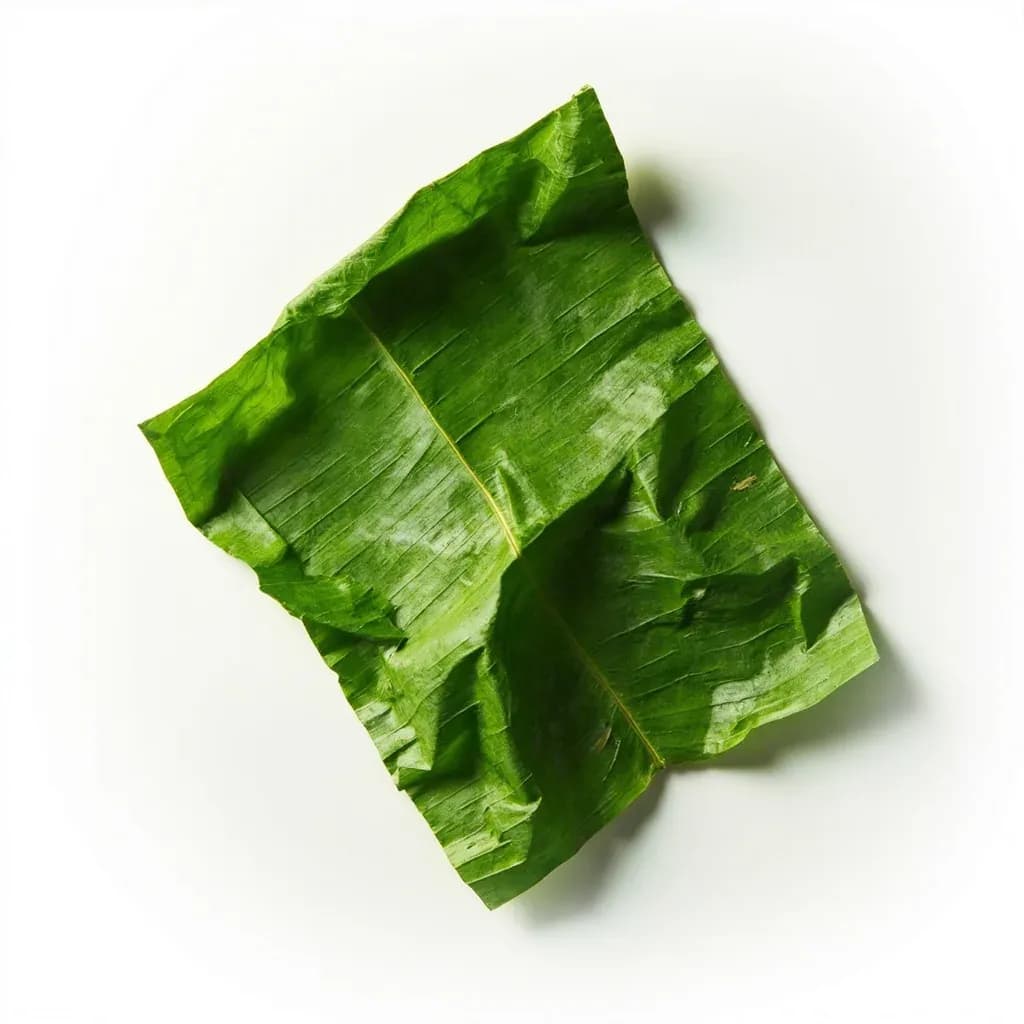
Fragrant tropical leaf used to wrap and flavor steamed or grilled foods.
The long, fragrant leaf of the pandan plant, used across Southeast Asia to wrap food for steaming, grilling, and frying. Wrapping chicken, sticky rice, or sweets in pandanus imparts a sweet, grassy aroma while holding the parcel together over heat. The leaf is woven into baskets or folded into pouches and is removed (or left as a fragrant garnish) before eating.
Pandanus leaf is the long, blade-shaped foliage of several tropical species in the genus Pandanus, and it earns a place in the kitchen for two distinct jobs: it wraps food like a parcel, and it perfumes that food while it cooks. The narrow, glossy leaves of Pandanus amaryllifolius — the "culinary pandan" of Southeast Asia — are the most fragrant, releasing a grassy, vanilla-rice aroma through a compound (2-acetyl-1-pyrroline) that is the same volatile responsible for the smell of basmati rice and fresh bread crust. The broader, stiffer leaves of Pacific relatives such as P. tectorius (hala) and P. utilis are chosen more for their structural strength as wrappers and plates than for their scent.
In Malaysian, Indonesian, Thai, Vietnamese, Sri Lankan, and Filipino cooking, pandanus is folded into cups, cones, and parcels that hold coconut-milk-bound mixtures — steamed fish, sticky rice, custards, steamed cakes — and the steam or smoke carries the fragrance into the food during cooking. Unlike banana leaf, which is mainly a structural wrapper, pandanus contributes noticeable aroma in just a few minutes of contact, so it is also used loose: knotted into a pot of rice or simmered in syrup the way a Western cook drops in a bay leaf. It sits comfortably between wrapper and herb, and a small handful of leaves will quietly transform an otherwise plain dish into something that smells like the tropics.
The leaf is single-use. After one heating it darkens, stiffens, and loses its volatile oils, but the trimmed midribs still carry enough scent to flavor stocks and rice. With proper storage — refrigerated in a damp towel for 10–14 days, or frozen for several months — fresh leaves are workable year-round in most markets that carry Southeast Asian produce.
Alternatives
Types & varieties
Narrow, intensely fragrant leaf used across Southeast Asia for wrapping and flavoring; the standard choice for steaming and rice.
Broader, stiffer leaf used in Polynesian, Hawaiian, and Filipino cooking as a wrapper and for plating; woven into baskets and mats.
Madagascar and Indian Ocean species with long, broad leaves; used in Réunion and Mauritius for wrapping and braising.
Sturdier South Asian form, knotted into biryani and yellow rice for aroma rather than used as a structural wrapper.
Commercially packed in Malaysian or Thai packs; a convenient substitute for fresh when out of season.
Shelf-stable but with significantly reduced aroma; better suited for long simmers than delicate steaming.
Aroma versus structure
Pandanus leaf is unusual among wrappers because it contributes flavor as well as form. Most wrappers — banana leaf, corn husk, lotus leaf — are essentially inert platforms that hold food together or hold in moisture; pandanus actively seasons. A single bruised leaf tucked into a pot of jasmine rice or coconut syrup will perfume the entire batch within minutes, which is why cooks treat it like an herb in liquid applications and like a wrapper in solid ones. The aroma is delicate: more than two leaves in a standard rice portion can tip the flavor from floral to soapy. When you want structure without much scent, reach for the broader hala or Pacific species; when you want scent, stay with the narrow Southeast Asian leaves.
Working with the leaf
Fresh leaves are supple and slightly waxy. A quick wipe with a damp cloth is all the cleaning they need — soaking leaches the surface oils that carry the aroma. Snip off the sharp basal spine and any torn edges so the leaf lies flat, then score it lightly along the central keel or fold it sharply to bruise the tissue and release the volatiles before it goes into the pot or steamer. For grilling, where direct heat will scorch a single layer quickly, double the leaf or sandwich it against banana leaf; secure parcels with natural kitchen twine, thin strips cut from the leaf itself, or soaked bamboo skewers, never plastic twine over flame.
Common uses
Tips & pitfalls
- Wipe leaves with a damp cloth rather than soaking; prolonged water contact dulls the surface oils and weakens the aroma.
- Trim off the sharp basal spine and any torn edges so parcels lie flat and do not tear during folding.
- Bruise, fold, or lightly score the leaf before wrapping to release more of its volatile aroma into the food.
- For grilling, double up the leaf or pair it with banana leaf; pandanus alone is thin and scorches quickly over direct heat.
- Secure parcels with natural kitchen twine, thin strips of the leaf itself, or bamboo skewers — never plastic twine over flame.
- Use only one or two leaves per portion of rice or custard; overloading produces a soapy, slightly bitter note.
- Lightly oil the dull (underside) of the leaf when steaming delicate custards so they release cleanly without tearing.
- Refresh tired or yellowed leaves by blanching them for 10–15 seconds in boiling water; they will brighten and soften.
- Frozen leaves can go straight into the pot or steamer; thaw briefly on a towel before folding to prevent cracking.
- Reserve trimmed spines and fibrous midribs for stocks or rice — they still carry meaningful aroma.
Good to know
- Botanical source
- Pandanus amaryllifolius (culinary pandan) and broader-leaved Pacific species including P. tectorius and P. utilis
- Family
- Pandanaceae
- Key aroma compound
- 2-acetyl-1-pyrroline, the same volatile found in basmati rice and bread crust
- Flavor profile
- Sweet, grassy, nutty, with a vanilla-rice fragrance; no bitterness when used in moderation
- Storage, fresh
- Wrapped in a damp paper towel in a sealed bag, refrigerated 10–14 days
- Storage, frozen
- Raw or blanched, sealed in plastic, 3–6 months
- Storage, dried
- Whole or crumbled in an airtight container, 6–12 months; aroma markedly diminished
- Heat behavior
- Releases aroma on bruising, steaming, grilling, or simmering; scorches quickly over open flame
- Reusability
- Single-use as a wrapper; toughens and discolors after one heating
- Regional names
- Pandan (Malay/Indonesian), bai toey (Thai), lá dứa (Vietnamese), rampe (Sri Lankan), hala/lauhala (Polynesian)
Also called
Pandanus Leaf · Pandan Leaf · Screwpine Leaf
Related

Aluminum Foil
Wraps, covers, and tents food for the oven and grill

Parchment Paper
Nonstick liner for clean, even baking and easy release

Wax Paper
Moisture-resistant sheet for wrapping and counter prep

Plastic Wrap
Clings tight to cover bowls and wrap leftovers

Silicone Baking Mat
Reusable nonstick liner that replaces parchment

Cheesecloth
Loose-woven cloth for straining stock and bundling herbs

Beeswax Food Wrap
Reusable wax wrap that molds around bowls and produce

Piping Tips
Shaped nozzles that turn frosting into stars and rosettes