Storage & Containers
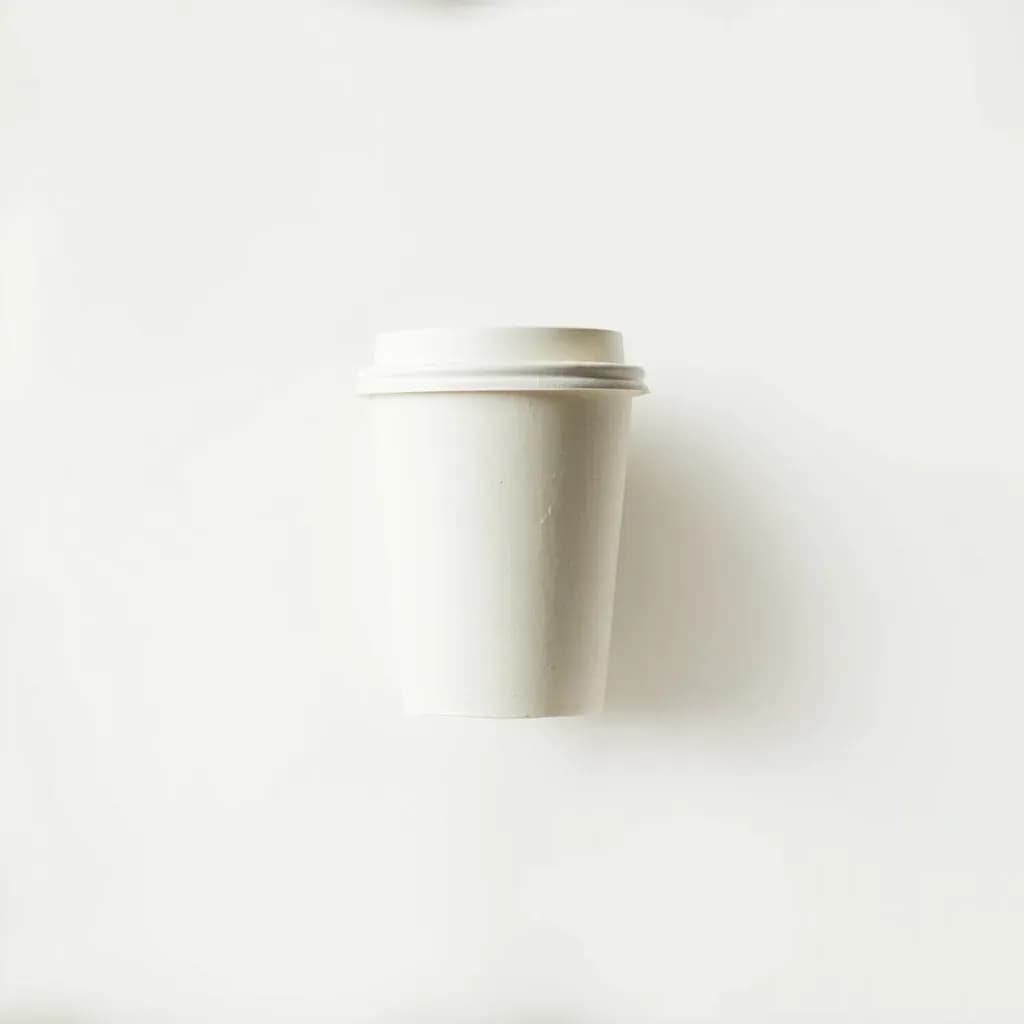
Paper Coffee Cup
Disposable single-use cup for serving hot or cold beverages to go.
A paper coffee cup is a single-use cup of poly- or bio-lined paperboard for serving hot drinks, with clear PET cold cups used for iced and shaved-ice servings. Cafes, market stalls, and caterers use them for grab-and-go service, pairing them with lids and sleeves for hot drinks. They are sized in standard ounces, and compostable PLA-lined versions are common where composting is available.
The paper coffee cup is a single-use, paperboard vessel with a thin internal lining that makes it waterproof and, in hot-cup versions, tolerant of near-boiling temperatures. It is not just paper: the body is food-grade paperboard and the inside is sealed with a microscopic plastic or bioplastic film. That lining is what holds a hot Americano without leaking, keeps a double latte from going soggy in your hand, and dictates whether the empty cup can be recycled, composted, or sent to landfill. The technology is older than most people think — Lawrence Luellen patented the disposable paper drinking cup in 1908, originally for sanitation and water service — but the to-go paper coffee cup as we know it is a creature of the 1990s specialty-coffee boom.
In day-to-day bar and café work, the cup is chosen by three things: the drink, the lid, and the end-of-life story you want to tell. Hot drinks above roughly 80 °C (175 °F) need a PE or PLA lining and either a double-wall construction or a separate cardboard sleeve, because a single-wall cup will be too hot to hold. Cold drinks use heavier paperboard with wax or PE moisture resistance and a domed PET lid. Sizes follow American fluid-ounce convention: a "12 oz" cup is brim-full at about 350–360 mL but is filled short of the rim to leave headspace for milk foam, ice displacement, or a lid. Getting size, wall, and lid to agree is the whole practical game.
The most misunderstood part of the paper coffee cup is what happens to it after use. PE-lined cups are technically recyclable, but the plastic film must be separated from the paper fiber in a specialized pulping facility — almost never the local curbside bin. PLA-lined and other "compostable" cups only break down in industrial composting, not in a backyard heap or landfill. Knowing which disposal streams your municipality actually supports matters more than the marketing claim printed on the cup.
Alternatives
Types & varieties
Standard PE-lined cup for brewed coffee, tea, and espresso drinks; needs an added cardboard sleeve for very hot pours.
Two paperboard plies with an air gap sealed between them; no separate sleeve needed, holds up well to boiling-water brews.
Single-wall cup wrapped in a corrugated paper band; the corrugation is the insulation and the grip surface in one.
Plain single-wall cup shipped with a separate or glued-on corrugated sleeve for heat protection and branding real estate.
Lined with plant-based polylactic acid instead of PE; breaks down only in industrial composting facilities.
Older paraffin-wax construction; largely phased out of hot service but still used for some cold cups and paper water cups.
Newer water-based or cellulose-fiber coatings designed to replace PE for easier pulping and recycling.
Heavier paperboard, wax- or PE-treated for condensation resistance; paired with domed PET lids and straws.
Small 3–4 oz format, sometimes supplied with a sip-through plastic lid for tasting pours.
Same construction as stock cups, printed with shop branding using food-safe inks; minimum-order quantities usually apply.
Choosing the right cup for the drink
Match the cup to the drink in three steps: temperature, size, and wall construction. Hot drinks above roughly 80 °C (175 °F) call for a PE or PLA lining and either a double-wall cup or a separate sleeve. Cold drinks need a heavier paperboard with wax or PE moisture resistance and a domed lid with a straw slot. Size is chosen by the intended pour plus headspace: a 12 oz cup is fine for a 10 oz latte, but an iced 16 oz drink should go into a 20 oz cup so the ice displaces liquid up to a fill line rather than over the rim.
- Espresso, cortado, and tasting pours: 3–4 oz cup, often with a sip-through lid.
- Standard brewed coffee, flat white, small latte: 8–12 oz single-wall with sleeve, or 8–10 oz double-wall.
- Large lattes, cappuccinos, mochas, and brewed coffee: 12–16 oz double-wall.
- Iced and cold drinks: size up by roughly 4 oz to account for ice displacement; pair with a domed PET lid and straw.
- Hot chocolate and chai with whipped cream: size up and consider a wider rim for easier lid seating.
Lid fit and accessories
Lids, sleeves, stirrers, and straws are not part of the cup itself, but they determine whether a takeaway drink arrives intact. Cup and lid systems are designed in matched pairs: a sip-lid for hot cups sits at one angle and seals to a specific rim profile, while a domed PET lid for cold cups seats differently and usually needs a separate straw slot. Mixing brands is the most common cause of leaks in real cafés.
- Always use the lid specified by the cup manufacturer — even a 1 mm rim difference changes the seal.
- Seat lids squarely with a firm press at the sip-lid hinge point; an angled lid will leak from the opposite side.
- Wooden or paper stirrers suit hot drinks; PET stirrers are needed for very hot or viscous drinks that would soften paper.
- Cardboard sleeves slip on after the cup is filled and the lid is seated, not before — they crush easily if stacked wet.
End-of-life: the recyclability gap
Almost every paper coffee cup carries a disposal claim, and almost every claim needs reading carefully. PE-lined cups are technically recyclable, but the thin plastic film must be separated from the paper fiber in a specialized pulping line — a process most municipal recycling programs do not run. PLA-lined and other "compostable" cups break down only in industrial composting at high, sustained heat; they will sit intact in a home compost bin or a landfill for years. The honest answer is that the disposal path of a paper coffee cup depends on local infrastructure, not on what is printed on the side.
- If your area has a cup-specific recycling drop-off or a pulping partner, PE-lined cups can be a real recycling stream.
- Industrial composting of PLA cups requires certified facilities; check locally before switching cup systems on this basis.
- Reusable cups (ceramic in-house, polypropylene or stainless for takeaway) remain the lowest-impact option where dishwashing is available.
- Unbleached or recycled-fiber paperboard is widely available and reduces the visual and environmental footprint of the paper layer, even if the lining is unchanged.
Common uses
Tips & pitfalls
- Size up for iced drinks: an iced 16 oz pour usually belongs in a 20 oz cup so ice displacement fills the cup rather than overflowing it.
- Use a double-wall or ripple-wall cup for drinks above roughly 80 °C (175 °F); the built-in air gap removes the need for a separate sleeve and speeds service.
- Seat lids squarely with firm pressure at the hinge — a tilted lid is the single most common cause of takeaway leaks.
- Do not microwave a paper cup with a PE or PLA lining; the lining can soften, deform, or leach. Transfer the drink to a microwave-safe ceramic or glass vessel if reheating.
- Store cups flat-packed in a dry, covered area; humidity makes nested cups stick together and weakens the walls, and a damp cup will collapse under a hot pour.
- Pre-warm a hot cup with a quick rinse of hot water before pulling a shot or pouring boiling water; it reduces thermal shock, protects the seal, and keeps the drink hotter longer.
- Pair cup and lid from the same manufacturer or product line; mismatched rims and sip-hole positions are the usual cause of poor seals and customer complaints.
- Match the cup's end-of-life claim to a disposal route that actually exists locally — recyclability and compostability are only as good as the bin they end up in.
Good to know
- Material
- Food-grade paperboard (virgin or recycled fiber) sealed with a thin internal lining — most often polyethylene (PE), with PLA or water-based bio-coatings in compostable lines.
- Standard sizes (oz / mL)
- 4 oz (~120 mL), 8 oz (~240 mL), 12 oz (~360 mL), 16 oz (~475 mL), 20 oz (~590 mL), 24 oz (~710 mL).
- Capacity convention
- Nominal U.S. sizes are brim-full volumes; a "12 oz" cup holds roughly 350–360 mL to the rim and is served filled to a lower mark to leave headspace for milk foam, ice, or a lid.
- Lining types
- Polyethylene (PE) for hot use; paraffin wax (older, now mostly for cold cups); PLA from plant starch for industrial-compostable lines; newer water-based and cellulose-based coatings aimed at easier recycling.
- Heat tolerance
- PE-lined hot cups are rated for service up to about 90–95 °C (195–205 °F); the cup itself is not designed for oven or microwave heating.
- Lid materials
- Polystyrene (PS) or polypropylene (PP) for hot cups; PLA lids for compostable systems; PET domed lids for cold drinks.
- Insulation
- Double-wall and ripple/corrugated cups trap an air gap that keeps the outer wall cool to the touch; single-wall cups rely on a separate cardboard sleeve for the same effect.
- End-of-life reality
- PE-lined cups are technically recyclable only in specialized pulping facilities, not curbside; PLA and bio-coated cups need industrial composting, not home bins.
Also called
Paper Cup · Shave Ice Paper Cup · Clear Cold Cup (PET) · to-go cup · disposable cup
Related

Freezer Bags
Thick, sealable bags built to fight freezer burn

Storage Bags
Resealable bags for fridge storage and marinating

Storage Container
Lidded container for leftovers, prep, and meal kits

Glass Container
Oven-to-fridge glass that won't stain or hold odors

Plastic Container
Lightweight, stackable storage for everyday leftovers

Vacuum Sealer Bags
Airtight bags for long freezing and sous-vide

Reusable Bags
Washable silicone bags that replace single-use plastic

Mason Jar
Sealed glass jar for preserves, pickles, and storage