Heat & Safety
Paper Napkin
Disposable paper sheet for wiping hands, blotting food, and quick cleanups during cooking and serving.
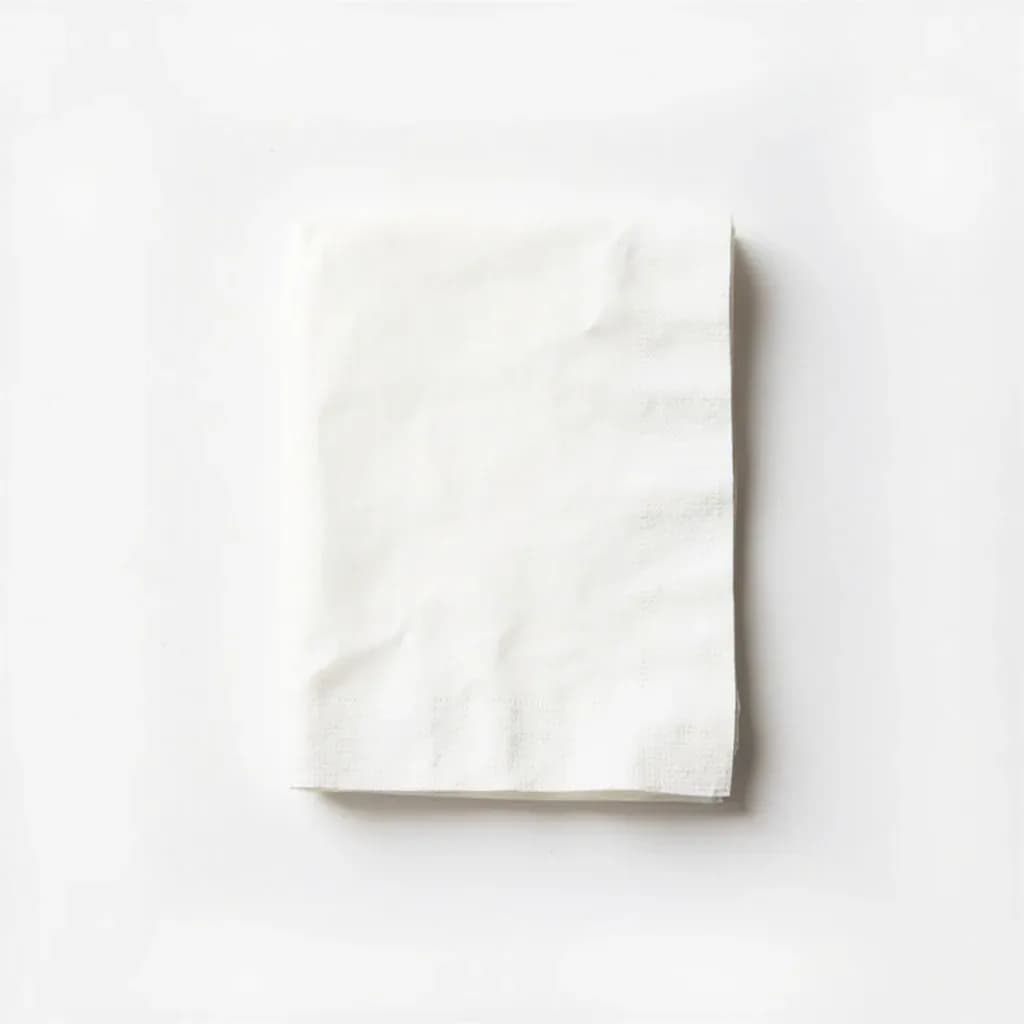
A paper napkin is a soft, disposable paper sheet used to wipe hands and mouths at the table and to blot small spills or greasy food during cooking. In the kitchen cooks grab them for quick cleanups, to blot oil off fried bites, or to line a serving basket. They are lighter and less absorbent than paper towels, so they suit table use more than heavy drying tasks.
Paper napkins are disposable sheets made primarily from wood pulp—virgin, recycled, or a blend—formed by pressing cellulose fibers together, sometimes with binding agents. While easily overlooked, they are a fundamental kitchen supply that bridges hygiene, food preparation, and safety in both home and professional settings. The key distinction from paper towels: napkins are smaller and lighter, designed for personal wiping and light cleanup, while paper towels are heavier, more absorbent, and suited for demanding tasks like drying produce or absorbing large spills. Understanding this difference helps you choose the right tool and avoid wasting napkins on jobs they cannot handle.
In the Heat & Safety context, the most critical point is this: paper napkins are not a heat-resistant material. Cellulose fibers ignite readily, and a forgotten napkin under a searing pan creates a genuine fire hazard. This is not theoretical—kitchen fires attributed to paper products under hot cookware happen. The solution is simple: never use napkins as a protective layer beneath hot pans, pots, or baking sheets. Reserve that role for trivets, silicone mats, or properly rated cork boards. Used correctly, napkins are indispensable for blotting, wiping, and keeping your workspace clean; the safety awareness just ensures they stay in their appropriate role.
Alternatives
Types & varieties
Small 9–10" square, typically 1- or 2-ply; for drinks, appetizers, quick hand wipes
Medium 13–14" square, usually 2-ply; versatile kitchen and serving size
Large 16–18" square, commonly 2- or 3-ply; for formal service and handling larger tasks
4–5" square; designed to sit under glasses and cups to prevent condensation rings
Pre-folded in Z-shape for single-hand dispensing in commercial dispensers
Spunbonded polyolefin or similar; more durable, lint-free, food-safe but not compostable
Dyed; avoid using for direct food contact or handling hot items due to potential dye transfer
Brown or off-white; minimal processing, compostable, preferred for eco-conscious kitchens
Heat Safety: The Non-Negotiable Rule
Never place paper napkins between hot cookware and any surface. Cellulose ignites at temperatures well below what a stovetop or oven produces, and a napkin can dry out and catch fire in seconds if trapped under a heavy pan. Before cooking, scan your workspace: remove any napkins, paper towels, or paper products from near heat sources. When serving, use a trivet, silicone mat, or wire rack to protect countertops from hot serving dishes. This habit takes seconds and prevents a serious hazard.
- Never use napkins as a trivet or protective pad under hot pans, pots, or baking sheets
- Use only materials rated for the temperature: silicone mats, metal trivets, or oven-rated cork boards
- Check beneath cookware before placing it on any surface—napkins can be knocked under without noticing
Choosing the Right Ply for Kitchen Tasks
The ply rating directly affects how a napkin performs. Single-ply napkins tear easily and absorb slowly, making them wasteful for most kitchen tasks. Two-ply is the standard choice for cooking and serving—it handles hand-wiping, light blotting, and spill cleanup without disintegrating. Three-ply napkins are best for heavier tasks like patting down large cuts of meat, handling messy ingredients like working with poultry, or absorbing marinades before searing. Stock 2-ply luncheon napkins as your default kitchen supply and add a stack of 1-ply cocktail napkins only for serving drinks or light appetizer plates.
- 2-ply is the workhorse for kitchen tasks—keep a roll or stack accessible at the station
Napkins vs. Paper Towels
These are not interchangeable. Paper towels are thicker, more absorbent, and designed to handle liquids, grease, and durable wiping tasks like drying washed vegetables or cleaning up large spills. Napkins are lighter, sized for personal use, and best reserved for hand-wiping, blotting, and light surface cleaning. Using napkins where paper towels are needed wastes product and leads to tearing and frustration; using paper towels where napkins suffice is an unnecessary expense. Keep both stocked, and reach for the appropriate tool.
- Paper towels for drying produce, wiping down surfaces, handling raw meat juices
- Napkins for hand-wiping during cooking, blotting, light spill pickup, food handling
Common uses
Tips & pitfalls
- Never place paper napkins under hot cast iron, sheet pans, or cookware—they can ignite at high temperatures; use a trivet or heat-safe silicone mat instead.
- For blotting fried foods, blot once gently and remove; pressing repeatedly squeezes out interior moisture and leads to sogginess.
- Store napkins in a sealed container or bag to keep them dry and free from dust and grease splatter.
- Choose 2-ply or higher for kitchen tasks requiring absorbency; 1-ply tears easily and wastes product.
- For food handling, use white, unbleached napkins to avoid dye transfer to food.
- Paper napkins are not a substitute for proper food-safe sanitizer on cutting boards—use them only for dry wiping before sanitizing.
- In commercial kitchens, use napkins from sealed dispensers to prevent contamination; never leave uncovered napkins near food prep areas.
- For high-heat tasks like handling chilies or spicy ingredients, dampen a napkin slightly to trap capsaicin particles rather than spreading them.
- Dispose of greasy napkins promptly; accumulated grease is a fire hazard and attracts pests.
- Do not use napkins as a substitute for a kitchen towel when you need a durable, reusable wiping surface—reserve napkins for single-use tasks.
Good to know
- Primary Material
- Wood pulp (virgin, recycled, or blend)
- Common Sizes
- Cocktail 9–10", Luncheon 13–14", Dinner 16–18"
- Ply Options
- 1-ply (light), 2-ply (standard), 3-ply (heavy-duty)
- FDA Status
- Approved for direct food contact when meeting food-grade standards
- Disposal
- Recyclable (paper fiber); compostable if unbleached, no glossy coating
- Heat Resistance
- Not heat-resistant; use trivets or heat-safe pads instead of napkins under hot pans
- Microwave Safe
- Generally yes, but avoid colored napkins that may transfer dye
- Typical Composition
- Cellulose fibers bonded through pressing, sometimes with binding agents
Also called
napkin · napkins · paper-napkins · kitchen-tissue · tissue-paper · serviette
Related

Paper Towels
Disposable sheets for spills, drying, and patting dry

Kitchen Towels
Reusable cloths for drying, gripping, and wiping

Oven Mitts
Heatproof gloves to handle hot pans and trays safely

Disposable Gloves
Single-use gloves for safe, mess-free handling

Cleaning Cloths
Reusable cloths for wiping counters and spills

Tortilla Warmer
Insulated holder that keeps tortillas warm and soft

Trivet
Heatproof stand that shields surfaces from hot pots

Ice Bath Setup
Bowl of ice water that halts cooking and sets color