Wraps & Liners
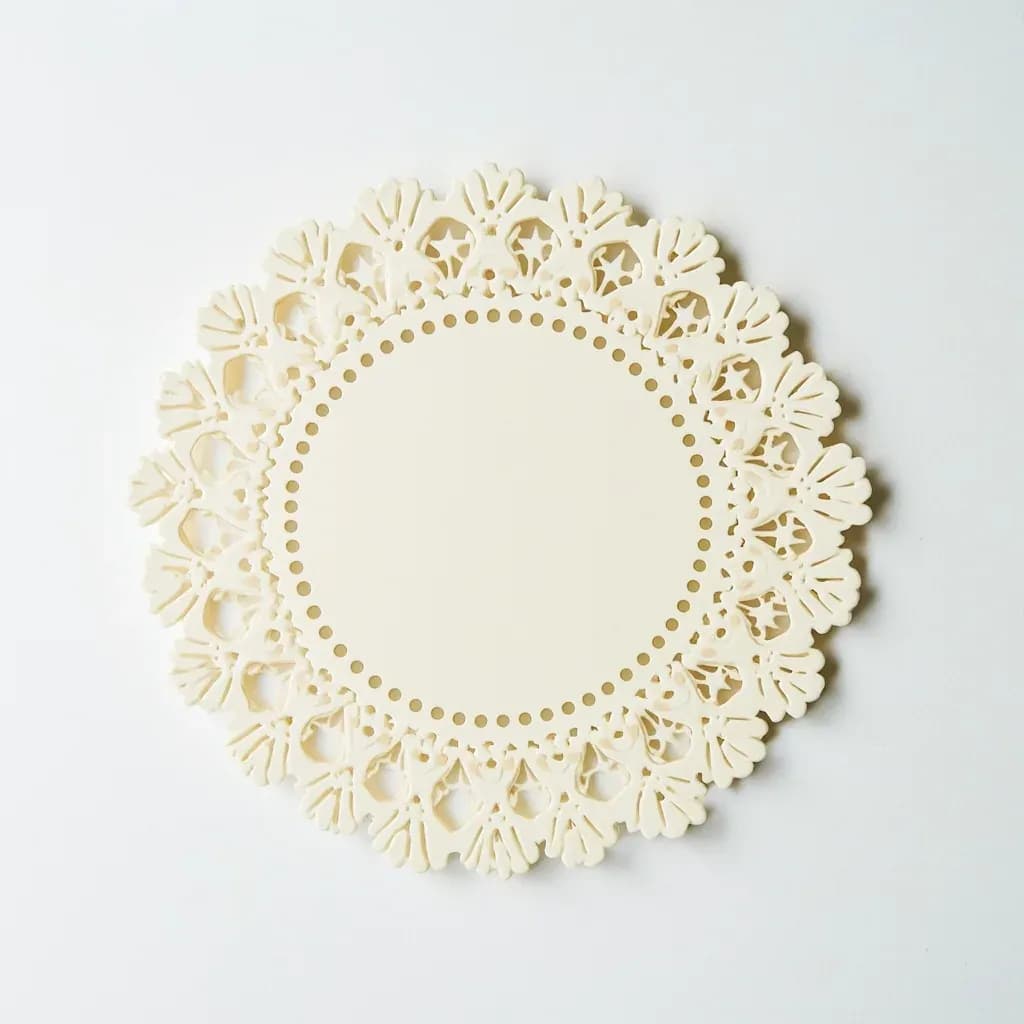
Paper Pastry Doily (Pizzo di Carta)
Decorative lace-cut paper liner placed under cakes and pastries on plates and trays.
A paper pastry doily is a round or rectangular paper liner with a lacy cut edge used to present desserts. It is set on plates, cake stands, and display trays beneath pastries to dress up the presentation and catch crumbs and grease. Common in patisseries and tea service, it also helps lift sticky items cleanly off the platter.
The paper pastry doily — pizzo di carta in Italian, sometimes called centrini di carta — is a thin, food-safe paper liner, most often round and scalloped, pierced with cutwork patterns that mimic the needle lace of Burano. It sits beneath cakes, pastries, and confections as a final flourish at the moment of service, framing the item visually while acting as a hygienic and practical barrier between pastry and plate. In the patisserie display case it is the visual signature of classic Italian and French tradition: a clean white lace border around a tartelette, a gold round under a panettone, an oval eyelet beneath a slice of bûche.
Beyond decoration, a doily catches loose crumbs, drips of glaze, and stray powdered sugar, keeping the serving plate clean and lifting the pastry clear of any condensation on a chilled buffet. It is purely a presentation and hygiene tool, not structural — it should never be asked to carry the weight of a heavy cake without a cake board beneath. Working patissiers keep an assortment on hand because the right doily disappears into the presentation, doing its job without drawing attention to itself.
Alternatives
Types & varieties
The classic pizzo di carta — white with scalloped border and pierced cutwork; the default choice for individual pastries, mignardises, and small cakes
Solid paper border ringed with punched eyelet holes; cleaner, more modern look, often under confections and chocolates
Oblong format for éclairs, bûches, log slices, and finger pastries
Large formats for trays, platters, and cake boards; common in hotel and banquet service
Specialty decorative shapes for tartes, entremets, and contemporary plating
Coated paper for buttery or oily items like financiers, sablés, and chocolate truffles — prevents oil bleed-through
Gold or silver finish for weddings, Christmas, and New Year displays
Very thin, delicate, inexpensive; standard under pralines and boxed bonbons
Solid paper with a printed (not cut) lace motif; budget option when true cutwork isn't required
The Lace Heritage
The decorative cutwork on a paper doily is a direct visual descendant of Burano lace, the needle-lace tradition from the Venetian lagoon that reached its peak in the 16th to 18th centuries. When machine-cut paper doilies became commercially viable in the 19th century, patissiers across Italy and France adopted them as a way to bring that lace-tablecloth refinement — long associated with bourgeois dining rooms and tea service — into the bakery display. The visual cues still translate: scalloped edges, pierced roundels, and floral medallions read as 'lace' even when the material is plain paper. Modern patissiers honor that lineage by choosing white scalloped doilies for traditional work and reserving metallics or printed motifs for contemporary or event service.
- White scalloped cutwork remains the most 'classical' choice and reads as Italian or French patisserie tradition
- Gold and silver doilies are reserved for festive or celebratory contexts — Christmas panettone, weddings, NYE
- Black doilies are an intentional contemporary choice, often paired with dark chocolate or minimalist plating
Choosing the Right Doily
Selecting a doily is a small but meaningful decision in plating. The diameter should be matched to the base of the pastry so that 1–2 cm of doily shows around the edge as a clean frame — too small and it disappears, too large and it overwhelms the item. Shape follows format: rounds for round pastries, ovals for logs and éclairs, squares for tray presentations. Material matters more than it appears: a tissue doily will bleed cocoa butter within hours under a chocolate truffle, while a greaseproof doily holds up cleanly.
- For high-fat items (truffles, financiers, buttery sablés), always use greaseproof or waxed doilies
- For long buffet service or chilled displays, greaseproof also resists condensation softening
- Keep at least three sizes (petite, small, medium) and two shapes (round, oval) on hand as a working minimum
- Reserve metallic and colored doilies for specific occasions — using them routinely looks theatrical
Plating Technique
A doily is placed at the very last moment, after glazing, dusting, and any final decoration, so that powdered sugar, cocoa, and oil do not stain the paper before service. Press the doily flat against the plate with the palm of the hand before setting the pastry on top to eliminate air pockets and curled edges; a doily that lifts at the rim breaks the visual line. For photographs and formal plating, a tiny invisible dot of neutral glaze or melted chocolate on the underside will adhere the doily to the plate so it does not shift when the pastry is cut or lifted.
- Always place the doily AFTER dusting or glazing to keep the paper crisp and white
- Smooth the doily flat before adding the pastry — trapped air creates lifted, visible edges
- For tall layer cakes, use a cake board and lay a doily between board and cake, never directly under the cake on a fragile plate
- Folded or fanned doilies can be used decoratively in baskets and window displays, but never under items intended for direct consumption from that surface
Common uses
Tips & pitfalls
- Match the doily diameter to roughly the base of the pastry, leaving 1–2 cm of paper visible around the edge for a clean frame
- Use greaseproof or waxed doilies under buttery and oily items (chocolate truffles, financiers, sablés) to prevent oil bleed-through
- Always place the doily AFTER glazing, icing, or dusting so cocoa and powdered sugar do not stain the paper before service
- Press the doily flat with your palm before setting the pastry on top — air pockets cause lifted, distracting edges
- Avoid dyed or heavily printed doilies in direct contact with high-fat foods unless specifically certified food-safe
- If a doily curls, lightly mist the back with water and press under a flat weight for a few minutes to relax it
- Store doilies flat in their original sleeves — humidity wrinkles the paper and grease stains it permanently
- For tall layer cakes, always place the doily between the cake board and the cake, never rely on the doily alone to carry the weight
Good to know
- Italian Name
- Pizzo di Carta ('paper lace'); also called centrini di carta
- Origin
- Inspired by Venetian and Burano needle lace; commercial paper doilies became standard in 19th-century European patisserie
- Material
- Food-safe paper — typically greaseproof, lightly waxed, or parchment-based; tissue versions also exist
- Typical Shapes
- Round (most common), oval, square, rectangular, hexagonal, heart
- Standard Sizes
- Petite 4–6 cm; small 8–12 cm; medium 15–20 cm; large 24–30 cm; cake-board size 30–40 cm
- Heat Tolerance
- Not oven-safe; not restricted in the freezer, but absorbs moisture over long cold storage
- Storage
- Flat in original sleeves or a dry drawer; away from humidity, grease, and direct sunlight to prevent yellowing and wrinkling
- Food-Safety
- Reputable brands are certified food-contact safe; avoid dyed or heavily printed doilies in direct contact with high-fat items unless labeled greaseproof
Also called
pizzo di carta · paper doily · pastry liner doily · lace doily
Related

Aluminum Foil
Wraps, covers, and tents food for the oven and grill

Parchment Paper
Nonstick liner for clean, even baking and easy release

Wax Paper
Moisture-resistant sheet for wrapping and counter prep

Plastic Wrap
Clings tight to cover bowls and wrap leftovers

Silicone Baking Mat
Reusable nonstick liner that replaces parchment

Cheesecloth
Loose-woven cloth for straining stock and bundling herbs

Beeswax Food Wrap
Reusable wax wrap that molds around bowls and produce

Piping Tips
Shaped nozzles that turn frosting into stars and rosettes