Heat & Safety
Paper Straw
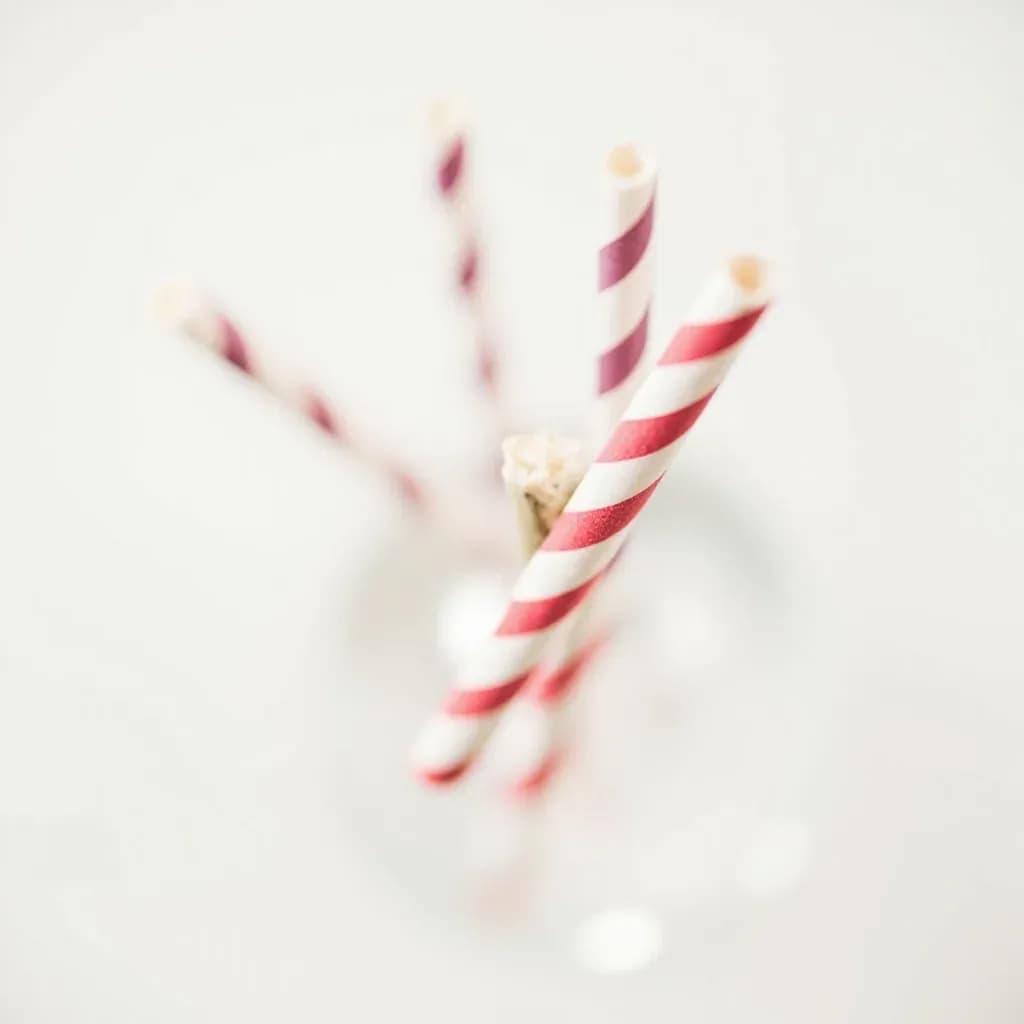
Biodegradable paper drinking straw used for cold beverages as a plastic-free alternative.
A paper straw is a rolled-paper tube used for sipping cold and blended drinks. Bars, cafes, and juice counters use it as a compostable replacement for single-use plastic straws. It is meant for one service and is best for shorter drinks, since prolonged soaking softens the paper; many versions are made of food-safe, biodegradable layers.
A paper straw is a hollow drinking tube made by spirally winding and gluing three to four plies of food-grade kraft paper around a forming mandrel, then sealing the inner surface with a thin moisture barrier — traditionally paraffin or beeswax, and now more often PLA (polylactic acid), a plant-based polymer. That inner coating is what separates a useful straw from a soggy tube of pulp, and it is the single most important quality variable to judge when buying. Plain uncoated paper collapses within minutes in any liquid; a well-coated straw will hold its shape through a long iced coffee, a thick milkshake, or a thirty-minute cocktail service.
The product was patented in 1892 by Washington, D.C. inventor Marvin C. Stone, who had grown frustrated with the natural rye-grass straws used at the soda fountain; his first commercial examples were hand-wrapped and sold in 1888. Paper straws dominated American beverage service until mid-century, when injection-molded plastic displaced them on cost. They returned to the mainstream around 2015–2018 in response to single-use-plastic bans in the U.K. and E.U. and to voluntary corporate phase-outs, and quality now ranges dramatically from cheap single-ply import stock that buckles in water to premium multi-ply PLA-lined tubes that perform almost like plastic for the duration of a drink.
For cooks, bartenders, and caterers the practical question is not whether to stock them — guests increasingly expect or require a plastic-free option — but which grade to buy for which drink, how long they will last in service, and how to handle the inevitable soggy-straw problem before it reaches the table.
Alternatives
Types & varieties
Classic soda-fountain size for water, soda, iced coffee, and most stirred cocktails.
Wider bore that resists softening in thick liquids; the right pick for smoothies, milkshakes, and frozen drinks.
Extra-wide to let tapioca pearls pass; almost always PLA-coated and longer than standard.
Accordion-jointed middle that holds an angle, useful for reaching across garnishes or into low-rim glassware.
Flared spoon-shaped tip for thicker drinks such as milkshakes, frappés, and frozen cocktails.
Traditional paraffin or beeswax lining; reliable for cold service, will shed wax into hot drinks.
Plant-based polymer lining; the only grade that qualifies as industrially compostable and the most heat-tolerant.
Sold in sleeves or open boxes; cheaper and lower-packaging, but a hygiene concern for shared-service counters.
Each straw in its own sleeve — the default for restaurants, bars, hotels, and catered events.
Coatings: What Lines the Inside Matters Most
All paper straws look the same on the outside — plies of kraft paper, glued, wound, and cut — but the inner coating decides how the straw behaves in service and what claims can honestly be made about it. There are three practical tiers, and they should be matched to the drink, not bought as one universal SKU.
- Uncoated or lightly sized paper: the cheapest grade, often sold as promotional or craft stock. Collapses within a few minutes in liquid and should not be used for any drink the customer will nurse for more than a few sips.
- Wax-coated (paraffin or beeswax): the traditional formula. Holds up through normal cold service, longer on ice. Softens, sheds visible wax flakes, and fails quickly once the drink approaches hot, so it is strictly a cold-service straw and is not accepted by municipal composting programs.
- PLA-coated: a polylactic-acid lining derived from cornstarch or sugarcane. Marginally more rigid than wax, tolerates brief contact with drinks up to roughly 90 °C, and is the only type that qualifies as industrially compostable under ASTM D6400 or EN 13432 — though it still needs a commercial facility running near 80 °C, not a backyard pile.
Common uses
Tips & pitfalls
- Use a jumbo (8 mm) straw for smoothies and milkshakes — thin 6 mm straws collapse long before a thick drink is finished.
- Insert the straw just before serving; pre-placed straws in ice water turn soggy within 15–20 minutes and arrive at the table already failing.
- Trim a standard-length straw to the rim height of the specific glass you are using — a straw that clears the rim by several centimetres looks slapdash and splashes more on the first sip.
- PLA-coated straws handle brief contact with hot drinks (a toddy, a short-pour latte); wax-coated ones will soften, shed wax into the cup, and should never be used above room temperature.
- Store boxes in a dry, sealed bin away from the dishwashing station or any source of humidity — moisture is the main cause of warping and lamination failure before first use.
- If a straw collapses while the guest is drinking, the cause is almost always strong suction on a thin-walled tube; angle the straw, loosen the lip seal, or upgrade that drink to a wider size rather than blaming the brand.
- Look for ASTM D6400, EN 13432, or BPI certification before accepting a supplier's 'compostable' claim — plain wax-coated straws are not accepted by municipal composting programs, and unverified PLA stock often is not either.
- Always keep a back-up option (reusable stainless, bamboo, glass, or silicone) on hand for genuinely hot drinks or for guests who will nurse a beverage for more than an hour.
Good to know
- Inventor
- Marvin C. Stone; U.S. Patent 470,565 granted March 8, 1892, with a hand-wrapped commercial product on sale in Washington, D.C. from 1888.
- Original purpose
- Replacement for natural rye-grass straws used to drink cold sodas at late-19th-century American soda fountains.
- Material
- Food-grade kraft paper, typically 3–4 plies spirally wound and glued.
- Inner coating
- Paraffin or beeswax (traditional) or PLA polylactic acid (modern); the coating determines performance and end-of-life claims.
- Standard lengths
- 197 mm (7.75 in) for short tumblers; 210–260 mm (8.25–10.25 in) for highball and Collins glasses.
- Standard diameters
- 6 mm regular; 8 mm jumbo; 12–15 mm boba / bubble-tea.
- Decomposition
- Wax-coated: roughly 2–6 weeks in a home compost. PLA-coated: requires industrial composting at ~80 °C and will not break down in a backyard pile.
- Heat tolerance
- Wax-coated: cold drinks only, softens well below boiling. PLA-coated: tolerates brief contact with liquids up to ~90 °C.
- Shelf life
- Two years or more in a sealed, dry box; humidity and condensation are the chief causes of warping and lamination failure before first use.
- Packaging
- Typically 250-count boxes unwrapped, or 100/250-count individually paper-wrapped sleeves for foodservice and bar use.
Also called
compostable straw · biodegradable straw
Related

Paper Towels
Disposable sheets for spills, drying, and patting dry

Kitchen Towels
Reusable cloths for drying, gripping, and wiping

Oven Mitts
Heatproof gloves to handle hot pans and trays safely

Disposable Gloves
Single-use gloves for safe, mess-free handling

Cleaning Cloths
Reusable cloths for wiping counters and spills

Tortilla Warmer
Insulated holder that keeps tortillas warm and soft

Trivet
Heatproof stand that shields surfaces from hot pots

Ice Bath Setup
Bowl of ice water that halts cooking and sets color