Heat & Safety
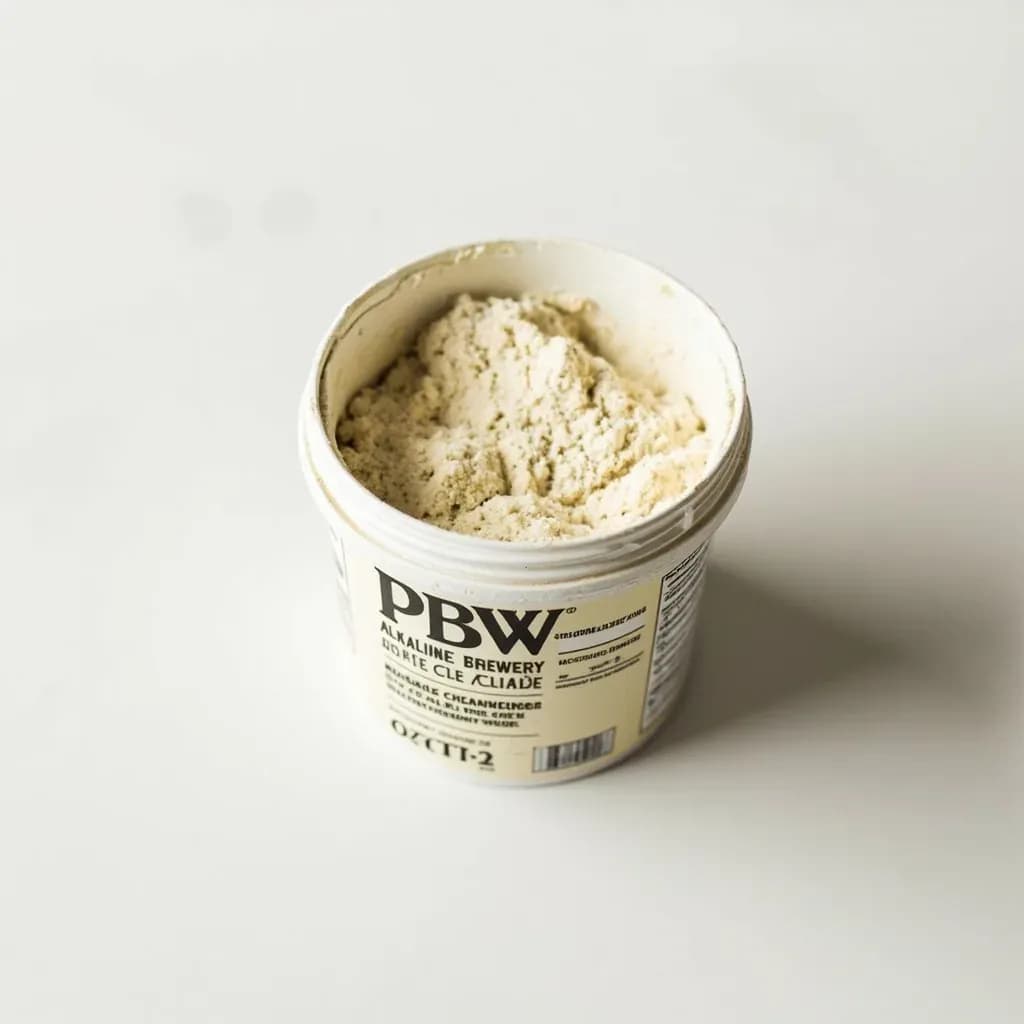
PBW (Alkaline Brewery Cleaner)
Buffered alkaline cleaner that strips residue from brewing and fermentation gear.
Powdered Brewery Wash, a buffered alkaline percarbonate cleaner used to dissolve organic residue, yeast, and protein film from brewing kettles, fermenters, and kegs. It cleans aggressively yet is non-caustic and safe on stainless and most plastics, making it a home- and craft-brewer staple. PBW is a cleaning step only; equipment is rinsed and then sanitized separately before use.
PBW is a powdered, buffered alkaline detergent built specifically to strip the kinds of organic and mineral soils that brewing leaves behind — dried krausen, hop tannins, yeast rings, and the calcium oxalate scale brewers call beer stone. Its alkalinity comes from a blend of sodium metasilicate, sodium carbonate (soda ash), and a small amount of sodium hydroxide, buffered so the working pH sits around 12 even as soils start to neutralize the bath. That high pH is what does the real work: it hydrolyzes fats and proteins, breaks down yeast and hop films, and lifts soils out of the microscopic surface scratches that would otherwise harbor contamination.
In practice, PBW's appeal is less about brute alkalinity and more about what it doesn't do. It is non-chlorinated, low-foaming, and safe on stainless steel, glass, and the PET and HDPE plastics used for fermenters and bottling buckets — materials that household cleaners often fog, craze, or leave with a residue that affects beer flavor. A 30-minute soak in warm PBW solution will release soil that would take fifteen minutes of scrubbing with a brush, and an overnight soak will deal with crud that mechanical action simply cannot reach.
It is important to remember that PBW is a cleaner, not a sanitizer. After a PBW soak, every surface still needs a thorough rinse with potable water and a follow-up sanitizer pass (Star San, iodophor, or a heat step) before it touches food or beverage. In a serious home or pro kitchen it can also stand in anywhere a food-safe, non-foaming alkaline wash is called for — stripping cooked-on residue from stainless before acid passivation, cleaning kombucha or cider vessels, or washing brewing-adjacent gear — provided you respect the two hard limits: never on aluminum, copper, brass, or anodized metal, and always rinsed before food contact.
Alternatives
Types & varieties
Flagship product; sold in 1 lb, 4 lb, 8 lb, 50 lb, and 100 lb sizes — same chemistry across sizes.
Pre-measured ½ oz or 1 oz packets; convenient for cleaning a single carboy or keg without measuring.
Same formulation in 50 lb pails and 100 lb drums for commercial breweries and packaging lines.
Craftmeister Alkaline Brewery Wash, BSG BLC Cleaner, BTF Brew Wash, and several store-brand "brewery washes" use similar metasilicate/carbonate chemistry with slightly different surfactant blends; behavior is comparable, but follow the specific label for dilution.
Often shelved beside PBW but a different product — acid-based, peroxy/octanoic no-rinse sanitizer/cleanser. Useful as the sanitizer step after PBW, not as a replacement for it.
How PBW Works
PBW's effectiveness comes from doing three things at once. The high pH (≈12) hydrolyzes and saponifies organic films — proteins, fats, yeast cell walls — turning them into water-soluble fragments that lift off the surface. The carbonate and silicate buffers hold that pH stable as soils load into the bath, so the working solution stays aggressive instead of quickly going neutral the way straight sodium hydroxide would. Finally, a small amount of surfactant reduces surface tension so the solution wets into scratches, threads, and carboy shoulders instead of beading off them. Warmth speeds every step, which is why a 120°F bath cleans in 30 minutes what a room-temperature bath needs hours to touch.
Alkaline Then Acid: The Two-Bath Approach
Beer stone is primarily calcium oxalate, a mineral deposit that alkalinity alone will not dissolve — it sits on stainless like concrete and harbors microbes in its pores. The standard remedy is to alternate PBW with an acid cleaner (Five Star Acid #5, lactic-acid blends like Lactic Star, or a dilute phosphoric/nitric mix in commercial settings): alkaline cycles chew out the organics that sit on top of the stone, then acid cycles dissolve the mineral underneath. Used together in separate passes, they leave stainless genuinely clean; used alone, each leaves a thin layer of the other kind of soil behind.
- Run a PBW soak first, rinse well, then run the acid soak, rinse again.
- Never mix concentrated acid and concentrated alkaline in the same bucket — the reaction generates heat and can splatter. Dilute, sequential use is fine.
- For light scale, a once-a-month acid pass is usually enough; heavy-stone breweries run it every CIP cycle.
Material Compatibility — What to Avoid
The same alkalinity that dissolves krausen will also dissolve aluminum, darken copper, and strip the dye out of anodized surfaces within minutes. This is the single most common PBW mistake: someone fills a copper chiller, an aluminum kettle, or an anodized cooler with PBW and comes back to a pitted, discolored mess. Stainless, glass, and food-grade plastics are unaffected; soft metals and anodized coatings are not. If a piece of equipment contains both — a stainless kettle with an aluminum false bottom, for instance — keep the PBW bath below the soft-metal line, or remove that part first.
- Safe: stainless steel, glass, PET/PETG, HDPE, polypropylene, silicone, EPDM rubber.
- Unsafe: aluminum, copper, brass, bronze, anodized aluminum, zinc, tin, and most soft-soldered joints.
Common uses
Tips & pitfalls
- Always use warm water — PBW's surfactants and alkalinity work dramatically faster above 100°F; cold-water baths need hours to do the same job.
- For heavy soil, soak rather than scrub: 12–24 hours in PBW will release caked-on krausen and beer stone with no mechanical effort and no risk of scratching plastic.
- Never use PBW on aluminum, copper, brass, bronze, or anodized metal — the solution will etch and darken them within minutes. Use a dedicated acid cleaner for those surfaces.
- PBW is a cleaner, not a sanitizer. Always rinse thoroughly with potable water and follow with Star San, iodophor, or a heat/steam step before any food or beverage contact.
- Wear nitrile or rubber gloves; the solution is strongly alkaline and will defat and irritate skin with repeated exposure.
- Discard the solution once it turns dark brown or grey and stops foaming — spent PBW has neutralized and will redeposit soil rather than remove it.
- Reuse the working solution within a cleaning session for similarly soiled items (a keg soak followed by a bottling-wand soak, for example), but start fresh for a different soil class.
- Keep the powder container tightly closed between uses; PBW is hygroscopic and will clump and lose effective strength in a humid brewery or kitchen.
- For PET carboys, fill with warm PBW and let sit — a soak is far safer than scrub pads, which scratch the plastic and create grooves that harbor future soil.
Good to know
- Type
- Buffered alkaline cleaner (powder)
- Original manufacturer
- Five Star Chemicals & Supply, Inc.
- pH in solution
- ~12.0–12.5 at use dilution
- Active chemistry
- Sodium metasilicate, sodium carbonate, sodium hydroxide, surfactants, buffers
- Typical mix ratio
- 1–2 oz per gallon (≈8–16 g/L) warm water; up to 4 oz/gal for heavy soil
- Working temperature
- Most effective at 100–140°F (38–60°C); usable cool but slower
- Contact time
- 30 min routine; overnight soak for caked-on residue
- Safe on
- Stainless steel, glass, PET/PETG, HDPE, polypropylene, silicone, EPDM
- Not safe on
- Aluminum, copper, brass, bronze, soft alloys, anodized metal (etches/corrosion)
- Rinse requirement
- Required — cleaner only, not a sanitizer
- NSF
- Listed by NSF for food and beverage processing
- Biodegradability
- Yes, per manufacturer
- Storage
- Sealed, dry, cool; hygroscopic, will clump if left open
- Shelf life
- Indefinite when kept dry and sealed
Also called
PBW · Powdered Brewery Wash · Alkaline Brewery Cleaner
Related

Paper Towels
Disposable sheets for spills, drying, and patting dry

Kitchen Towels
Reusable cloths for drying, gripping, and wiping

Oven Mitts
Heatproof gloves to handle hot pans and trays safely

Disposable Gloves
Single-use gloves for safe, mess-free handling

Cleaning Cloths
Reusable cloths for wiping counters and spills

Tortilla Warmer
Insulated holder that keeps tortillas warm and soft

Trivet
Heatproof stand that shields surfaces from hot pots

Ice Bath Setup
Bowl of ice water that halts cooking and sets color