Heat & Safety
pH Buffer Calibration Solution
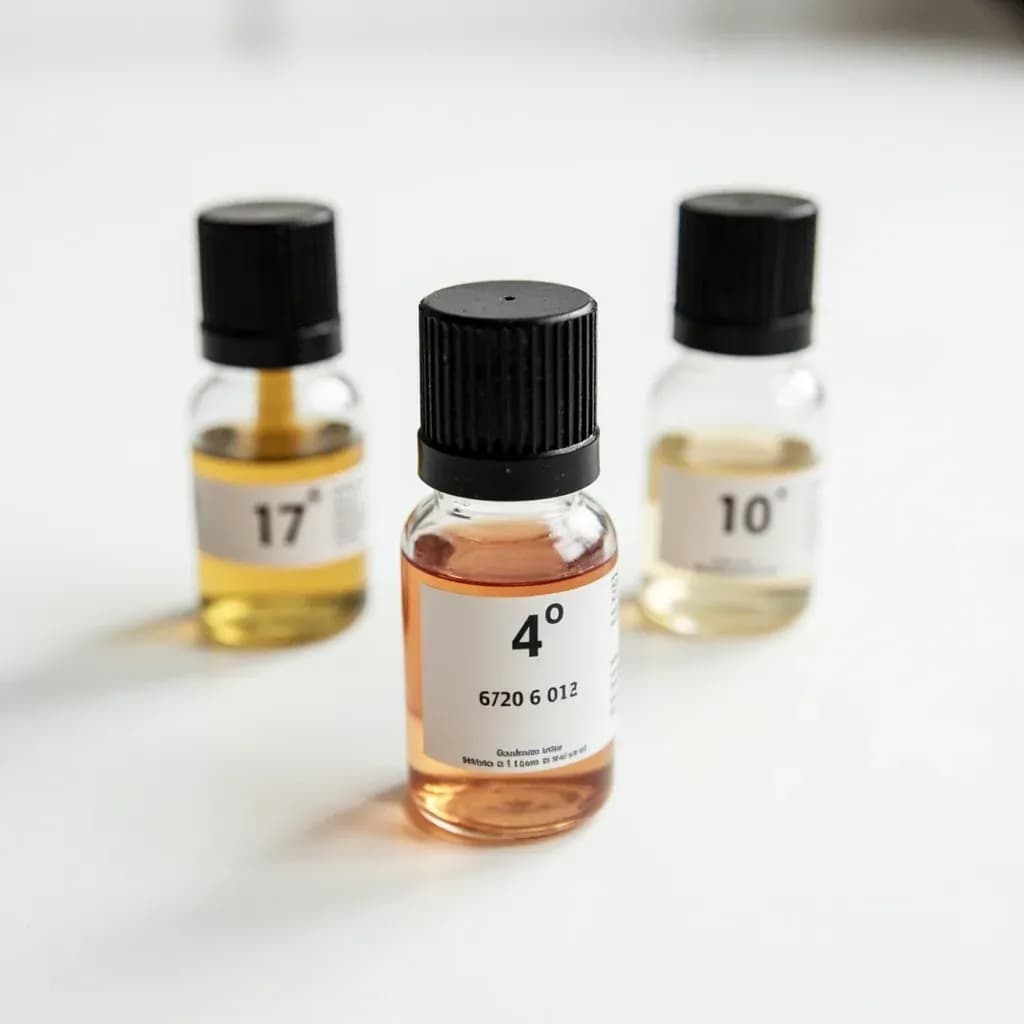
Standardized reference liquid (pH 4.0, 7.0, 10.0) used to calibrate a pH meter for accurate acidity readings.
pH buffer calibration solution is a precise reference liquid sold at fixed pH values, most commonly 4.01, 7.00, and 10.01. Cooks, fermenters, brewers, and picklers use it to calibrate digital pH meters so acidity readings stay accurate, which matters for safe canning, kombucha, cheese, and sausage. The probe is rinsed and dipped in each buffer, the meter is set to match the stated value, and the buffers are replaced periodically since they degrade once opened.
A pH buffer calibration solution is a precisely prepared aqueous reference liquid whose hydrogen-ion activity has been fixed and certified at a known temperature, almost always 25 °C, and packaged so a cook or food technician can verify and adjust a pH meter before testing a real sample. The three values every serious kitchen should own are 4.00, 7.00, and 10.00. The 7.00 buffer is the anchor because it sits closest to the isopotential point of the glass-membrane electrode, so it is used first; the 4.00 and 10.00 buffers confirm linearity on either side of neutrality. Commercially, pH 4.00 is built around potassium hydrogen phthalate (true pH 4.005 at 25 °C), pH 7.00 around a phosphate blend formulated to read 7.00 at 25 °C (distinct from the lab-grade NIST 6.865 reference), and pH 10.00 around a carbonate or borate buffer (pH 10.012 or 9.183 respectively at 25 °C).
In the kitchen, the buffer's job is to defend a single critical decision: is this food safely acid enough to be processed by water-bath canning, hot-fill-hold, or fermentation? USDA guidance sets the threshold at pH 4.6 for acidified canned foods, and a meter that is 0.2 pH units off can push a borderline product out of compliance, with botulism risk as the consequence. The same calibration discipline governs HACCP plans in breweries, dairies, and charcuterie operations. For most cooking work — pickles at pH 4.2, sourdough at 4.0–5.0, cheese curd acidification toward 4.6, beer mash at 5.2–5.5 — a two-point calibration with 4 and 7 is sufficient; add 10 only when the work crosses both sides of neutrality, such as lye-bath pretzels, soap making, or verifying cleaning chemicals.
Treat the buffer as a perishable, single-use reagent. The moment the probe touches it, the solution is no longer a true standard. Decant a small volume into a clean cup, calibrate, discard, and never return any used fluid to the stock bottle. Buy in 20 mL sachets if you only calibrate occasionally; buy in 500 mL or 1 L bottles if you calibrate daily, but mark the open date and expect the alkaline bottle to drift first, because dissolved CO2 from the air depresses its pH within hours. The probe itself lives only as long as its buffers and storage solution stay clean — a glass membrane kept dry, wiped instead of blotted, or stored in distilled water will refuse to calibrate long before the buffers are at fault.
Alternatives
Types & varieties
Sets the meter for acidic foods: pickles, vinegars, fermented vegetables, sourdough, citrus products. Mid-range readings sit between 4.00 and 7.00.
Always used first in a two- or three-point calibration because it sits closest to the electrode's isopotential point — the reference the glass membrane is tuned to.
Confirms correct reading in the alkaline range; useful for some brines, lye-pretzel soaks, and quality control of cleaning chemicals.
Lab-grade references shipped with NIST-traceable certificates of analysis; preferred when audit-grade or publication-quality data is needed.
Foil pouches for one-time calibration; eliminate cross-contamination from a shared bottle, ideal for occasional home or small-batch use.
Economical for production kitchens, breweries, dairies, and labs that calibrate daily; mark the open date and use within months, not years.
Some suppliers add food-grade dye so calibration fluid cannot be confused with water, juice, or sample liquid on a busy bench.
Not a buffer but sold alongside one: 3 M KCl solution (or proprietary pH storage fluid) used to keep the glass probe hydrated and responsive between uses.
Calibration Procedure for the Kitchen
A two-point calibration is enough for the vast majority of food work and takes under two minutes once you have the kit laid out.
- Rinse the electrode with distilled or deionized water and gently blot — never wipe — the glass bulb with a soft tissue; wiping builds static charge that drifts the reading.
- Pour about 20 mL of pH 7 buffer into a clean beaker. Immerse the probe past the junction, stir once, and wait for the reading to stabilize. Accept the calibration on the meter.
- Rinse and blot the probe again, then immerse in pH 4 buffer (or pH 10 if your samples run alkaline). Accept that point. Many meters will auto-recognize the buffer from its color-coded cap.
- Rinse a final time before testing samples. If the meter reports slope or efficiency outside 95–105 % after calibration, the probe is tired — not the buffers.
Why the Buffers Die (and Why Your Reading Drifts)
Every standard buffer has a finite life, and the failure modes are predictable once you know what to look for.
- Carbon dioxide from the air dissolves into the pH 10 buffer and forms carbonic acid, dropping its effective pH by 0.1–0.3 over a day on the bench. Keep the cap on, and decant only what you need.
- Microbial growth blooms in phosphate and phthalate buffers once opened, especially in warm kitchens. Cloudy or visibly contaminated fluid is no longer a standard, even if it is in date.
- Temperature shifts move every buffer by a small but real amount — the certified value on the bottle is the value at 25 °C. If your probe is in a 12 °C ferment, look up the buffer's tabulated pH at 12 °C and enter it manually, or warm the buffer first.
- Cross-contamination from a returned, dipped probe is the silent killer: food proteins, oils, and salts ride back into the bottle and shift every subsequent calibration. Pour what you need, discard what you used.
Common uses
Tips & pitfalls
- Always calibrate pH 7 first, then 4 (or 10), and finish on whichever bracket surrounds your expected sample pH; this minimizes error in the range that actually matters.
- Pour only what you need into a clean beaker — never dip the probe into the stock bottle or return used fluid to it.
- Rinse the electrode with distilled or deionized water between buffers and blot (do not wipe) the bulb; wiping creates static charge that drifts the reading.
- Discard calibration fluid immediately after use; even one immersion carries food residue, salts, and proteins that shift the pH.
- Match calibration temperature to sample temperature, or input the buffer's actual pH at that temperature from the supplier's table — a 10 °C swing can shift a buffer by 0.05–0.1 pH.
- Keep the alkaline (pH 10) bottle tightly capped and consider decanting into a small beaker; atmospheric CO2 dissolves in and drops the effective pH within hours.
- Replace buffers before the printed expiry date and label each bottle with the date it was first opened.
- Store the electrode moist in electrode storage solution (3 M KCl), never in distilled water — water leaches ions from the glass membrane and slowly kills the probe.
- For three-point calibration across a wide range (e.g., pretzel lye at pH 13 versus finished dough at pH 5), use 4, 7, and 10 to bracket the spread.
- If a fresh, in-date buffer will not calibrate the meter, the probe glass is likely spent — replace the electrode rather than chasing phantom buffer problems.
Good to know
- Common pH values
- 4.00, 7.00, and 10.00 are the workhorse triple for general kitchen use; lab-grade NIST primary standards are 6.865 and 9.183 at 25 °C
- Color coding
- Red cap/label for pH 4, yellow or green for pH 7, blue for pH 10 — followed by Hanna, Mettler Toledo, Oakton, and most major suppliers
- Buffer chemistry (4.00)
- Potassium hydrogen phthalate (KHP); true pH 4.005 at 25 °C
- Buffer chemistry (7.00)
- Phosphate buffer (KH2PO4 / Na2HPO4) formulated to read 7.00 ± 0.02 at 25 °C
- Buffer chemistry (10.00)
- Carbonate (NaHCO3 / Na2CO3) or borax buffer; commercial 10.01 or NIST 9.18 at 25 °C
- Temperature dependence
- Every standard buffer shifts slightly with temperature; a 10 °C swing can move a buffer 0.05–0.1 pH units, so calibrate at or near 25 °C or enter the tabulated value for actual temperature
- Shelf life
- 1–2 years unopened; 3–6 months once opened, faster for the alkaline (pH 10) buffer because CO2 from air lowers its pH
- Calibration frequency
- Daily for production kitchens; at minimum before any food-safety-critical reading such as acidified canned goods
Also called
pH calibration solution · buffer solution · pH 4 7 10 buffer
Related

Paper Towels
Disposable sheets for spills, drying, and patting dry

Kitchen Towels
Reusable cloths for drying, gripping, and wiping

Oven Mitts
Heatproof gloves to handle hot pans and trays safely

Disposable Gloves
Single-use gloves for safe, mess-free handling

Cleaning Cloths
Reusable cloths for wiping counters and spills

Tortilla Warmer
Insulated holder that keeps tortillas warm and soft

Trivet
Heatproof stand that shields surfaces from hot pots

Ice Bath Setup
Bowl of ice water that halts cooking and sets color