Wraps & Liners
Plastic Press Sheet (Cut Bag)
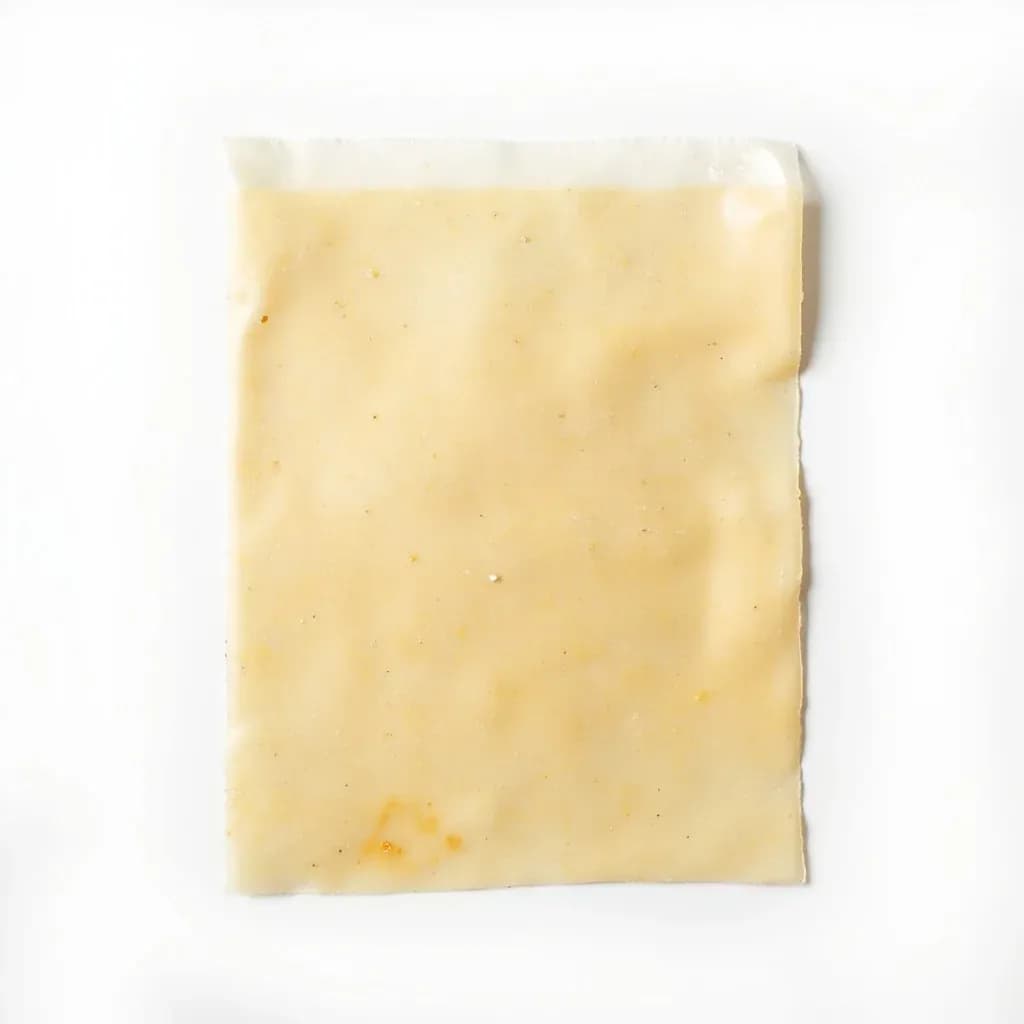
Flat plastic sheet, often a cut-open bag, laid between food and a press to keep surfaces clean.
A plastic press sheet is a flat piece of food-grade plastic, frequently made by slitting open a bag, used as a barrier in pressing. It sits between the food and the press plate so the block does not stick and the equipment stays clean. Cooks use it when pressing terrines, tofu, and cheese, and it can be wiped or replaced between batches.
A plastic press sheet is a flat, food-grade plastic layer placed between food and a press, a weight, or a press plate. In its most common form it is simply a polyethylene freezer or zip-top bag cut open at the seams and laid flat — a kitchen workaround so universally useful that it has become standard equipment in home cheesemaking, tofu pressing, and panini-press operation. The sheet is a sacrificial release layer: it accepts the mess so the press does not have to, and it is cheap enough to be thrown away when soiled.
The practical problem the press sheet solves is twofold. First, presses and weights are hard to keep clean — melted cheese, whey, and pressed-out moisture all want to glue themselves to a wooden follower, a metal weight, or a cast-iron press plate. A plastic barrier takes the abuse and goes into the trash. Second, it acts as a release layer that lets a cook lift a weight cleanly off a delicate block of tofu or a soft wheel of fresh cheese without tearing the surface or leaving residue behind.
The defining limitation is heat. Standard low-density polyethylene softens well below the temperature of a working griddle, so a DIY cut bag is safe only for cold or warm pressing — cheese presses, tofu weights, room-temperature sandwich assembly. For a hot panini press or griddle, a food-grade silicone sheet, a PTFE (Teflon) sheet, or a sheet of parchment paper is the correct choice. The plastic version's value lies in being nearly free, sanitary, and exactly the right tool for the jobs that never get hot.
Alternatives
Types & varieties
The classic improvised sheet: snip the side and bottom seam of a gallon-size LDPE freezer bag and flatten. Thin, food-safe, single-use, and free.
Same idea using a slider-seal bag; the intact seal can be repurposed as a small pouch for weighted pressing of single portions.
Food-grade silicone with much higher heat tolerance; dishwasher-safe and the standard commercial alternative to the DIY bag.
Heavy-duty, high-heat liner used in commercial sandwich presses; reuses hundreds of times and releases cheese and fats effortlessly.
Rolls of food-grade PE film cut to size; cleaner edges and more consistent thickness than a repurposed bag.
Choosing the right sheet for the job
The right press-sheet material is dictated almost entirely by temperature, then by volume and hygiene preference. Match the sheet to the application rather than reaching for the same liner every time.
- Cold or room-temperature pressing — cheesemaking, weighted tofu, weighted deli meats, sandwich assembly: a cut-open LDPE freezer or zip-top bag is ideal, free, food-safe, and disposable.
- Hot pressing on a panini grill, flat-top, or contact griddle: switch to food-grade silicone, PTFE-coated fiberglass, or parchment paper; polyethylene will soften, wrinkle, and fuse to the food.
- High-volume commercial service: a reusable silicone or PTFE sheet pays for itself quickly in labor saved on scrubbing.
- Soft, sticky foods being portioned (dough, fondant, marzipan): any clean LDPE sheet works as a sanitary work surface and releases the food cleanly when peeled back.
Common uses
Tips & pitfalls
- Always confirm the bag is labeled food-grade — never improvise with garbage, hardware, or chemical bags, which can leach contaminants.
- Keep the sheet out of direct contact with hot plates; when in doubt about temperature, switch to parchment paper or a silicone mat instead.
- On a panini press, score or perforate the plastic lightly so steam can vent; otherwise trapped steam will make the bread soggy rather than crisp.
- Cut the sheet slightly larger than the press plate so the edges overlap and catch drips and splatter.
- In high-volume service, swap the sheet between batches — it is cheaper than scrubbing a fouled press plate.
- A press sheet is not a substitute for cheesecloth when draining curds; the plastic blocks airflow and traps moisture against the food.
- Store sheets flat or loosely rolled rather than folded sharply; hard creases become weak points that split under load.
- When pressing tofu, lay the sheet on top of the block and set the weight on the sheet, not directly on the tofu — this lets you lift the weight away cleanly without tearing the surface.
Good to know
- Primary material
- Food-grade polyethylene (LDPE), typically repurposed from freezer or zip-top storage bags
- Heat tolerance
- Low — softens and sticks well below griddle temperatures; avoid direct contact with surfaces above ~110°C / 230°F unless a higher-rated sheet is used
- Typical thickness
- Roughly 0.04–0.1 mm (1–3 mil) for household bag stock
- Food-safety note
- Use only bags labeled food-grade and BPA-free, made from virgin resin; never improvise with garbage, hardware, or chemical bags
- Cost
- Essentially free when made from bags on hand; reusable silicone and PTFE sheets cost more but last for years
- Reusability
- LDPE sheets are single-use; silicone and PTFE versions can be wiped clean and reused hundreds of times
- Working size
- Cut to fit — commonly 20 × 20 cm to 30 × 40 cm for sandwich or small cheese presses
- Storage
- Flat, loosely folded, or rolled in a dry drawer, away from heat sources and sharp objects
Also called
press sheet · cut press bag · press barrier sheet
Related

Aluminum Foil
Wraps, covers, and tents food for the oven and grill

Parchment Paper
Nonstick liner for clean, even baking and easy release

Wax Paper
Moisture-resistant sheet for wrapping and counter prep

Plastic Wrap
Clings tight to cover bowls and wrap leftovers

Silicone Baking Mat
Reusable nonstick liner that replaces parchment

Cheesecloth
Loose-woven cloth for straining stock and bundling herbs

Beeswax Food Wrap
Reusable wax wrap that molds around bowls and produce

Piping Tips
Shaped nozzles that turn frosting into stars and rosettes