Storage & Containers
Plate Lunch Takeout Box
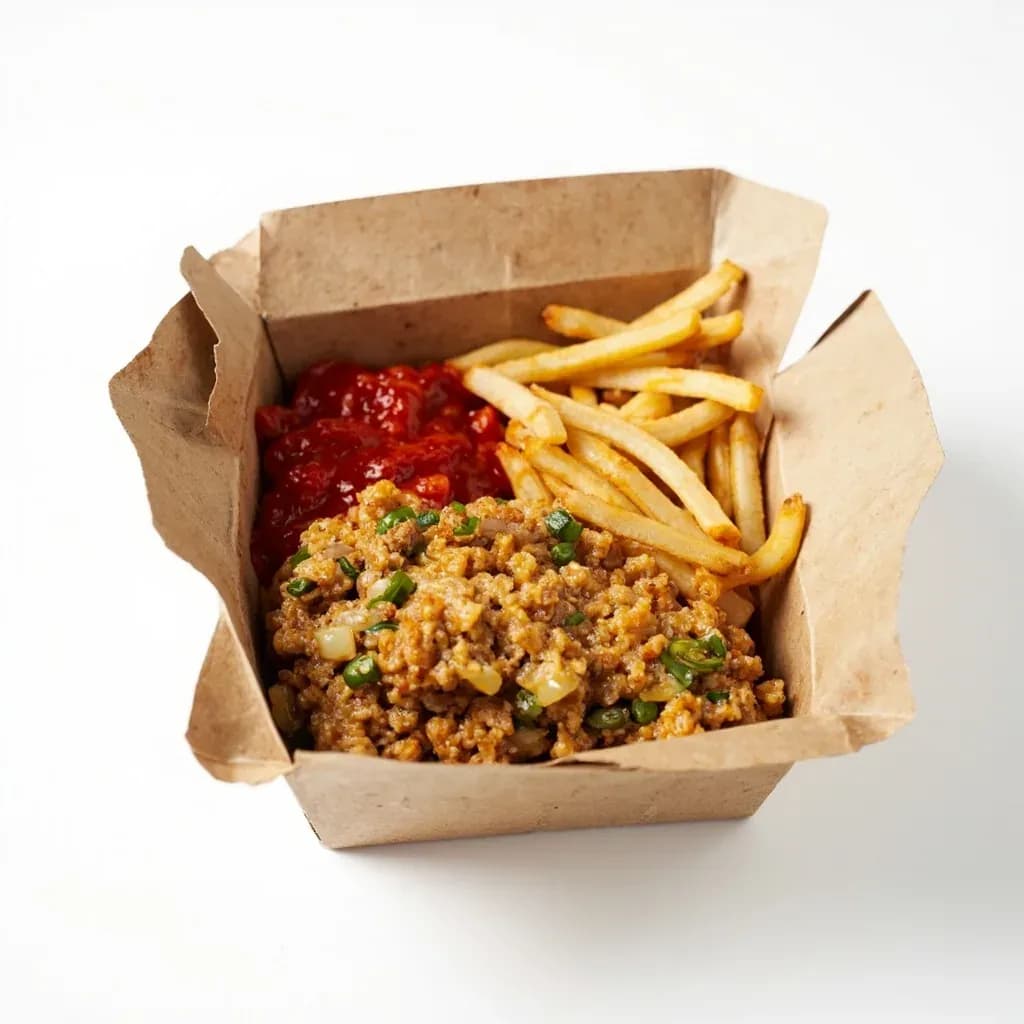
Compartmented disposable box used to pack a full plate-lunch meal for takeout.
A plate lunch takeout box is a hinged or lidded disposable container, often divided into sections, used to pack a complete meal to go. Its compartments keep the main, rice, and sides separate so a plate lunch travels without the components running together. Made of foam, paper, or plastic, it is a staple of diners and lunch counters for grab-and-go service.
The plate-lunch box is the hinged, compartmented clamshell most people picture when they imagine a takeout container built around a complete meal rather than a single dish. Its defining feature is a one-piece molded base with divider walls that partition the interior into separate wells — typically one, two, or three — sealed by a lid that flips up from a living hinge along one long edge. That geometry is what distinguishes it from a plain foam hinged container or a burger clamshell: each compartment is sized for a specific component of a meal, so a protein, a starch, and a wet side can ride together without mingling. The form is so deeply identified with Hawaiian plate-lunch service — teriyaki chicken or kalua pork, two scoops of rice, and a scoop of macaroni salad — that the container itself is sometimes called simply a "plate lunch" in foodservice shorthand.
The box matters in practical terms because it solves a portion-control and logistics problem at once. Compartments set serving sizes by volume, so a standard scoop of rice lands in one well and stays there, and the lid keeps everything upright during a short delivery or a car ride. The trade-off is that the hinged lid is not leak-proof; lids simply rest against the rim, so wet or saucy items must be packed into the deepest, smallest compartment and the box must travel flat and level. Material choice also shapes behavior: expanded polystyrene (EPS) foam is light, insulating, and cheap but warps above roughly 150°F and is not microwave-safe; paperboard and molded-pulp versions tolerate higher heat and are accepted in more waste streams, at higher unit cost.
Alternatives
Types & varieties
Single-cavity oblong box for sandwiches, single entrées, or meals with sides bagged separately.
Splits main from side; common for smaller portions or a rice-and-one-side plate.
The canonical plate-lunch configuration: one well for protein, one for rice, one for macaroni salad or a vegetable side.
9×9-inch footprint in 1- or 3-compartment layouts; used for larger portions or multiple small items.
Lined (usually PLA or polyethylene) paper version marketed as eco-friendlier; microwave tolerance depends on the liner.
Made from sugarcane fiber; industrially compostable; heat-tolerant to about 220°F; higher unit cost than foam.
Plastic clamshell used when product visibility matters; recyclable where #1 PET is accepted but not biodegradable.
Choosing the right material
Material choice is the single biggest decision when sourcing plate-lunch boxes, because it determines heat tolerance, microwave safety, sustainability claims, and unit cost at the same time.
- EPS foam is the cheapest and most familiar option, but it is excluded from curbside recycling in most U.S. municipalities and is banned for restaurant takeout in Hawaii (effective January 2025, under Act 152), New York, California, Maryland, and Washington, among others. Operators in those jurisdictions must source paperboard or molded-pulp substitutes.
- Kraft paperboard versions are the most common replacement. They typically have a thin PLA (plant-based) or polyethylene liner; PLA-lined versions are compostable in industrial facilities, while PE-lined versions are recyclable with paperboard but not compostable. Check the liner before assuming microwave safety.
- Molded-pulp (bagasse) clamshells are made from sugarcane fiber left over from sugar refining. They tolerate heat to about 220°F, are freezer-safe, and break down in industrial composting. They cost noticeably more per unit than foam and have a rougher interior texture.
- Clear PET clamshells are used when the customer needs to see the food — display cases, sushi counters, salad bars. They are strong and recyclable where #1 PET is accepted, but they offer no insulation and are not biodegradable.
Common uses
Tips & pitfalls
- Pack the wettest item — macaroni salad, gravy, sauerkraut, coleslaw — into the smallest, deepest compartment so starches and proteins do not turn soggy.
- Line compartments with a small square of parchment or a lettuce leaf when packing very wet or acidic foods (pickled vegetables, citrus-marinated proteins) to slow moisture migration.
- Never microwave an EPS foam container; heat can warp the plastic and drive styrene into the food. Transfer to a microwave-safe plate first, or use a paperboard or bagasse version rated for the microwave.
- For hot foods above 200°F, skip foam entirely — choose molded-pulp or kraft paperboard, which hold their shape under heat and won't buckle or leach.
- Do not assume an "eco" or "compostable" label means curbside acceptance; verify local recycling and industrial-composting facilities before switching materials.
- Stack filled boxes flat, lid down, with nothing overhanging the rim, and keep them level during transport — the hinged lid is a cover, not a seal, and will leak if tilted.
- Order by the case (200–500 units) rather than in sleeves of 25–50; small operators often pay two to three times the unit price for the convenience of small packs.
- Pre-portion rice with a standard scoop — a #8 or #10 disher yields roughly 4–6 oz, which fits a typical rice compartment without crushing the protein against the lid.
- Label the matte lid with a wax pencil or food-safe marker for catering orders; the foam or pulp surface takes ink cleanly and wipes off with isopropyl alcohol.
Good to know
- Container type
- Disposable hinged clamshell with molded-in compartment dividers
- Typical materials
- Expanded polystyrene (EPS) foam; kraft paperboard; molded pulp (bagasse/sugarcane fiber); PET plastic
- Standard dimensions
- Oblong ~9 in × 6 in × 2.5 in (small) up to ~9 in × 9 in × 3 in (large); square footprints also common
- Compartment options
- 1-, 2-, or 3-compartment; divider walls molded into the base
- Capacity range
- Roughly 24–48 oz total, depending on size and compartment count
- Heat tolerance
- EPS foam warps above ~150°F and is not microwave-safe; paperboard and bagasse versions tolerate ~220°F
- Freezer safe
- Yes for foam, paperboard, and molded-pulp versions
- Recyclability
- EPS foam is rarely accepted curbside; paperboard and molded-pulp versions are recyclable or industrially compostable where facilities exist
- Case pack
- Commonly sold in cases of 100, 200, or 500 units
- Cultural origin
- Strongly associated with Hawaiian plate-lunch service; widely adopted across U.S. casual takeout, food trucks, and school foodservice
Also called
bento takeout box · compartment lunch box · plate lunch container
Related

Freezer Bags
Thick, sealable bags built to fight freezer burn

Storage Bags
Resealable bags for fridge storage and marinating

Storage Container
Lidded container for leftovers, prep, and meal kits

Glass Container
Oven-to-fridge glass that won't stain or hold odors

Plastic Container
Lightweight, stackable storage for everyday leftovers

Vacuum Sealer Bags
Airtight bags for long freezing and sous-vide

Reusable Bags
Washable silicone bags that replace single-use plastic

Mason Jar
Sealed glass jar for preserves, pickles, and storage